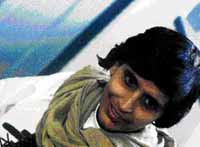
Category: Articles about Shamima


This is a selection of articles written about Shamima Shaikh,
some while she was alive and others after her death


  • The (South) African Queen: Remembering Shamima Shaikh

    The (South) African Queen: Remembering Shamima Shaikh

    By Safiyyah Surtee, 4 June 2009
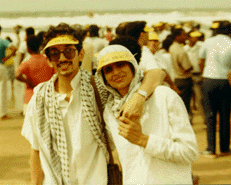
    Shamima and Na'eem at a "beach defiance" protest, 1989

    Muslimahs who work hard in shaping the depiction of themselves and their sisters in the media, and who are engaged in Islamic feminist discourse to dispel cultural and literalist concepts unjustly attributed to them, are often left flattened under the heavy heap of misrepresentations and stereotypes by both Muslim and non-Muslim agencies.

    I would like to dedicate my post for the week to one such South African woman, who fought against all types of oppression, especially against the oppression of Apartheid, Zionism and misogyny.

    Shamima Shaikh (1960-1998) was a journalist, media activist and Islamic feminist. Both her life and her death were symbols of struggle for the rights of Muslim women. I found it very difficult to articulate the magnanimity of Shamima’s life, so I turned to her husband, Na’eem Jeenah, for insight:

    Shamima’s mission in life was to struggle for justice; whether against white racists propping up apartheid or Muslim misogynists who wanted to ‘keep women in their place’.

    Deeply committed to the message of the Qur’an concerning justice and fighting oppression, she lived her life fighting for the right of all people to be treated equally as human beings, and for women, in particular, to be accorded their rights. She was inspired in all of this by the words of Allah. She was also one of the most compassionate people I know – towards everyone.

    She tirelessly worked for this message of this justice, including speaking, and writing. Shamima wrote for student publications, newspapers, and became the editor of al-Qalam, a South African Muslim community newspaper, and was the founder chairperson of the Muslim Community Broadcasting Trust, which owned The Voice, a Muslim community radio station. All these media she shaped in order to deliver that singular message. Her persistence, her love, her conviction that Allah’s justice would prevail endeared her to many, including some of her ideological opponents.

    Whilst browsing through the memorial website set up for Shamima by her husband and friends, I read the messages of condolences on her death; I became overwhelmed, in awe at her personality and felt sadness that I never had the privilege to meet Shamima. One obituary that made every tiny hair on my body stand is:

    Shamima was an extraordinary human being. In knowing her as a friend and organisational colleague there were many aspects of her personality that moved me very deeply: her passionate commitment and idealism which translated into a continuous activism for social justice, her constant transgression of religious and cultural traditions in critically constructive ways, her fundamental refusal to be taken as a second-class Muslim because of being a woman, her openness in engaging even the thorniest aspects of the women’s struggle and her capacity to extend sisterhood to women very different in beliefs from herself, her wonderful laughter, generosity and hospitality (Shamima and Na’eem’s home was an “open-house”, always full of people talking, eating, laughing, arguing), her inexhaustible energy in both juggling motherhood, work, numerous political commitments and an active social life. All of these things are what defined Shamima, but most distinctive for me were her incredible qualities of courage and spunkiness and it is with a multitude of both that she faced her meeting with Allah – she never faltered in the face of death, remaining true to her life commitments to the very end. Even in her death she made this manifest – she requested that her janaza (funeral) prayers be lead by a woman. Very few of us can, at the age of 37, be able to stand before our Creator and be sure that we have fulfilled our vicegerency in this world with the totality of who we are. I believe that Shamima will be able to do so. Dearest Sister Shamima, aluta continua. Go with the knowledge that you have touched this temporal world in the profoundest way. Salaam-u-alaykum wa rahmat-ul-allah wa barakatu.

    Sa’diyya Shaikh

    A small collection of her articles can be found here. She was also the subject of many a written work.

    Farid Esack, in his book, “On Being a Muslim” wrote

    When other co-religionists were denying women the right to be on air, she served as chairperson of the Muslim Community Broadcasting Trust… In the same way that for anyone committed to gender justice a woman’s place cannot be confined to bedrooms and kitchens, she ultimately became frustrated at being an “upstairs” woman. In a little-known move, unprecedented in the world of Islam, she and a number of comrades –male and female – started an alternative congregation where gender equality and all its implications for Islamic thought and practice were the norm.

    Shamima, we do not have to pledge that we will pick up the battles where you left off. About that you have no doubt. We can pledge to try to do so with the gentleness and love with you fought them. What a life! What a way of passing on! What a death.

    Amina Wadud also writes about Shamima in her book, “Inside the Gender Jihad”

    I liked her right away; she had no airs, no fan fares, and no feminine vanities. She impressed me as a person who worked with a cause, and found meaning in doing.

    Just what was Shamima’s message about Muslim women in the media? In a paper she presented a few days before her death at the Durban Conference, she said:

    Another problem is that men write women into their experiences. For a long time men have been writing about women, men have been writing the interpretations. Even if a progressive man writes about women, it’s from a male perspective. They write us into their experiences. Ebrahim Moosa [a leading South African and international progressive Muslim theologian and scholar] experiences life much differently than I do. He’s progressive, fine! But I’d rather Firdousa (the MYM Gender Desk co-ordinator) wrote it. It would be more real. Our experiences are different because we’re in an oppressive situation.

    Shamima’s role and impact on the media was immense. Not only was she a journalist, but her activities were constantly in the public eye, for marches, demonstrations, mass rallies and solidarity campaigns against the apartheid government and especially for her famous “women in the mosque campaign”, when she mobilized a number of Muslim women to attend Ramadan prayers in a male only mosque in Johannesburg.
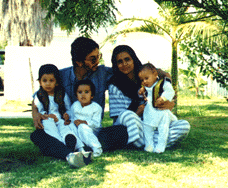
    Shaikh also became the first National Co-ordinator of the Muslim Youth Movement Gender Desk, a position that again put her on the MYM’s National Executive. Under Shaikh’s leadership, the MYM Gender Desk rapidly became the most outspoken Muslim organization on the question of Muslim women’s rights and gender within the Muslim community and the leading organization in the South African articulation of Islamic feminism. She was also involved with the founding and establishment of the Muslim Personal Law Board of South Africa and was a member of the Board until it was unilaterally shut down by the United Ulama Council of South Africa.

    She also co-authored a book with her husband Na’eem about their spiritual journey on the Hajj. The book features their personal analysis of the pilgrimage, anecdotes and observations highlighting racism, inequalities and misogyny within the Muslim world as experienced by the couple on their trip.  It was published only after her death, and serves as a mini memoir and inspiration to thousands of South African pilgrims.

    Shamima learned of her cancer in 1997. She continued her social struggle in the face of her physical struggle against illness, and most would say, with even more zest than before. Her last public engagement in the media was the deliverance of a paper “Women & Islam – The Gender Struggle in South Africa”, in Durban, with great difficulty due to her condition. Just seventeen days later, on January 8, 1998 / 9 Ramadan 1418, Shamima passed away. She left behind her husband Na’eem and two sons Minhaj and Shir’a. May Allah grant her peace and paradise.

    In life, as in death, Shamima fought against what she perceived as injustice, to people of colour, and to women. Numerous funeral prayers were said for her; most notably the funeral prayer led by a woman, her close friend, Farhana Ismail, as per Shamima’s request. Shamima was often referred to by her opposition as “that mad Shaikh women.” At another funeral service in a Johannesburg masjid, led by her husband Na’eem, he prayed, “If this be madness God, give us all the courage to be mad.”

    * Published on the website “Muslimah Media Watch” here

  • The mad courage of Shamima Shaikh’s activism for mosque reform

    , Thursday, 23rd October 2014, in Aquila Style

    http://www.aquila-style.com/focus-points/mightymuslimah/mad-courage-shamima-shaikh/82764/

    How a Muslim woman who fought for gender equality had her sanity questioned in a South African mosque. By Merium Kazmi


    Contrary to popular belief, Islamic history is full of stories of extraordinary Muslim women. These women have assumed positions of power and respect by challenging cultural norms of women’s role in society, and contributing to their communities’ wellbeing and development. These range from the heroic contributions of many female members of the Prophet’s (peace be upon him) family, to philanthropists like Fatima Al Fihri, who in Fez, Morocco built the University of Qarawiyin, the world’s oldest and a UNESCO World Heritage site. Today, we also have strong leaders, such as Atifete Jahjaga, President of Kosovo and also the world’s youngest female president.


    It is unfortunate that at times we learn of these brave women only after they have passed away. For many of us, Shamima Shaikh is one such individual. A Muslim from South Africa of Indian descent, Shamima was a journalist and activist who strived to relay the Qur’an’s messages of peace, justice and equality to both a burgeoning community of fellow Muslims and the politically charged atmosphere of apartheid and post-apartheid South Africa. She became known for the strength and tenacity with which she fought for the rights of women – rights she believed the religion of Islam guaranteed her.

    Her activism traces back to her days at the University of Durban-Westville (initially established for South Africans of Indian descent and now called the University of KwaZulu-Natal), where she studied Arabic and psychology. The university was known for its anti-apartheid political rallies which increasingly matched the socio-political direction of the country at the time.

    Becoming involved with the Azanian People’s Organisation (AZAPO), a black consciousness political organisation, she protested against an oppressive academic environment. Following her collaboration with AZAPO, she had a brief teaching stint, in addition to meeting and marrying her husband, Na’eem Jeenah, a well-known and respected academic and journalist.

    Her indomitable fighting spirit would find a home in an extensive collaboration with the Muslim Youth Movement of South Africa (MYMSA), an organisation focused on serving the Muslim community through initiatives of education, advocacy, socio-economic development and gender justice. She would assume the role of editor of their Muslim monthly, Al-Qalam, and venture into other opportunities with MYMSA, eventually taking on a greater leadership and decision-making role in the organisation as executive chair. She became the second woman to do so in the history of the organisation.

    If this be madness God, give us all the courage to be mad.

    – Na’eem Jeenah, husband of Shamima Shaikh

    One of the many campaigns that Shamima was involved with under the auspices of the MYMSA was the 1989–1990 series of protests against the South African legislative body (the Tricameral Parliament), who were against any political representation for coloured and Indian racial minorities during apartheid.

    She also introduced the Women in the Mosque campaign, and her struggle in this regard would go on to define her work as a women’s rights activist. All of these efforts would culminate in her being appointed the national coordinator of the Gender Desk at MYMSA.

    Her Women in the Mosque campaign was an important part of her advocacy work. On praying at the mosque, she said:

    It is important for women to be at mosques because they are the most important centres of Islam. Decisions are taken, direction is given. It is where people meet to pray together and it promotes consultation.

    The event that would unfortunately label her as “that mad Shaikh woman” took place in 1994 on one of the holiest nights of the year, 27th Ramadan.[i] In the hope of offering tarawih prayers at a Johannesburg mosque, she arrived to find their designated space occupied by male worshippers (as was often the case during crowded gatherings).

    Accompanied by a small group of women from the tents set up outside, Shamima made attempts to reclaim their space, drawing rancour from some community members who considered the presence of women unnecessary. Spurred by this event, she would eventually go on to form an “alternative” congregation that respected gender equality and held other progressive Islamic values.

    Although it came many years before, Shamima’s stand is similar to the efforts being made by the Inclusive Mosque Initiative in the United Kingdom, which hopes to provide a space for all Muslims – young or old, male or female, straight or gay – to pray side by side.[ii]

    As the chairperson of the Muslim Community Broadcasting Trust, she oversaw the establishment of an Islamic radio station, The Voice.[iii] She had learnt of the controversy over the lack of women’s voices on other Islamic radio stations in South Africa and had hoped to correct that by ensuring that voices of Muslims from a variety of backgrounds were heard. She wrote extensively about women in Islam and published a book, Journey of Discovery, with her husband about their experiences performing the Hajj.

    As an Islamic feminist, Shamima joins a growing list of individuals who have defied socio-cultural expectations and remained committed to enhancing the status of women in the region. While the struggle to implement gender-equitable programmes and policies continues today, it is heartening that Shamima’s life story continues to inspire women and girls to embark on their own struggles. Such actions spur discussion, debate, understanding and respect, all of which are necessary to accommodate the ever-growing diversity of Muslim voices in our respective communities.

    Her struggle to achieve gender equality also paralleled her struggle with cancer, which would eventually take her life during Ramadan in 1998 at the age of 37. Even her departure from this world was testament to her faith in the religion of her birth and its inherent promotion of gender equality: her funeral prayers were read by a close female friend, an act unheard of in the Muslim world. This final farewell served as a perfect denouement to a life well lived.[iv] She was laid to rest in the city of her childhood, Pietersburg, and left behind her husband and two sons – as well as a lasting legacy of tenacity for asserting her God-given rights.

    The Shamima Shaikh Commemorative website is a great repository of information for those interested in reading more about her.

    All pictures courtesy of Na’eem Jeenah


    [i] Farid Esack, ‘Death of a Muslim Joan of Arc’, Mail & Guardian, 20 Jan 1998, available here
    [ii] Tamsila Tauquir, ‘Mission to build an alternative mosque’, The Guardian, 7 Aug 2013, available here
    [iii] Maria McCloy, ‘Finding a voice’, Mail & Guardian, 19 Sep 1997, available here
    [iv] Farid Esack, ‘If this be madness…’, Women in Action, Feb 1998, available here

    This article originally appeared in the November 2013 Happy New You Issue of Aquila Style magazine. You can read the entire issue free of charge on your iPad or iPhone at the Apple Newsstand, or on your Android tablet at Google Play


  • Women claim the mosques

    By Ferial Haffejee, Africa South & East, 1994

    There is a quiet revolution underway at mosques around the country as women demand to pray alongside the rest of the congregation. This storming of the masjid is being led by members of the Muslim Youth Movement and by its Transvaal leader, Shamima Shaikh, who gives new meaning to the adage about dynamite in small packages.

    In September, Shaikh led a group of women at Wits University to Friday’s Jumu’ah prayers – the most important prayer of the week – where they prayed alongside male students, instead of separately as has been the case for many years. “They still hung up a sheet to seperate us.” says Shaikh, shrugging her shoulders.

    Their action followed a protest at the beginning of Ramadaan this year when 25 women, led by Shaikh, entered a mosque in Mayfair and said that they would pray there. Despite the anger of the elders, the women stood their ground and prayed. Shaikh says: “It was very intimidating at first, but our perseverance saw us through. The protests fizzled out as the nights went by.”

    Their protests paid off in part. On the 27th night of Ramadaan, called Lailatul Qadr, when the congregation’s reading of the Quraan is completed, women were invited to other mosques, to pray and to listen to lectures from the congregation’s leaders. The sexes were still seperated, but the first bridge was crossed and women had got into the mosques.

    And the protests are not confined to urban areas. Deep in the Northern Transvaal, in Pietersburg, where Shaikh was raised, her sisters also went to Eid prayers. They were the only two women there, but she hopes that a precedent has been established. Protests for the right of women to pray at mosques is confined almost totally to Indian Muslim areas.

    Women in Malay areas do have facilities at mosques, although these are always partitioned from the main prayers. Some of the objections to women praying at mosques are archaic. According to Shaikh, these include “Women make fitna (gossip), they come to look for husbands and women always pray at home.” From the younger men comes the complaint that women distract them from their prayers.

    Now the challenge for Muslim women is to assert their right to pray alongside men, not separately, and for women to know that they can also be Imams (the leaders of the congregation). “Women believe they are not supposed to be at the mosque,” says Shaikh. Yet this belief has no basis in Islam.

    She quotes two examples of Islamic history where women have led prayers. In Mecca, women and men pray together during Haj, the annual pilgrimage. A woman led the funeral prayers for Imam Shafi’i (a respected Muslim scholar) and “the other was a case of an elderly women whom the Prophet Muhammad used to visit. The male servant used to give the adhan (call to prayer) while the woman used to lead the prayer,” says Shaikh.

    Shaikh is pathbreaker in more than one sense. From the modernist strand of Islam in South Africa, she is the first women leader of the Muslim Youth Movement. The organisation “views Islam as a comprehensive world view,” and central to the practice of the religion is understanding the political role of Islam, which includes considering the role of women in Islam.

    Shaikh’s methods have not always made her popular, especially amongst more traditional leaders. In a letter to a newspaper, a Muslim man said: “Great emphasis is placed on men performing their five times compulsory daily prayers at mosques, while women are encouraged to perform their prayers at home…” He said when women went to mosques, they prayed in the back rows not out of discrimination, but to separate the sexes. “In any case, one’s objective is to perform prayer, and you would not be any closer to God if you were to stand in the front rows, or any other rows for that matter.”

    Says Shaikh: “For women, being home-makers is the priority. Going to mosque must fit into your schedule, but women carry the burden of the house-hold.” For example, women do not attend the morning prayers on Eid days, instead, they see there role as preparing meals for the day. “But (the most important part of) Eid is the morning congregational prayer,” says Shaikh. She says it is important for women to be at mosques because they are the most important centres of Islam. “Decisions are taken, direction is given. It is where people meet to pray together and it promotes consultation and discussion.”

    This will be essential in encouraging Muslim women to think independently, especially when faced with the range of challenges that living under a future government presents them with. These challenges includes voting in next years elections as well as the forthcoming inclusion of Muslim personal law in the South African body of law.

    Muslim women will now have to start discussing changes to personal law, like whether women can divorce men. The law as it stands says that women cannot divorce men.

    Karima Brown, in a survey of the Muslim community in transition, points out that “….the Muslim community, especially those of Indian origin, are very traditional and in many instances Muslim women will in most cases follow their husbands on who to vote for, or whether to vote at all.”

    A Muslim scholar remarked: “If women can win the battle for the mosques, then they are expressing clearly that they want entry into the Muslim community.”

  • Making history in a man’s world – Mail & Guardian

    Shamima Shaikh is the first women to hold the senior position of chairman of the Transvaal region of the Muslim Youth Movement – just one sign of changes in the community, writes Farouk Chothia

    A group of 25 women enter a mosque in Mayfair, adamant that they will pray there. Bearded men yell at the women for having the audacity to leave their homes – and worse, to enter a man’s world, the House of Allah. The women stand their ground, forcing the men to back off.

    This was the scene at a Mayfair mosque earlier this year when the Islamic month of Ramadaan started. It was the first time South African women had staged such defiant action in protest against their exclusion from mosques.

    Behind their action was Shamima Shaikh, a 33-year-old firebrand activist who has made history for another reason – she is the first woman to hold the senior position of chairman of the Muslim Youth Movement’s Transvaal region.

    Said to be “sharp and dynamic”, Shaikh is a University of Durban Westville BA graduate and mother of two. There are hints of feminism in the fact that she retained her own surname – her husband is Naeem Jeenah, editor of the MYM’s mouthpiece, Al-Qalam.

    Recalling the mosque incident this week, she said: “It was very intimidating at first, but our perseverence saw us through. The protests (from the men) fizzled out as the nights went by.”

    But it was a partial victory: the women were not allowed to pray in the front rows of the mosque and had to stand at the back and pray behind the men.

    Shaikh hopes that Muslim men will eventually come to accept women can do more than pray in mosques; they can also be Imams. “There are cases in Islamic history when women led prayers. One was at the funeral of Imam Shafi (a respected Muslim scholar). Another was the case of an elderly woman whom the Prophet (Muhammad) used to visit – the male servant used to give the Azaan (the call to prayer) while the women led the prayer,” she said.

    Shaikh does not say it, but she implies that the Prophet used to pray behind the elderly woman. The suggestion would set more bearded mouths foaming. This weekend Shaikh will come face to face with representatives of the broader Muslim community – including theologians cosidered extremely conservative – to debate important issues related to the April 27 elections. Not wanting to antagonise the theologians on her first encounter with them, Shaikh will swop militancy for diplomacy. She said she would “keep quiet – if necessary”.

    Muslims are preparing for elections, and Shaikh said mosques would be used as a platform to embark on voter education. The problem is that mosques – with some exceptions in the Cape – are open to men only. “This means that women will be dependant on the grace of their husbands. We will try to overcome this problem by ensuring that there are door-to-door campaigns,” said Shaikh.

    With South African Muslims having divided political loyalties, the MYM will adopt a position of “positive neutrality.” “But we will urge people not to vote for the oppressor. They should vote for the liberation movements,” Shaikh added.

    How did Shaikh come to occupy such a key position in the MYM – and with such strong support? At a regional assembly in May, she won the highest number of votes.

    “It (her election) was on merit – I hope. I have been quite active in the MYM for a number of years,” she said. The rest of her regional executive is made up of men.

    “The MYM is a progressive organisation and there has been interaction between men and women for a long time. I haven’t really had any problems,” Shaikh said.

    Her election would make traditionalists baulk for another reason: she is not a theologian, and traditionalists argue that she cannot be a leader. Shaikh believes that women are not theologians because men have kept education – both Islamic and secular – largely for themselves. She is concerned that the absence of women thelogians could have a negative effect on women’s rights in a democratic South Africa.

    A future constitution is expected to recognise Muslim Personal Law, meaning the Islamic marriages and divorces, for example, would be recognised. A body of thelogians is likely to be formed to advise a future government on implementation.

    “We need women ulama (theologians) on the advisory board. At present, the (male) ulama say that only a husband can divorce the wife. The question is: can a wife give a divorce ?

    “Some say they can and others say they can’t. This is an important area that needs to be looked at,” said Shaikh.

    Shaikh’s rise to prominence is not the only sign of sea-change in the MYM. She said that since 1990 the movement has made a particular effort to reach out to African Muslims.

    “The future of Islam (in South Africa) lies in the hands of Africans. It is important that in Africa it should be Africanised,” Shaikh said.

    “There was no resistance but I won’t be romantic and say that there were no difficulties in adapting to the change in emphasis and programmes,” Shaikh added.

    Three years ago the MYM elected its first African president, Tahir Sitoto, a resident of Uitenhage’s kwa-Nobuhle township.

    Sitoto recalled this week that his election had caused a stir at the time. ” There was a lot of reaction accross the board. It came as a shock to the so-called Indian Muslim community and in the so-called African Muslim community people saw it as a window-dressing manoeuvre.”

    Sitoto believes that the influx of Africans into Islam started in the mid-1970’s – but the appeal came from the Middle East.

    “We saw Islam in the Middle East as a liberating and revolutionary force. The Palestinian struggle and the Iranian revolution were examples of this,” said Sitoto.

    African Muslims still idolise men like Yasser Arafat and Ayatollah Khomeini, and many African Muslims name their children after the Middle Eastern leaders.

    A Black Consciousness activist at the time he converted to Islam in the 1970’s, Sitoto said he had “lost complete faith in the church”.

    “We, the youth, perceived Christianity as a tool which was being used to blind us from the injustices that were going on,” added Sitoto.

    Yet, Sitoto faced a rude shock when he embraced Islam. “We were on the margins, those of us from an African background.”

    “We were constantly treated as newcomers; as new babies in the house of Islam,” he said.

    Although inspired by Islamic revolutions elsewhere, he does not believe an Islamic Party should be formed in South Africa to contest the elections. He argued that it would be “political suicide” to do so , as Muslims constituted only two percent of the country’s people.

    “Muslims are an integral part of South African society and as such they should position themselves within the liberation movements and articulate their positions there.

    “Being exclusivist won’t serve any purpose.”

  • Finding a voice – Mail & Guardian

    Maria McCloy : In your ear

    There are signs that Gautengs second Muslim radio station, The Voice, is very different from South Africas other Muslim stations. Two stations in Cape Town have proved extremely popular, while Durban has a couple in the pipeline and Gauteng boasts Radio Islam.

    Shamima Shaikh, chair of The Muslim Community Broadcasting Trust, which owns The Voice (on air since August 29), says: This station is open, vibrant, exciting and Muslim, and definitely not condescending and self-righteous.

    Lenasia’s Radio Islam had complaints earlier this year that centred around women being excluded from air and in the running of the station. The dynamic Shaikh has been at the forefront of the fight to have women allowed in mosques, and although not deliberately planned, The Voice is mainly run by women.

    According to Shaikh, the birth of a radio station came about because Muslims didnt feel they had a stake in local broadcasting. Although Muslim issues and the Muslim world attract a lot of mainstream media attention, Muslim voices are not always part of these debates.

    Diversity of opinion on air is an important focus to Shaikh, within a scenario where power is controlled by a few, saying the station wants to be a voice of the whole community, not just a small section of it.

    So how is the station different to Lenasias Radio Islam? There are no call- ins [on Radio Islam] nor is there the kind of participation we want to encourage. Its very much talk from one person and they generally have the clergy speaking.

    Shaikh and Basit Bulbulia host a talk show on Tuesday nights. There were several calls on the show about the experiences of black Muslims, and there are sure to be more when they examine the theory espoused by some that womens voices should not be on air.

    Shaikh says they are keen to hear a variety of voices on the experiences of gay Muslims, and to explore racism, classism and cultural divides within the Muslim community. In addition there are current affairs, cultural and sports programmes.

    Along with the five-times-a-day call to prayer (adhan), The Voice offers specifically Islamic shows which look at themes in the Quran, Islamic law and history. The station is also planning a regular show that will look at the powerful and important women in the Quran who are often ignored.

    Shaikh says the station needs to reflect the diversity of a Muslim audience that is of Arab, Indian, Malay and African descent. The station does this with music which ranges from African musicians Pops Mohomed, Abdullah Ibrahim, Salif Keita, and Ishmael Lo; to Indian and Pakistani artists like Nusret Fateh Ali Khan.

    The Voice can be heard in Mayfair, Lenasia, Sandton, Soweto, Eldorado Park, Krugersdorp and Germiston.

    The Station went on air just a fortnight ago, and Shaikh admit s there is still work to be done in terms of building up resources, providing training and hooking up with community radio organisations.

    And even if religious leaders have been frosty towards the new station, the launch felt like a happy community affair. After all, it is the Mayfair community who payed for the rent of the equipment and studio.

    The station now hopes for sponsorship to keep its voice on the air.

  • Why we miss her? – Femina

    Why we miss her? – Femina

    By Sharon Sorour-Morris

    Femina magazine

    Shamima Shaikh (37), who died of cancer in recent months, was South Africa’s leading Muslim gender-equality activist, highly respected for her tenacity and bravery in the face of fierce opposition from conservative elements in her community. She led a rebellion of Muslim women worshippers at a mosque in 1994 and started an ‘alternative’ congregation where gender equality and all its implications for lslamic thought and practice were the norm.

    More recently when another Muslim radio station denied women the right to be on air, Shamima served as chair of the Muslim Community Broadcasting Trust which runs The Voice, a Johannesburg Muslim community radio station.

    Even at the hour of her death she fought for a woman’s rights. She asked that a closefriend lead her funeral prayers, ensuring that for the first time in centuries, a Muslim’s funeral service was led by a woman. Shamima is survived by her husband, Naeem Jeenah, and their sons Minhaj (nine) and Shir’ah (seven).

  • Women’s Rights Champion loses her Fight against Cancer

    The Star, 16 January 1998

    Shamima Shaikh (37), a leading human rights and gender activist, died of cancer on January 8.

    The courage with which she battled the disease was the same quality which made her a fearless campaigner for women’s rights, a democratic and free South African, and the Muslim Youth Movement.

    She is survived by her husband and two young sons. A commemoration will be held at the Seido Jodo Hall in Mayfair West tomorrow at 2:30pm.

  • Activist Dies – The Post

    SHAMIMA Shaikh, acclaimed pioneer for the rights of Muslim women in South Africa and station manager for the Mayfair-based Islamic radio station The Voice, succumbed to cancer on the same day that her final inerview with the media appeared in POST last week.

    Mrs Shaikh, 37, started out as a student activist during her days at the University of Durban-Westville, defyind tradition at the time which precluded Muslim women from taking part in male-dominated religious activities by leading a group of women into the Pageview mosque in Johannesburg to pray.

    Though threatened with eviction, the women stood their ground and today, largely because of their actions, several progressive mosques in the city have arranged facilities for women to join in prayers in seperate sections.

    Just before her death, an excited Mrs. Shaikh, a journalist and former editor of the Muslim newspaper Al-Qalam, told POST about plans which THE VOICE had to involve the Greater Johannesburg community to an even larger extent.

    She was the chairperson of the Community Broadcast Trust, which founded the station.

    Mrs. Shaikh is survived by her husband, Naeem Jeena, also a former editor of Al-Qalam, who has taken over as station manager at The Voice, and two boys, Minhaj, 9, and Shir’a, 7.

  • Shamima Shaikh – Fighter for Women’s Rights – Horizon

    Horizon Newspaper

    Shamima Shaikh (37) Muslim women activist, journalist and campaigner for gender equality, lost her long battle against cancer recently.

    FORMER

    Shamima was former editor of Al-Qalam, the Muslim Youth Movement-owned newspaper and one of the founders of the Johannesburg-based Muslim radio station The Voice. She was Chairperson of the community broadcast trust that owns the station. Shamima launched her battle for human rights and gender equality in 1978 as a student activist at the University of Durban-Westville.

    DAYS

    In those days it was unthinkable for indian women, let alone Muslim women from conservative homes to take to the streets with pamphlets and plackards calling for consumer and other boycotts.

    “It was clear to me that the voteless opressed could not be liberated by remaining conservative and docile. And women were part of the voteless opressed. Action was needed, for it was louder than words,” she recollected in an interview a week ago before taking a turn for the worst.

    MUSLIM

    In 1992, Shamima shocked the fundamental religious Muslim establishment which she believed discriminated against women by barring them from praying with men in the mosque. She lead a group of women into the Pageview, Johannesburg Mosque to pray.

    MALE

    Some male worshippers threatened the protesters, but they stayed put.

    PROTEST

    The protest led to a number of mosques, run by liberal-minded trustees and heavily patronised by students eventually opening their doors to women worshippers in seperate prayer areas. It was a victory for Shamima and her muslim feminist activists.

  • Claremont Main Road Masjid Mourns Mujahidah Shamima Shaikh

    Shamima Shaikh, one of the foremost Muslim women activists in South Africa, died peacefully in the early hours of the morning, at her home in Mayfair, Johannesburg. Shamima leaves behind two young boys, Minhaj and Shir’a, and her husband Na’eem Jeenah. She will be buried in Pietersburg, the town of her birth, later today.

    Shamima will always be remembered by Islamic activists all over the country for her unflinching commitment to the gender jihad. She was a founder member of the Muslim Youth Movement’s Gender desk. A few years ago in the month of Ramadan, she led a group of women in a protest to a Johannesburg Masjid who had refused women permission to pray inside of it.

    Shamima has served as editor of the Muslim newspaper Al-Qalam and more recently she served as chairperson of the management board of Radio Al-Saut/The Voice, a local Muslim community radio station broadcasting in the Johannesburg area.

    Shamima will also be fondly remembered by all of us for her gentle nature and soft speech.

    We extend our heartfelt condolences to her immediate family and friends and implore Allah, the Most Merciful, to grant her jannatul firdous, insha-Allah.

    Salatul Janazah Ghaibah will be performed for the deceased at the Claremont Main Road Masjid this evening after Tarawih Salah, followed by an obituary to be delivered by Maulana Dr. Ebrahim Moosa.