Category: Articles about Shamima


This is a selection of articles written about Shamima Shaikh,
some while she was alive and others after her death


  • A letter to Shamima – Tahir Sitoto

    By Shaikh Tahir Sitoto

    Dear Shamima

    The last we saw of you, you were a living mortal – your spirit fighting, refusing to give up. That memory still lingers. We remember the many moments we shared both in times of joy and sadness. The moments of struggle and celebration.

    We remember the students at Rhodes University howling at you and yet you kept calm and smiled at them. The only crime was to say women are not sub-human, but all are equal in the eyes of the Creator. We remember you walking and jumping in the dusty and muddy roads of Kwa-Nobuhle, sharing a meal in a tiny four-room matchbox house, not afraid to enter the terrain or conquering our space and confronting some of us whom you perceived to have male chauvinist tendencies. You sensitised some to the gender jihad not in a confrontational fashion but in a caring and loving manner, not self-righteous but persuasive.

    Your doors were always open. We spent many treasured moments in your small flat with no trepidation.

    We remember your honesty that made you vulnerable at times, but above all your unwavering commitment to the cause of the doormats of society, the so-called marginalised, those on the periphery and sidelines, that category known as the women; the so-called converts or reverts and so-called Africans.

    Together with your family you were almost entirely wiped out in a car accident on your way to Botshabelo. Your spleen crashed, yet you continued the struggle. All these memories as we write to you are flashing back, reminding us of your presence. In short, yours was a life of selflessness.

    Even after hospitalisation you fervently went to the ITP, presented a paper on a theme so dear to you and continued to participate inspite of your predicament. These are moments we will hold dear and continue to cherish.

    When some of us shared your tenth wedding anniversary, little did we know that it would be the last meal in your esteemed company.

    We know this letter should have been written to you whilst you were still in our company – and so we must admit that it is with reluctance that we do so. We do so, however, with the thought that even at this moment you will not say, “No, it is too late,” and thus refuse its acceptance.

    Words, we must add, are not sufficient to convey what you have been and meant to us. Others can try to do so, but we refuse. Suffice to say you were an epitome of what is true and genuine humanity.

    We ask the God of Mercy and Compassion, the All Wise and All Knowing, to grant you Jannah al-Firdous.

    As for your family, especially Na’eem, little Minhaj and Shir’a… We invoke Allah the Almighty to grant them the necessary patience and perseverance in these trying moments.

    In missing you we can find contentment in the thought that your spirit forever lives. And so the only commitment we can make is to continue the struggle for which you were a tireless campaigner.

    Hamba Kahle – Go Well.

    Eyakho indima uyifezile – You have fulfilled your task.

    On behalf of the National Executive of the Muslim Youth Movement of South Africa

    Shaikh Tahir Fuzile Sitoto

    National Vice- President
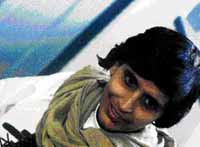
  • Death of a Muslim Joan of Arc – Faried Esack, Mail & Guardian

    Death of a Muslim Joan of Arc – Faried Esack, Mail & Guardian

    OBITUARY: Shamima Shaikh, former editor of the progressive Muslim monthly Al-Qalam, and the leading Muslim gender-equality activist, dies at age 37.


    FARIED ESACK

    20 January 1998, Mail & Guardian


    SHAMIMA SHAIKH (37), South Africa’s leading Muslim gender equality activist, passed away in the early hours of January 8 at her home in Mayfair, Johannesburg. She had cancer. Shaikh left behind her husband, Naeem Jeenah, and two sons Minhaj (9) and Shir’ah (7).

    Shaikh was a member of the national executive committee of the Muslim Youth Movement and former editor of the progressive Muslim monthly Al-Qalam. More recently, when other Muslims were denying women the right to be on air, she served as chair of the Muslim Community Broadcasting Trust, which runs The Voice, a Johannesburg Muslim community radio station.

    It was, however, as a gender activist within the Muslim community that she made her mark. She spearheaded the formation and headed the gender desk of the Muslim Youth Movement. In this capacity, she rapidly became a thorn in the flesh of conservative Muslim clerics on the now defunct Muslim Personal Law Board, who were keen to develop and implement a set of laws which would entrench gender inequality.

    In an event that drew widespread controversy in the Muslim community, she led a rebellion of Muslim women worshippers at the 23rd Street mosque in Fietas in 1994. Throughout the month of Ramadan she and a number of other women prayed upstairs in the mosque. On the 27th night, the most spiritually significant one for Muslims, when she arrived the upstairs section was occupied by men and a tent was set up outside for women.

    Braving numerous angry offended men with tiny egos, she led a group of women to re-occupy their space. By then she had acquired the well-deserved description of “that mad Shaikh woman”. Yet to friend and foe, Shaikh was the epitomy of gentleness and politeness.

    In the same way that for anyone committed to gender justice, a woman’s place cannot be confined to bedrooms and kitchens, she ultimately became frustrated with being an “upstairs” woman. In a little-known move, and an unprecedented one in the Islamic world, she and a number of comrades — male and female — started an “alternative” congregation where gender equality and all its implications for Islamic thought and practice were the norm.

    Shaikh first learned that she had cancer about three years ago. Nothing had changed for her. Her life was full of laughter, courage and the will to change the world and she merrily continued.

    “If the last hour strikes and finds you carrying a sapling to the grove for planting,” said the Prophet Muhammed, “go ahead and plant it.” Her hour had struck but her planting continued unabated. Knowing that her life was rapidly ebbing away, she delivered a lecture in Durban three weeks ago on the “Qur’an and Woman”.

    She inspired us and taught us that there is nothing inevitable in life. She insisted that while death may be inevitable, we are free to shape our responses to it. She chose not to undergo various forms of chemotherapy and, other than resorting to some traditional and homeopathic options, she was determined not to return to her Lord kicking and screaming.

    The day of her death and burial was a day of relentless pushing of the religio-cultural limits. Shaikh’s death was a testimony to the Qur’anic verse which says “Do not say about those who are slain in the path of God that they are dead; nay they are alive …”.

    She asked that a close female friend lead her funeral prayers (as part of her obsession with retrieving subversive theological and juristic memories which accorded women a more just place in Islam, she had come across a report that the funeral prayers for Imam Idris bin Shafi, a revered Muslim jurist, was lead by a woman).

    Thus, for the first time in the last few centuries a Muslim’s funeral service, albeit at her home, was led by a woman.

    At another service in the nearby mosque later, her husband led the prayer despite the presence of a number of theologians and clerics. In what is possibly unprecendented in the contemporary Islamic world, a large number of women attended the funeral prayers at the mosque. And no, they did not go upstairs, nor to an outside tent.

    When her physical remains arrived at her final earthly resting place, in Pietersburg, the place where she was reared, the women were there again to offer the funeral prayers. While a narrow pathway separated the women mourners (mostly clad in black) from the men (mostly clad in white) who surrounded the grave, it was nevertheless an historic occasion.

    “If this be madness, God,” her husband Na’eem prayed at her funeral service, “give us all the courage to be mad.”

    Faried Esack is the acting chief executive officer of the Commission on Gender Equality


  • Warrior of the gender jihad returns to her maker after a life well lived

    Warrior of the gender jihad returns to her maker after a life well lived


    By: Staff Reporter

    Sunday, January 18, 1998

    The silence after the prayers for Shamimah Shaikh, who died on January 8, is broken by tributes from family, friends and comrades. They talk about a defiance and a fighter’s spirit that will never die.

    The Seido Karate Hall in Brixton, Johannesburg, is full. It is Saturday, the 16th day of Ramadan.

    Shaikh, who was 37, comes alive in memory. Deeply spiritual, she sought justice and challenged whomever stood in its way.

    Her activities are relived by her comrades who are here to tell her family what she meant to them. Her husband Na’eem and their two children, nine-year-old Minhaj and seven-year-old Shir’ah, her mother, her three sisters and two brothers are present.

    Shaikh touched many lives. She was a member of the Muslim Youth Movement’s national executive committee; she edited the newspaper Al-Qalam for a while; she co-hosted Our Voices on The Voice, a Muslim radio station; and she chaired the station’s controlling body.

    Her critics referred to her as “that mad Shaikh woman”. Not today, though. Mohamed Mahdavi, the Iranian ambassador, recalls the way she challenged him. “We had differences but I admired her. She was concerned about Islam and she tried to introduce Islam to the right way of doing things as she saw it. After the visit of female parliamentarians from Iran, Shaikh wrote articles illustrating that the public perception of Iran is wrong.”

    Mahdavi commends her for introducing “this divine religion” to those who had no knowledge of it and for her attempts to revive the rights of half of “the community of suffering humanity”.

    He says Islam came to the world 1 400 years ago, when the status of women was so low that men expressed their shame at having fathered a baby daughter by committing infanticide.

    One after another, people take the podium. Farid Esack, the acting head of the Commission for Gender Equality, recalls how her dear friend challenged the Muslim Personal Law Board, a group of men who tried to rewrite Muslim personal law to make it applicable to South Africa.

    Esack describes a deeply spiritual woman, stirred but not angered by injustice. She established study groups to reinterpret Muslim theology and tradition, and to retrieve “the subversive memories” about gender equality in the Islamic tradition.

    Before her death, Shaikh requested that a woman friend read prayers at her memorial. Esack says this was the first time in several centuries that a Muslim woman’s funeral service was led by a woman. The service took place at home, before the service at the mosque.

    Prayers were important to Shaikh and those who have come to say goodbye smile as they remember how she fought for equal access to the mosques.

    They recall how, in 1994, she challenged the men of her community to allow women to enter the mosque on the Night of Power, the 27th night of Ramadan. The women ended up saying their prayers in a tent, but that they were allowed to say them at all is remarkable, says Esack.

    Firoz Cachalia, a member of the Gauteng legislature, remembers “the exclusion, the vilification and the diminutions” to which Shaikh was subjected. Author and activist Julie Adams recalls the way that Shaikh “cracked the door of woman’s equity”.

    A picture of Shaikh emerges: a fiery, beautiful woman who gave as well as fought. The battle she fought was the gender jihad. She was utterly without ambiguity in her cause.

    Her sister Fatima says she was the sun around which the rest of the family revolved. The memory of her beautiful older sister makes her weep. Her friend Aisha Roberts remembers their journey to Mecca last year, where Shaikh broke down with joy at the sight of men and women praying side by side in the holy mosque.

    The tears fall for the woman who refused to fight her cancer with chemotherapy once she found out the disease was terminal. The mourners wipe their eyes as they contemplate filling a gap left by a woman who was happy to return to her maker after a life well lived.

    “Never will I suffer to be lost the work of any of you, either man or woman. The one of you is of the other.” The quote from the Koran is embellished in large lettering; it stands boldly above the grieving faces.

  • Obituary – Abdulkader Tayob

    By Professor Abdulkader Tayob

    In the Name of Allah, Most Gracious, Most Merciful.

    Moving on the Exalted Friend is always a momentous occasion. But when a martyr to truth and justice moves to her Exalted Friend, it calls for more than a moment of reflection and gratitude. Perchance, we may not be counted among those who cover up (kafara).

    Shamima, you have given us an opportunity to reflect on ourselves and our stations in this world. May the Exalted Friend grant you supreme satisfaction, forgiveness. May all your sins be forgiven, and transformed into righteous rewards.

    O Allah, Possessor of Peace, to whom all Peace returns, grant her the Abode of Peace. Grant strength and perseverance to her family, her husband, her children, and her many friends.


    Shamima reminds one of many things. As we read the Qur’an in this blessed month of Ramadan, it also provides us an opportunity to remember Rumi’s insightful remarks about our cosmos. In reference to the names taught to primordial Adam about the true nature of things, Rumi told us that most of us often live in some form of deception. Death reveals the true nature of things, the names deeply imprinted onto our primordial selves.

    He added though, that some people, like Umar (May Allah be pleased with him) had penetrated to their nature before death. And thus, while Umar was his common name, his true name was the fighter of the devil. Even the devil took another road in order not to cross the path of Umar.

    Shamima, your everyday name was beautiful. But there are many of us who know that your true name was:

    Fighter for Justice

    Smiling

    Don’t let grass grow under my feet.

    You have met the Exalted Friend


    Take Care

    Prof. Abdulkader Tayob

    Department of Religious Studies

    University of Cape Town

  • Obituary – Shuaib Manjra

    By Dr Shuaib Manjra

    Shamima Shaikh, one of the foremost Muslim women activists in South Africa, was recalled by her Lord in the early hours of the morning of the 9th day of Ramadaan. In writing this obituary, one cannot but remember Soraya Bosch, whose obituary I wrote just about two months ago. Soraya and Shamima were close friends and sisters in a common struggle, both of whose names will feature prominently in the history of the struggle for gender equity within the Islamic tradition.

    In remembering Shamima two enduring qualities stand out: tremendous courage and a singular commitment to a cause. The courage with which she coped with her cancer, was the same quality which made her a fearless campaigner for women’s rights, a democratic and free South Africa and the cause of the Muslim Youth Movement (MYM). Her commitment to these ideals was unflinching. Operating in a parochial “Transvaal” environment dominated by the conservative clergy and their compradore, and being a women, made these essential qualities. Shamima epitomised them. Her small frame and small voice belied her underlying strength.

    Shamima was a founder member of the Muslim Youth Movement’s gender desk. She served as the past editor of Al-Qalam and more recently as chairperson of the Muslim Community Broadcasting Trust, which runs As Saut/The Voice, a radio station in Gauteng. That is where I last saw her just six weeks ago conducting her controversial and often contentious talk show. She also served on the national executive of the MYM. In a very sick state Shamima travelled to the Natal South Coast to attend the Islamic Training Programme and presented her paper from a wheel chair barely ten days ago. Her paper on women’s rights is a testament she leaves us all.

    Shamima challenged everything. This is how I remember her at university and she remained so till her departure from us. In fact this legacy continues even after. Her Janazah salaah at home was performed by her dear friend Farhana Ismail, which was Shamima’s last wish. The salah at a Johannesburg mosque was performed by her husband, Na’eem Jeenah. Women graced this salah as well as her Janazah salaah and burial at the cemetery in her home-town Pietersburg. In life as in death she challenged orthodoxy.

    Shamima leaves behind two young sons, Minhaj (9) and Shir’a (7), whose names reveal the intellectual and activist vision of Shamima and Na’eem. Minhaj means an open way and Shir’a, a moral code. Her marriage to Na’eem was one of the “struggle marriages” that endured and endeared. They constantly challenged each other, inspired and motivated each other, and probably competed as well – they were truly garments unto each other.

    We thank Allah for this gift which he loaned to us for a fixed period. We celebrate her life, give gratitude for His gift, and pray for Sabr in thinking of a future without her. Our hearts and thoughts go to her family, husband and two young children. We pray that Allah grants them patience and perseverance to bear this loss. May Allah grant her Jannatul Firdous, insha-Allah.

  • If this be madness… – Farid Esack

    By Dr Farid Esack

    Published in Women in Action, Phillipines, February 1998

    Shamima Shaikh (37), South Africa’s leading Muslim gender equality activist passed away in the early hours of last Thursday at her home in Mayfair, Johannesburg when her physical body succumbed to cancer. Shamima left behind her husband, Na’eem Jeenah and two sons, Minhaj (9) and Shir’a (7).


    Shamima was a member of the National Executive of the Muslim Youth Movement and former editor of the progressive Muslim monthly, al-Qalam. More recently, at a time when other co-religionists were denying women the right to be on air, she served as chairperson of the Muslim Community Broadcasting Trust, which runs The Voice, a Johannesburg Muslim community radio station. It was, however, as a gender activist within the Muslim community that she made her mark. She spearheaded the formation and headed the Gender Desk of the Muslim Youth Movement. In this capacity she rapidly became a thorn in the flesh of conservative Muslim clerics on the now defunct Muslim Personal Law Board who were keen to develop and implement a set of Shari’ah laws which would entrench gender inequality.

    In an event that drew widespread controversy in the Muslim community, she led a rebellion of Muslim women worshippers at the 23rd Street Mosque in Fietas in 1993. Throughout the month of Ramadan she and a number of other women prayed upstairs in the mosque. On the 27th night, the most spiritually significant one for Muslims, when she arrived, the upstairs was occupied by men and a tent was set up outside for the use of women. Braving numerous angry offended men with tiny egos, she led a group of comrades to re-occupy their space. By then she had acquired the well-deserved description as “that mad Shaikh woman”. Yet to friend and foe Shamima was the epitome of gentleness and politeness.

    In the same way that for anyone committed to gender justice a woman’s place cannot be confined to bedrooms and kitchens, she ultimately became frustrated with being an “upstairs” woman. In a little known move, and unprecedented in the world of Islam, she and a number of comrades – male and female – started an “alternative” congregation where gender equality and all its implications for Islamic thought and practice were the norm.

    Shamima first learnt that she had cancer about three years ago. Nothing changed for her. Her life was full of laughter, courage and the will to change the world and she merrily continued. “If the last hour strikes and finds you carrying a sapling to the grove for planting” said the Prophet Muhammad, “go ahead and plant it”. Her hour had struck but her planting continued unabated.

    Knowing that her life was rapidly ebbing away she delivered a lecture in Durban three weeks ago on “Qur’an and Woman”. She inspired us and taught us that there is nothing inevitable in life. She insisted that while death may be inevitable we are free to shape our responses to it. She chose not to undergo various forms of chemotherapy and, other than resorting to some traditional and homeopathic options, she was determined not to return to her Lord kicking and screaming. A poem, penned by a cousin and posted at the entrance to her bedroom said it all:

    What Cancer Cannot Do

    Cancer is so limited

    It cannot cripple love,

    It cannot shatter hope,

    It cannot corrode faith,

    It cannot destroy peace,

    It cannot kill friendship,

    It cannot suppress memories,

    It cannot silence courage,

    It cannot invade the soul,

    It cannot steal eternal life,

    It cannot conquer the spirit

    The day of her death and burial was a day of relentless pushing of the religio-cultural limits. Shamima’s death was testimony to the Qur’anic verse which says: “Do not say about those who are slain in the path of God that they are dead; nay they are alive.” She requested that a close female friend lead her funeral prayers. (As part of her obsession with retrieving subversive theological and juristic memories which accorded women a more just place in the Islamic scheme of things, she had come across a report that the funeral prayers for Imam Idris bin Shafi’, a revered Islamic jurist, was led by a woman.). Thus it came to pass that for the first time in the last few centuries a Muslim’s funeral service, albeit at her home, was led by a woman.

    At another service in the nearby mosque later, her husband led the prayer despite the presence of a number of theologians and clerics. In what is possibly unprecedented in the contemporary Islamic world, a large number of women attended the funeral prayers at the mosque. (And no, they did not go upstairs, nor to an outside tent.) When her physical remains arrived at her final earthly resting place, in the town where she was born, Pietersburg, the women were again there to offer the funeral prayers. While a narrow pathway separated the women mourners (mostly clad in black) from the men, (mostly clad in white) who surrounded the grave, it was nevertheless an historic occasion.

    What a life! What a way of passing on! What a death!

    “If this be madness, God”, her husband, Na’eem, prayed at her funeral service, “Give us all the courage to be mad”.

    Amen.

    Dr Farid Esack

    Acting CEO

    Commission on Gender Equality
