Author: shamsadmin

  • Shamima Salahuddin Shaikh

    (14 September 1960 – 8 January 1998)

    Shamima Shaikh was one of South Africa’s foremost Muslim women’s rights activists. She died of cancer on 8 January 1998, aged 37. This website includes some of her writings, articles written about her, and messages received upon her death.

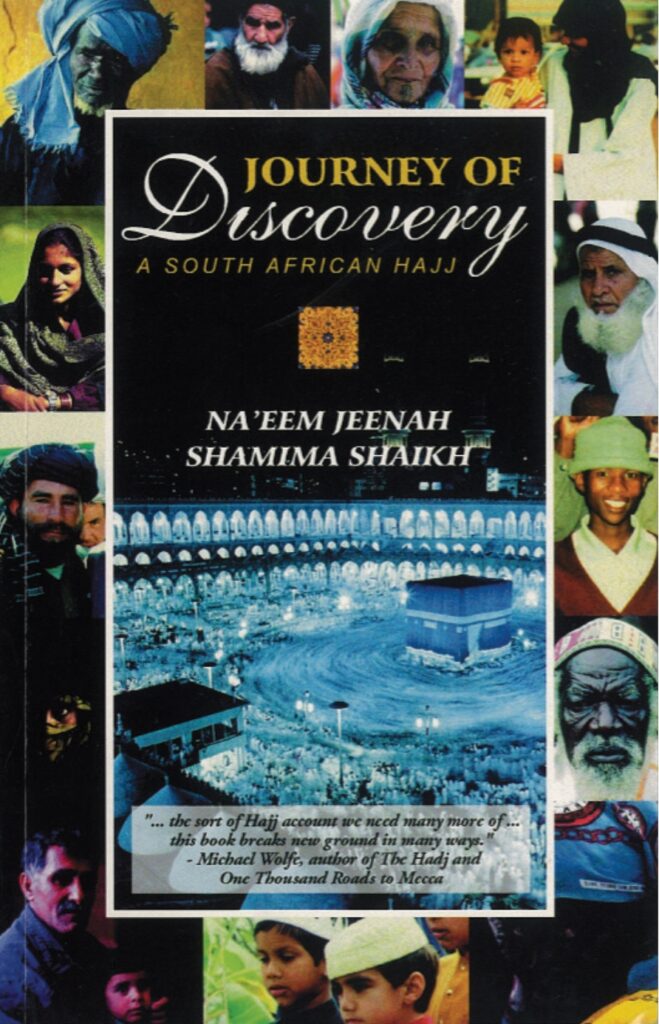
  • Journey of Discovery: A South African Hajj

    By Na’eem Jeenah and Shamima Shaikh

    Published by Full Moon Press (2000), Cape Town, South Africa

    ISBN 0-620-26405-5

    Some comments about the book:

    Michael Wolfe

    Author of: The Hadj: An American’s Pilgrimage to Mecca and

    One Thousand Roads to Mecca: An Anthology of Pilgrim Travel Writing

    This is the sort of Hajj account we need many more of: an honest assessment of an experience shared by millions world-wide, which does not leave out the personal, but rather successfully reminds us that every pilgrim comes from somewhere, from a specific place, a particular family, a politics and a social point of view informed by Islam: in this case, South Africa. And how few books of any kind are written by a husband and wife who enjoy, respect and understand each other! This book breaks new ground in many ways. May other pilgrims follow its fine lead.

    Shamil Jeppie

    University of Cape Town

    I very much liked the whole thing. It is well written, clear, and captivating. The hajj came alive for me like no other description I’ve read before… I still wanted more when I closed the manuscript. Indeed, after each chapter I felt I wanted it to continue. I’m certain many other readers will respond in the same fashion… I thoroughly enjoyed it.

    Tamara Sonn

    College of William and Mary

    This is a unique book, actually groundbreaking in the field of Islamic studies. It is, on its surface, a personal story of a South African couple making their first pilgrimage to Makkah (Hajj) together. The authors are highly intelligent, well educated, slightly sarcastic, but very devout in a way that resonates with the faith of other young people throughout the world. But this book is more than the musings of young professionals on the meaning of a traditional ritual. The authors are South African activists struggling against apartheid and its aftermath. At the same time, Shamima and Na’eem grapple with gender and authority issues within Islam, especially as these issues question their social activism. Their book is therefore a focused story of Muslims committed to social reform and seeking to reconcile their activism with their deeply traditional faith. The story is made all the more poignant knowing that the trip is both the vehicle of spiritual discovery and the couple’s last trip together. Shamima died a few months later, leaving Na’eem to bring up their two young sons and make sense of their journey(s) together. There have been several books published recently on the Islamic pilgrimage: F.E. Peters, The Hajj: The Muslims’ Pilgrimage to Mecca and the Holy Places (Princeton, 1994); I.R. Netton, Seek Knowledge: Thought and Travel in the House of Islam (Curzon, 1966); and most recently, Michael Wolfe, ed., One Thousand Roads to Mecca (Grove, 1997). None of these, however, has the accessibility and personal appeal that Na’eem and Shamima have achieved in their Journey of Discovery. More importantly, none has incorporated the meaning of the pilgrimage into the spiritual and social landscape of Muslim life in the contemporary world, as theirs has. This book is easy to read, yet highly charged intellectually and emotionally, making it a good choice for undergraduate classroom discussion. It is also attractive to a non-specialist readership.

    Laila Al-Marayati

    Chairperson, Muslim Women’s League, USA

    The style is open and inviting and made me feel as if I had accompanied [the] group on its journey. [The] discussion of the significance of the rituals from a spiritual and meaningful Islamic point of view was very enriching. I felt I was seeing things that I already knew in a different and more compelling light. The humor was apparent throughout and is something that is sadly lacking in other books as it seems that we Muslims are unable to laugh at ourselves in general. Several (South African) references were extremely relevant and eye-opening for those of us who were not present during the resistance to apartheid.

    from the ‘Foreword’ by Amina Wadud

    Virginia Commonwealth University

    In sharing their Hajj experience Shamima and Na’eem allow us to witness how Islam as engaged surrender is put into action. For one thing, we are reminded that the struggle goes on at multiple levels. At times we are witnesses to their joy and at other times to their frustrations. We witness small victories and defeats. The Hajj for Na’eem and Shamima is full of the ups and downs of the life journey. In this context Islam as engaged surrender reminds us that we must make our path as we walk it.

    from the biographical chapter by Abdulkader Tayob

    University of Cape Town

    [Shamima] and Na’eem seemed to have discovered different levels of their relationship with God, community and nation. This profundity certainly oozes through the pages of this text as the Hajj brings together their spirituality and their social conscience.

    Read the following reviews of Journey of Discovery:

  • Shamima Shaikh y La Locura de la Igualdad

    Publicado por Vanessa Rivera de la Fuente
    el agosto 21, 2020

    En el mes de la mujer sudafricana, destacamos la contribución de las mujeres que muestran un compromiso incondicional con el avance de sus comunidades. Esta semana conocemos a Shamima Shaikh, una mujer que se definia a si misma como “una dueña de casa” y fue una feminista adelantada a su tiempo, cuyo nombre ha quedado relegado en la historia de la lucha anti apartheid de Sudáfrica

    https://sister-hood.com/wp-content/uploads/2019/07/scan0017_colourcorrected-1140x660.jpg

    El nombre de Shamima Shaikh es desconocido en este lado del mundo, acostumbrado a relacionar Sudáfrica y las luchas sociales de ese país con Nelson Mandela. La figura de Shamima ha sido cubierta por el velo del segundo plano que la historia reserva a las mujeres, e incluso en su país de origen, pocos saben que fue una de las más activas defensoras de los derechos de la mujeres y una aliada pionera de la lucha contra el apartheid. Periodista, productora de radio, creadora de movimientos, abre caminos, activista sin miedo y sobre todo, como ella misma se definía: “Una dueña de casa”.

    En junio de 1998 Shamima perdía la batalla contra el cáncer de mama; una batalla que, como todas las que encontró en su vida, peleó con todas sus fuerzas hasta el final. Había nacido el 14 de septiembre de 1960 en la actual Provincia de Limpopo, Sudáfrica. fue la segunda de seis hermanos.

    Shaikh estudió en la Universidad de Durban-Westville, que en ese tiempo estaba reservada, en virtud de las leyes del apartheid de Sudáfrica, para los estudiantes de ascendencia india. Se licenció en Artes con especialización en Árabe y Psicología. Ella fue una activista que hizo su camino desde y por la base social. Durante esos politizados años, se involucró en la Organización Popular Azanian (AZAPO) que denunciaba el racismo y la opresión en los ambientes universitarios.

    El 4 de septiembre de 1985, fue detenida por distribuir panfletos que llamaban al boicot de las empresas que eran propiedad de los blancos en la ciudad de Durban. El boicot había sido organizado por la Federación de Sindicatos de Sudáfrica (FSS). Shaikh pasó las siguientes horas encerrada en la comisaría con el presidente de la MSA, Na’eem Jeenah. Esta fue la primera vez que se vieron. Se casarían 2 años más tarde.

    Durante la década de los 90, Shamima Shaikh se involucra apasionadamente en distintas acciones contra el apartheid político. En 1993 Shaikh fue elegida Presidenta Regional para el Transvaal del Movimiento de Jóvenes y miembro de su nivel ejecutivo nacional, siendo la segunda mujer en ocupar esa posición.

    El indómito espíritu de Shamima no pasó desapercibido para el patriarcado de su tiempo. Cómo toda mujer rebelde y desafiante, Shamima fue objeto del escarnio y la patologización de su resistencia feminista por parte de una hegemonía para la cual, el silencio y la aceptación son aún la norma deseable para las “Buenas y Maravillosas Mujeres”.

    Así es, debido a su apasionado compromiso con las causas que transitaba, la gente comenzó a llamarla “La Loca Shaikh”. Y le hicieron la vida imposible. Hubo quienes llegaron a reclamarle a su marido por no “controlar” a su mujer. Hubo quienes celebraron que tuviese cáncer, el castigo merecido por alterar “el orden de las cosas”. “Está loca” decían aquellos que piensan que la lucha por la igualdad de las mujeres y la justicia social es una locura.

    Su esposo respondió a las quejas con estas palabras:

    “Si ella está loca, que Dios nos permita ser así de locos, aunque sea sólo un poco locos”

    La “Loca Shaikh” fue una pionera de su tiempo en materia de activismo y encontramos en su quehacer, mucho de lo que hoy teorizamos con conceptos que ella no conoció.

    Habló de las opresiones múltiples de las mujeres y la influencia de la raza en profundizar esa opresión, lo que hoy llamamos Interseccionalidad.

    Se unió en Sororidad al movimiento de hombres y mujeres negras contra el Apartheid, siendo ella de un origen social y étnico diferente y, por lo tanto, con un status distinto en el sistema.

    Desde la radio comunitaria que fundó, en plenos años ochenta, fomentó la participación de las mujeres en medios de comunicación y se dio el espacio para problematizar la prostitución y el aborto desde una perspectiva de género.

    Promovió la justa distribución de las cargas domésticas y familiares, lo que hoy llamamos Corresponsabilidad.

    Shamima fue una mujer que se sintió sudafricana y universal en un tiempo en que la raza definia el valor de las personas. Fundó una radio comunitaria y un periódico cuando nadie esperaba que las voces de las mujeres se alzaran en la esfera pública. Llevó su locura a un punto virtuoso, desafiando a quienes pensaban que colgarle esa etiqueta la avergonzaría. Fue una dueña de casa que hizo de lo personal algo fuertemente político. Fue una madre que heredó a sus hijos la semilla del compromiso social.

    Shamina Shakih fue la clase de feminista que no acomoda el tono de su voz al oído de los opresores, no se detiene ante los obstáculos y no negocia sus convicciones. Una joya rara en ese tiempo y todavía hoy, cuando la palabra, los sentimientos y hasta los activismos, parecen liquidos.

    Lamentablemente, el peso de la historia, que generalmente se inclina hacia las voces, figuras, representaciones y hazañas masculinas, ha dejado el legado de Shamima en segundo plano. Si bien, cada año, desde su fallecimiento, sus amigas y cercanos se juntan en el día de su cumpleaños para recordarla, no fue sino hasta el 2019 que se publicó una antología que recuerda su persona, sus luchas y sus ideas.

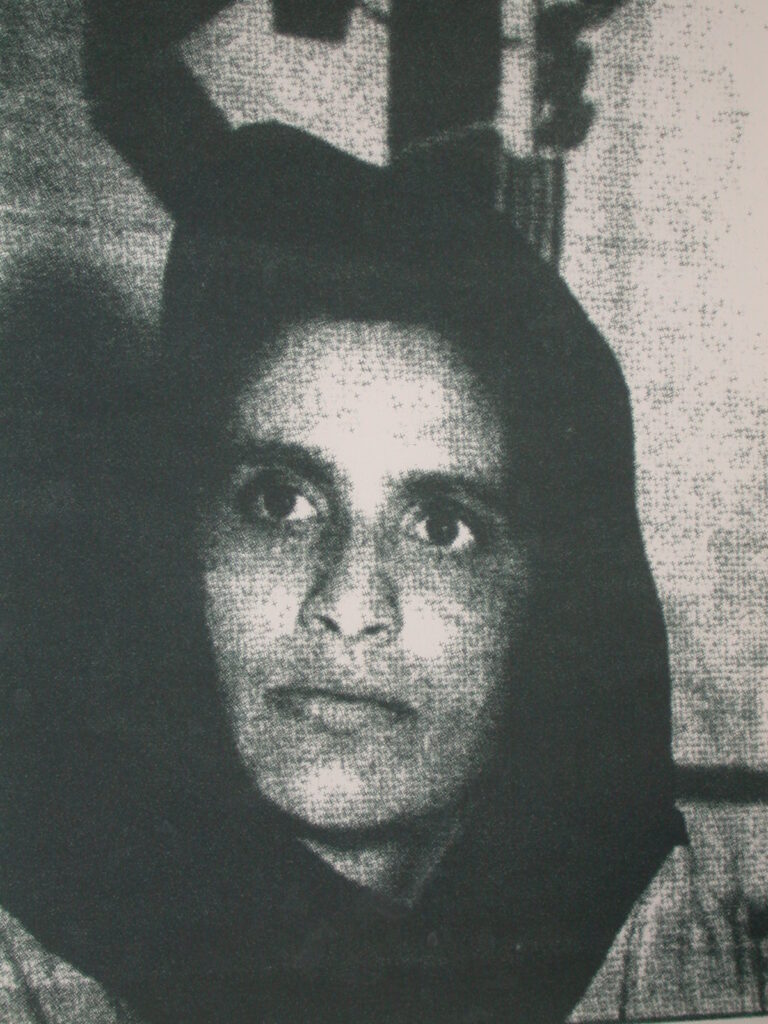
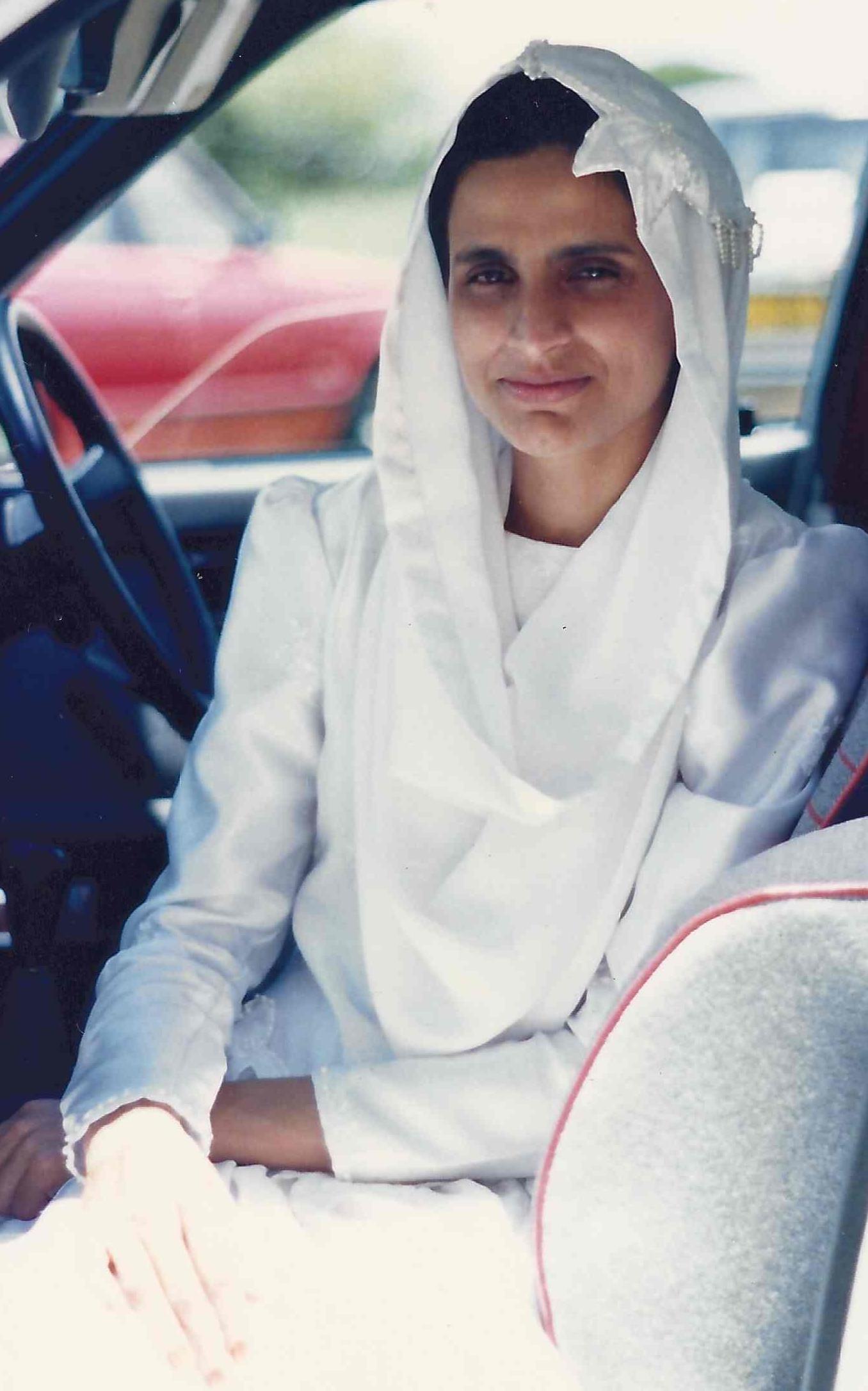
    El trabajo de recopilación fue arduo ya que la mayoría de las fuentes eran testimoniales y hay pocos recursos documentales disponibles. Su mejor foto, en términos de calidad gráfica, es la del día de su boda, que hace la portada del libro de conmemora su vida. En ella nos mira con serena complicidad. Su mirada es fresca, cálida, reposada y eterna.

    Su alma descansa con la paz de la labor cumplida. Que su nombre permanezca en nuestra memoria y su vida se haga luz en la historia. Que su espíritu indomable nos inspire a ser mujeres a quienes ninguna estructura podrá someter, porque somos terremoto; mujeres a quienes una hoguera no puede quemar, porque somos el fuego; mujeres a quienes el opresor no puede callar, porque somos el trueno, suficientemente locas, alegre y orgullosamente locas para reclamar la parte del cielo que nos pertenece, aquí y ahora.


  • Shamima Shaikh 1960-1998 – Sister-Hood

    sister-hood magazine. A Fuuse production by Deeyah Khan.


    http://sister-hood.com/sister-hood-staff/shamima-shaikh-1960-1998/


    11th July 2019 | by sister-hood staff |  


    They claim that Islam gave women the right to equal education and civil and economic rights, but at the end of their analysis they come to the conclusion that a woman’s place is in her husband’s home and that she should be obedient to him and the male elite. How on earth can she enjoy any liberty if she lacks knowledge, is confined to her home and has minimal control over her life? – Shamima Shaikh


    Shamima Shaikh was South Africa’s most well-known Muslim women’s rights activist. She was a newspaper editor, a radio producer, and an activist against apartheid who ultimately identified herself as an Islamic feminist. Her legacy lies in promoting  egalitarianism within Islam in South Africa.

    Shamima was born in Louis Trachardt, in what was to become the Limpopo province. She spent most of her life in Polokwane (then called Pietersberg). Her father was a teacher and a committed Muslim, who had travelled to Saudi Arabia in order to study Arabic. Shamima supported her mother and took care of her younger siblings. Her sister Fatemah described her as ‘like sparkling, shimmering shards of light that danced around all of us – optimistic, energetic, and always smiling.’

    Shamima attended Taxila primary and secondary schools, before attending the University of Durban-Westville, an establishment created under the apartheid system to cater to the Indian population. Here, she developed the beginnings of a political consciousness, joining a movement committed to Black liberation following the ideals of Steve Biko, subsequently  promoting consumer boycotts of companies that abused their workforce. It was during this campaigning work she met her future husband Na’eem Jeenah. Their relationship began when were arrested together whilst distributing pamphlets. They were held in the CR Swart Square police station in Durban and interrogated. Shamima boldly refused to answer any questions. 

    Their first child, Minhaj, was born in 1988. Shamima ended her career as a teacher in order to become a full time mother and social activist. With Shamima’s support, Na’eem became the general secretary of the Muslim Youth Movement and the editor of the progressive Muslim monthly magazine Al-Qalam. Later in life she would go on to take  on the role of chief editor herself. 

    She was also a member of the National Executive Committee of the Muslim Youth Movement, and chair of the Muslim Community Broadcasting Trust. She also spent time visiting Muslim women in impoverished townships, talking with them about Islam, women’s lives, and women’s rights.

    She campaigned for Muslim women’s right to access to their own places of worship, calling for equivalent access to mosques as men – an irony in a country deep in debate about the prejudice and separatism. In 1994, she led a rebellion of Muslim women at the 23rd Street Mosque in Fietas. She and other women had been offering Ramadan prayers upstairs in the mosque, but on the 27th day of Ramadan – the holy night of Laylat al-Qadr – they found that their space had been commandeered by men, and that they had been relegated to a tent outside the mosque. The women reclaimed their space and Shamima recited the taraweeh prayer herself. 

    Her main mission was campaigning for Muslim women’s rights within their own community. The new South African constitution granted legitimacy to Muslim marriages, which while welcome to the Muslim community, raised the issue of patriarchal interpretations of shari’a which would disadvantage women. She refused to accept any reliance on male interpretations of Islam, or men speaking on women’s behalf. She focussed upon finding support for feminist ideals in Islamic texts and history instead.

    In a radio interview in 1995, Shamima criticised the proposed Muslim Personal Law Bill which was being proposed, expressing concerns about men’s ability to unilaterally divorce their wives. For this, she received a stern caution from the United Ulama Council of South Africa, informing her that she was ‘in gross violation of Islamic principles’. She responded by outlining her vision of an Islam adapted to the needs of the modern world, stating: ‘We were never meant to impose those laws on our context, rather, we are meant to apply the eternal, universal and Divine Qur’an to our context.’ 

    She was rudely rebuffed by the Ulama, which accused her of ‘gross ignorance and an arrogant refusal to accept the truth.’ Unabashed, she continued to agitate for a more egalitarian vision of Islam. 

    In 1997, she started a radio station on behalf of the Muslim Youth Movement, which broadcast her message across Johannesburg. In the same year, she performed hajj with her husband, co-writing a book about their experiences of the pilgrimage.

    Shameema had been diagnosed with breast cancer in 1994. Despite an arduous regime of chemotherapy, it spread to her bones. Her final public engagement was delivering a speech on women and Islam at the 21st Islamic Tarbiyyah Programme, organised by the Muslim Youth Movement just a few weeks before her death. At her request, in a final defiance of patriarchal traditions, her funeral prayers were read by a woman, Farhana Ismail, and her funeral procession involved both women and men. 

    Shamima Shaikh was a pioneer and an inspiration to Islamic feminists, through her project of interpreting Islam through feminist hermeneutics. She embodied a passion for justice which was expressed through her strong Muslim identity, said to be based in her belief that she was only accountable to God himself.


    Further reading:

  • The legacy of Shamima Shaikh for the Muslims of South Africa

    The legacy of Shamima Shaikh for the Muslims of South Africa

    scan0002

    https://issuu.com/muslimviews/docs/mv_may_2017

    By Vanessa Rivera de la Fuente, Muslim Views, May 2017

    THE ninth of Ramadaan will be 20 years of the death of Shamima Shaikh.


    She is currently known worldwide for being the most prominent human rights activist and Muslim feminist in South Africa. Twenty years after her death, what is the major lesson that her short but fruitful life left to us Muslims?

    Allah in the Holy Quran commands every Muslim to embrace an active commitment to what is fair and good, and says in Surah An-Nisa:135: ‘O you who have imaan, stand firm in establishing justice, and be witnesses for Allah, even if it be against yourselves or parents and relatives.’

    If Islam is peace then Islam is justice because one can’t exist without the other. It is no coincidence that this mandate appears in the surah of women. Allah speaks there about us and to us.
    Women, thanks to Quran, are the beneficiaries of justice and equality of the revelation and, at the same time, we are called to be active promoters and builders of social justice.

    As a Muslim woman and activist for gender justice, in the conviction that Islam contains a message of equality and compassion for all human beings, the most important legacy that Shamima’s life left is the fearless commitment to live for standing up for justice, even if this has negative consequences for us.

    Shamima Shaikh was a Muslim who firmly stood up for justice, defying the religious status quo of her time.

    As a believer, she did not hesitate to make visible the inequality that affects women in our communities, as widely spread and contrary to the divine word of Allah.

    She said: ‘Despite the overwhelming and strong position of Muslims that Islam liberated women 1 400 years ago, you still find there’s a problem.

    ‘Some thought and practice within Muslim society does not reflect this conviction, giving rise to the accusation that Islam oppresses women, to which the Muslim community reacts emotionally with denial and animosity, without reflecting inwardly and addressing the existing problems.’

    Shamima was a pioneer in the promotion of inclusive mosques, introducing the campaign ‘Women in the Mosque’.

    She firmly believed that our presence in these spaces was necessary and indispensable, as she stated: ‘It is important for women to be at mosques because they are the most important centres of Islam. Decisions are taken, direction is given. It is where people meet to pray together and it promotes consultation.’

    She embodied the commitment for justice that must inspire every Muslim in our daily lives but her own community punished her for this.

    She was alienated, mistreated and labelled as mad for following the divine guidance revealed by Allah so that humanity could live in justice, ensuring equal dignity for all people.

    According to the testimony of relatives, an Islamic authority that proudly claimed to be Muslim publicly celebrated that Shamima suffered from cancer, saying that it was a punishment from God for her advocacy for gender justice in the framework of Islam.

    Shamima’s legacy is much more relevant nowadays, in a time when humans’ lives seem to matter less, making it much more necessary for men and women of faith to show a real, proactive and unconditional commitment to work for the restoration of the dignity of every human being.

    How many of us, today, say we are believers in the Quran and are willing to raise our voices to denounce injustice if it involves receiving disapproval?

    Are we ready to claim back dignity for those in pain when it demands more than the ‘minimum necessary’?

    Are we standing up for justice beyond pretty statements? Are we ready, as Muslims, to be called crazy, mad or troublemakers for reporting abuse?

    May her unbreakable faith inspire us to be of those believers that no structure can subject because we are an earthquake; freedom fighters that no fire can burn because we are the fire; Muslims who the oppressor could not silence because we are the thunder; crazy enough, blissfully and proudly crazy to stand up for justice, even against ourselves.

    This 9th of Ramadaan, Saturday, June 3, at 3:00 p.m. in Women Zone Artscape, we will remember Shamima Shaikh.

    We will celebrate her life, her legacy and her courage with the respect, love and compassion she deserves.

    May her name remain in our memory and her life be a light that guides us in establishing the justice and peace of Islam.

    Vanessa Rivera de la Fuente, a Chilean Muslim, is a social-educator and communication specialist, journalist and research consultant. She is also an-independent scholar on Women’s Studies, Religion and Politics.

  • Recalling the Courage of Shamima Shaikh

    If this be Madness

    https://feminismandreligion.com/2017/05/27/shamima-shaikh/

    By Vanessa Rivera de la Fuente

    Shamima Shaikh’s name may be unfamiliar for you and many who are not deeply informed about Islam and gender issues in South Africa or who tend to identify Muslim women and/or activism for women’s rights in Islam with the Arab region. Why should you know about her? Because Shamima Shaikh was one of the most notable Muslim anti-apartheid activists and advocates for the rights of Muslim women in her country—a prominent feminist, journalist, radio producer, movement builder, trailblazer, and fearless activist.


    This year—2017—marks the 20th anniversary of her death, and I think it’s a special occasion to recall her brave legacy, not only because twenty is a special number. In the context of violence against women in South Africa and worldwide—in particular the violence against and exclusion of Muslim women in Syria, Palestine, Yemen, and Saudi Arabia—as well as the gendered Islamophobia that targets our sisters in Europe, claiming the courage and spirit of resistance of Shamima Shaikh as part of our ethos as women living in a patriarchal world that hates us is absolutely necessary.

    Shamima Shaikh was an activist who made her way from and towards the grass roots; apartheid, poverty, inequality, and discrimination against women were some of the issues that mattered to her. During the difficult years of racial segregation in South Africa, she got involved in the Azanian People’s Organization (AZAPO), denouncing racism and oppression in university environments. According to her husband, Na’een Jeenah:

    Shamima’s mission in life was to struggle for justice; whether against white racists propping up apartheid or Muslim misogynists who wanted to keep women in their place.

    Shamima took her activism to the heart of the Islamic community. Courageously advocating for the right of Muslim women to have a voice and to participate on equal terms with men in community life, she became the first National Coordinator of the Muslim Youth Movement (MYM) Gender Desk, where she organised workshops, seminars, and campaigns. She was a pioneer of her time in promoting inclusive mosques; she firmly advocated that our presence in these spaces was indispensable, as she said:

    Mosques are the most important centres of Islam. Decisions are taken, direction is given. It is where people meet to pray together and it promotes consultation.

    She did believe that Islam holds a message of equality and social justice, aimed especially at women, so the inequality that affects us through society was one of her major concerns. She even had the “audacity” to be vocal on controversial issues that are absent from the scope of Muslim feminists nowadays, albeit they are part of the painful reality of many Muslim women along the world, like criminalized abortion and the sexual exploitation of women through prostitution.

    The struggle against patriarchy was parallel with the fight against cancer. In 1994, already diagnosed with the disease, she was appointed editor of the newspaper Al-Qalam, which became the communication channel of progressive Muslims in South Africa. On December 22, 1997, Shaikh completed her final public engagement with the presentation of the lecture: “Women and Islam: The Ideological Struggle”. Seventeen days later, she returned to God.

    Claiming Back her Legacy for All

    It is possible to find online some magazine articles written during the last decade that refer to different aspects of Shamima Shaikh‘s life. Since 2014, memorial lectures have been held in different cities of South Africa to honor her memory: Kecia Ali, Sadiyya Shaikh, and Fatima Seedat have addressed the figure and activism of Shamima Shaikh in 2014, 2015, and 2016 respectively.

    Inspired by these efforts, several months ago I proposed to feminist comrade Shehnaz Haqqani from the United States, a collaboration with me in crafting a book on Shamima Shaikh. Na’eem Jeenah, from South Africa, who was married with Shamima, joined us later.

    The book we are working on, which will be launched this year, is an anthology of essays to mark the 20th anniversary of her passing. It will celebrate her legacy, life, and courage and highlight the struggles and issues that she believed were important for leading humankind towards more inclusive and compassionate societies. Contributors from South Africa and all over the world include those who shared their life with Shamima, activists inspired by her struggles, and scholars interested in highlighting the central tenets of her political thinking on women’s rights and social justice.

    As the coordinator of this anthology, let me say that we are humbled by our contributors’ generosity in adding their voices to this book. We are pleased with the diversity gathered around Shamima’s memory: Remarkable scholars like Margot Badran and Kecia Ali, together with Fatima Shaikh (Shamima’s sister), activist Sirin Adlbi Sibai from Syria, or an emergent voice in Islamic Feminism such as Lailatul Fitriyah from Indonesia, are some of those who have embraced our vision of this work as a primordial act of love, gratitude, and sisterhood towards her.

    We are guided by the deep conviction that Shamima Shaikh was a woman whose life is a testimony for all times and for all struggles for social justice. She was anti-apartheid; she devoted a big part of her life to making sure there will be room for everyone in her society. This is an ethics worthy to learn and practice. Her legacy deserves to be known, embraced, and owned by all, beyond the limits of our religious, ethnic, and national identities. She was a Muslim, Indian, and South African feminist, but her legacy is not property of Indians South Africans Muslims  Feminists. Any claim on exclusivity in this regard dishonors the very memory of Shamima and expresses an egoism that is alien to the basic values of feminism. What a sister did, does, or will do for our liberation is an inheritance for all women.

    We celebrate the interest that her life has aroused. Along with our book, there is a biography in process to be released, maybe this year too, by a South African journalist.

    As Thandile Kona, president of Muslim Youth Movement, which hosts the annual Shamima Shaikh Memorial Lecture,  said:

    In celebrating and memorialising Shamima Shaikh, we also remind ourselves that the struggle for an egalitarian society has not ended, it continues, and needs each one of us to put our shoulder to the wheel of justice as it trudges along the path of history.

    Her life is proof that Islam contains a message of equality for all people and is a path and a perspective useful to reclaim and restore justice wherever it is necessary. The courage of a woman who passionately and fearlessly challenged the patriarchy of her time should be known everywhere a woman rises today to claim her dignity; as long as misogyny preys upon us, we will always need examples to inspire us.

    Vanessa Rivera de la FuenteVanessa Rivera de la Fuente works in community development, gender equality, and communication for social change. She has led initiatives for women’s empowerment in Ecuador, Peru, Argentina, Morocco, and South Africa. As a Gender Justice advocate with a broad scope of interests, she is a social and digital entrepreneur committed to the strengthening of grass roots organizations and the development of an independent pathway of thinking, research, and academic writing around Gender, Politics, and Religion. Loyal lover of books, cats and spicy chai.

  • Recordando a una Guerrera Feroz y Compasiva

    https://mezquitademujeres.org/2016/06/14/shamina-shaikh/

    by Vanessa Rivera de la Fuente

    15 June 2016

    Cuando hablamos de Feminismos Islámicos y de activismos por los derechos de la mujer en el Islam, hay algunos nombres que tienen un lugar bien ganado en el imaginario colectivo de las feministas: Amina Wadud, Fatima Mernissi, Shirin Ebadi, Asma Lamrabet, Kecia Ali, entre otras.  La mayoría de ellas pertenecen al mundo académico. A través de sus libros, ellas han instalado la causa del Feminismo Musulmán como una lucha legitima y visible, tanto dentro como fuera del Islam.


    Aisha Bewley en su obra “Islam, el Poder de las Mujeres” dice que las mujeres musulmanas destacaron en la historia de la humanidad, especialmente, como guerreras. Y si bien esta autora recoge una lista de nombres de hace mil años atrás, yo creo con toda convicción que Shamima Shaikh fue una de las más feroces, incansables, compasivas y valientes guerreras musulmanas de nuestro tiempo.

    El nombre de Shamima es desconocido en este lado del mundo, acostumbrado a relacionar el feminismo islámico con mujeres árabes. Shamima Shaikh fue la más famosa defensora de los derechos de la mujer musulmana de Sudáfrica, notable feminista islámica de origen indio, periodista, productora de radio, creadora de movimientos, abre caminos, activista sin miedo y sobre todo, loca, muy loca. Suficientemente loca para enfrentarse a las patriarquías de su tiempo y batallar hasta el final por la yihad de género en la que creía.

    Un día como hoy, el noveno del mes de Ramadán de 1998 (que este año corresponde al 15 de junio) Shamima perdía la batalla contra el cáncer de mama; una batalla que, como todas las que encontró en su vida, peleó con todas sus fuerzas hasta el final. Había nacido el 14 de septiembre de 1960 en la actual Provincia de Limpopo, Sudáfrica. fue la segunda de seis hermanos.

    Shaikh estudió en la Universidad de Durban-Westville, que en ese tiempo estaba reservada, en virtud de las leyes del apartheid de Sudáfrica, para los estudiantes de ascendencia india. Se licenció en Artes con especialización en Árabe y Psicología. Ella fue una activista que hizo su camino desde y por la base social. Durante esos politizados años, se involucró en la Organización Popular Azanian (AZAPO) que denunciaba el racismo y la opresión en los ambientes universitarios.

    El 4 de septiembre de 1985, fue detenida por distribuir panfletos que llamaban al boicot de las empresas que eran propiedad de los blancos en la ciudad de Durban. El boicot había sido organizado por la Federación de Sindicatos de Sudáfrica (FSS) con el apoyo de la Asociación de Estudiantes Musulmanes de Sudáfrica (MSA). Shaikh pasó las siguientes horas encerrada en la comisaría con el presidente de la MSA, Na’eem Jeenah. Esta fue la primera vez que se vieron. Se casarían 2 años más tarde.

    Durante la década de lo 90, Shamima Shaikh se involucra apasionadamente en distintas acciones contra el apartheid político y fue elegida en cargos de representación del Movimiento de Jóvenes Musulmanes (MYM). En 1993 Shaikh fue elegida Presidenta Regional para el Transvaal del Movimiento de Jóvenes Musulmanes y miembro de su nivel ejecutivo nacional, siendo la segunda mujer en ocupar esa posición.

    “Esa Loca Mujer Shaikh”

    Shamima fue una pionera de su época en la promoción de Mezquitas Inclusivas, al introducir la Campaña “Mujeres en la Mezquita”. Ella creía firmemente que nuestra presencia en dichos espacios era necesaria e indispensable:

    Es importante que las mujeres estén en las mezquitas porque son los centros más importantes del Islam. Ahí se toman las decisiones y se definen directrices. Es el lugar donde la gente se reúne para orar juntos y se promueve la consulta.

    El indómito espíritu de Shamima no pasó desapercibido para el patriarcado de su tiempo. Cómo toda mujer rebelde y desafiante, Shamima fue objeto del escarnio y la patologización de su resistencia feminista por parte de una hegemonía para la cual, el silencio y la aceptación son aún la norma deseable para las “Buenas y Maravillosas Mujeres”.

    En efecto, el 27 de Ramadán de 1994  se produjo el evento a partir de cual sería estigmatizada como “Esa Loca Mujer Shaikh”.

    Al llegar a la mezquita de Johannesburgo con el objetivo de participar en las oraciones rituales de esa noche, Shamima se encuentra con que el espacio designado tradicionalmente para las mujeres había sido ocupado por los hombres y a ellas, se las había “lanzado” a rezar a unas carpas ubicadas en la calle.

    Esta práctica, común incluso hoy en día en muchas mezquitas, movió a Shamima a reclamar los derechos que le correspondían en igualdad con todos los y las creyentes de acuerdo al Corán.

    Acompañada por un pequeño grupo de mujeres de las carpas instaladas fuera, Shamima hizo intentos por reclamar su legítimo espacio, lo cual la hizo acreedora del rencor de algunos miembros de la comunidad, que consideraban la presencia de las mujeres innecesaria.

    Motivada por este evento, Shaikh forma, eventualmente, una congregación alternativa, de corte progresista y con perspectiva de igualdad de género.

    Como una memoria del futuro, el compromiso de Shamima con la Yihad de Género, sirve de eco a los esfuerzos realizados hoy en día para instalar mezquitas inclusivas, como las que existen en Canadá, Estados Unidos, Francia, Alemania, Holanda y Reino Unido, que ofrecen espacio a todos los y las musulmanes – joven o viejo, hombre o mujer, heterosexual o gay – para orar lado a lado y participar en igualdad de condiciones.

    La lucha contra el patriarcado, corria a la par con la lucha contra el cáncer. En 1994, ya diagnosticada con la enfermedad, es nombrada editora del periódico Al-Qalam, que se convierte en el canal de comunicación de los musulmanes progresistas de Sudáfrica. En 1997 realiza junto a su esposo, familia y amigos, el Hajj o Peregrinación a la Meca. A su regreso, la pareja escribiría un libro “Journey of Discovery: A South African Hajj”, publicado en el año 2000. El 22 de diciembre de 1997, Shaikh completó su compromiso público final con la presentación del ensayo: “La mujer y el Islam – La lucha de género en Sudáfrica: Una batalla ideológica”.

    En el contexto actual, en que la islamofobia se ha vuelto un problema de género que tiene su contraparte en las narrativas misóginas de quienes se dicen representantes y voceros “oficiales” del Islam, las palabras de Shamima están vivas, actuales y vigentes:

    Después de 1400 años, parece que todavía hay confusión y conflicto en cuanto a la situación de la mujer en el Islam y el papel que juega el género en el valor de un individuo en términos de estatus, posición, potencial y constitución. A pesar de la posición dominante absoluta y fuerte de los musulmanes de que el Islam liberó a las mujeres hace 1400 años, todavía hay un problema. Algunos pensamientos y prácticas dentro de la sociedad musulmana no reflejan esta convicción, dando lugar a la acusación de que el Islam oprime a las mujeres, a lo cual la comunidad musulmana reacciona emocionalmente con negación y animosidad, sin reflexionar introspectivamente y hacer frente a los problemas existentes.

    17 días después, volvía a su Creador. Una de las cuatro oraciones fúnebres realizadas en su nombre, fue dirigida por su amiga Farhana Ismail, con mujeres y hombres – según la petición de Shaikh. Además, a sus servicios funerarios en una Mezquita de Johannesburgo y en la Mezquita Claremont en Ciudad del Cabo, así como a su entierro, asistieron muchas mujeres.

    Su Legado para Nosotras

    La vida de Shamima Shaikh es una prueba de que el feminismo islámico contiene un mensaje de justicia para todas las personas; es un camino y una perspectiva útil para restablecer la justicia de género siempre que sea necesario.

    Shamima nos enseñó que las feministas musulmanas no estamos limitadas por el marco de nuestra fe y nos ponemos de pie juntos a todos los oprimidos y en contra de todos los opresores. Ella rompió los estereotipos que aún persisten sobre las mujeres musulmanas en general y las mujeres indias en particular.

    En palabras de Zakiyya Ismail, de Sudáfrica

    Si hubo alguien que fue modelo de como ser fuerte y compasiva al mismo tiempo fue Shamima. Sobre todo fuerte, algo que entre las mujeres indias no es tan común, ya sabes, esa crianza para ser “siempre dulce”… Hace ya 18 años que nos dejó pero su influencia sigue vigente..

    La lucha incansable de Shamina fue una yihad hecha de ferocidad y compasión, que deja muy claro que las activistas podemos y debemos asumir una opción radical e inquebrantable por la justicia. Para las feministas musulmanas, vivir según los valores del Islam, es una vida entregada a la búsqueda, construcción y defensa de la justicia, en cada acción y en cada palabra, con misericordia para todos los seres de la creación. Una lucha dada sin vergüenza, sin miedo y sin descanso, incluso si esto trae consecuencias negativas para nosotras mismas, como ser tachadas de locas.

    Desde la perspectiva del tiempo, Shamina Shakih fue la clase de feminista que, personalmente, yo echo mucho de menos en los activismos de hoy en día: La que no acomoda el tono de su voz al oído de los opresores, no se detiene ante los obstáculos y no negocia sus convicciones.

    Su alma descansa con la paz de la labor cumplida.

    Que su nombre permanezca en nuestra memoria y su vida se haga luz en la historia.

    Que su espíritu indomable nos inspire a ser mujeres a quienes ninguna estructura podrá someter, porque somos terremoto; mujeres a quienes una hoguera no puede quemar, porque somos el fuego; mujeres a quienes el opresor no puede callar, porque somos el trueno, suficientemente locas, alegre y orgullosamente locas para reclamar la parte del cielo que nos pertenece, aquí y ahora.

    Que la Divinidad nos bendiga con más guerreras feroces y compasivas como Shamima Shaikh

    Amén.

     Visita el Sitio conmemorativo de Shamima Shaikh

  • Recalling the Legacy of a Fierce and Compassionate Warrior

    https://www.worldpulse.com/en/community/users/nasreenamina/posts/68019

    15 June 2016

    by Vanessa Rivera de la Fuente

    When we talk about Islamic Feminisms and activisms for women rights in Islam, there are some names that have a well deserved place in the collective feminist mind: Amina Wadud, Fatima Mernissi, Shirin Ebadi, Asma Lamrabet, Kecia Ali, among others. Most of them belong to the academic world. Through their books, they have installed the cause of Muslim Feminists as a legitimate and visible struggle, both inside and outside of Islam.

    Aisha Bewley in her book “Islam, the Power of Women” says that Muslim women excelled in the history of humanity, especially as warriors. And while this author includes a list of names of thousand years ago, I believe with all conviction that Shamima Shaikh was one of the most fierce, tireless, compassionate and brave Muslim warriors of our time.

    Shamima’s name is unknown on this side of the world, used to identify Islamic feminism with Arab women. Shamima Shaikh was the most famous advocate for the rights of Muslim women in South Africa, prominent Islamic feminist of Indian origin, journalist, radio producer, movement builder, trailblazer, fearless activist and, above all, crazy, very crazy. Crazy enough to challenge the patriartchy of her time and fight to the end for the Gender Jihad she believed in.

    On this day, the ninth of the month of Ramadan 1998 (This year June 15th) Shamima lost the battle against breast cancer; That battle she fought, like others in her life, with all her strength until the end. She was born on September 14, 1960 in the current province of Limpopo, South Africa; she was the second of six siblings.

    Shaikh studied at the University of Durban-Westville, Which at that time was reserved, under the apartheid laws of South Africa, for students of Indian descent. She graduated in Arts with a specialization in Arabic and Psychology. She was an activist who made her way from and towards the grass roots. During those difficult years, she got involved in the Azanian People’s Organization (AZAPO) denouncing racism and oppression in university environments.

    On the 4th September 1985, she was arrested for distributing pamphlets that called for a consumer boycott of white-owned businesses in Durban. The boycott had been called by the Federation of South African Trade Unions (Fosatu), the largest trade union federation in the country and supported by the Muslim Students Association of South Africa (MSA), which had organised this particular pamphlet blitz. Shaikh spent the next few hours locked up at Durban’s CR Swart Police Station (now Durban Central Police Station) with the president of the MSA, Na’eem Jeenah. This was their first meeting and they would marry 2 years later.

    “That Crazy Woman Shaikh”

    Shamima was a pioneer of her time in promoting Inclusive Mosques. She introduced the Campaign “Women in the Mosque”. She firmly believed that our presence in these spaces was necessary and indispensable:

    “It is important for women to be at mosques because they are the most important centres of Islam. Decisions are taken, direction is given. It is where people meet to pray together and it promotes consultation.”

    The indomitable spirit of Shamima didn´t go unnoticed by the patriarchy of her time. Like all rebellious and challenging women in history, Shamima was the subject of ridicule. Her feminist resistance was pathologized from that hegemony to which, silence and submissive acceptance are still the desirable norm for being a “good and wonderful woman”.

    Indeed, the 27th of Ramadan 1994 an event occurred from which she would be stigmatized as “That crazy woman shakih”.

    Upon arriving at the mosque in Johannesburg with the aim of participating in the ritual prayers that night, Shamima found that the space traditionally designated for women had been occupied by men and then, females have had “located” to pray to some tents on the street.

    This is a common practice, even today, in many mosques. Shamima moved to claim the right she was entitled to equally with all the believers and according to the Quran: The right to pray in the Mosque.

    Accompanied by a small group of women from tents set up outside, Shamima made attempts to reclaim their legitimate space, causing resentment from some members of the community, who thought the presence of women was unnecessary.

    Encouraged by this event, Shaikh formed, eventually, an alternative congregation, based in progressive values and with gender equality perspective.

    The commitment of Shamima to the Gender Jihad, served as echo for the efforts of today to install inclusive mosques, like those in Canada, the United States, France, Germany, Netherlands and United Kingdom, offering space to all Muslims – young or old, male or female, straight or gay – to pray and participate side by side on an equal footing.

    The struggle against patriarchy was parallel with the fight against cancer. In 1994, already diagnosed with the disease, she is appointed editor of the newspaper Al-Qalam, which becomes the communication channel of progressive Muslims in South Africa.

    In 1997 she performed with her husband, family and friends, the Hajj or pilgrimage to Mecca. Upon their return, the couple wrote the book “Journey of Discovery: A South African Hajj,” published in 2000.

    On December 22th in 1997, Shaikh completed her final public engagement with the presentation of the lecture: “Women and Islam – The Gender Struggle in South Africa: The Ideological Struggle”

    In the current context, where Islamophobia has become a gender issue that has its counterpart in the misogynist narratives of those portrayed as “official” Islam’s spokespeople, Shamima’s words are alive, essencial and on point:

    “After 1400 years it appears that there is still confusion and conflict as to the status of women in Islam, and the role that gender plays in an individual’s worth in terms of status, position, potential and constitution. Despite the overwhelming and strong position of Muslims that Islam liberated women 1400 years ago, you still find there’s a problem. Some thought and practice within Muslim society does not reflect this conviction, giving rise to the accusation that Islam oppresses women, to which the Muslim community reacts emotionally with denial and animosity, without reflecting inwardly and addressing the existing problems.”

    17 days later, she returned to God. One of the four funeral prayers made in her name, was led by her friend Farhana Ismail, with women and men – according to the request of Shaikh. Her service at a mosque in Johannesburg and Claremont Mosque in Cape Town as wel her funeral, were attended by many women.

    Her Legacy for Women like Us

    Shamima Shaikh’s life is proof that Islamic feminism contains a message of equality for all people and is a path and a perspective useful to restore gender justice wherever is necessary.

    Shamima taught us that muslim feminists are not limited by the frame of our faith and stand up for all oppressed and against all oppressors. She broke the stereotypes that still persist about Muslim women in general and Indian women in particular.

    In the words of Zakiyya Ismail, from South Africa

    “If there was someone who was a model of how to be strong and compassionate at the same time was Shamima. Especially strong, which among Indian women is not as common, you know, that upbringing to be “always nice” … 18 years after she left us her influence still persists”

    The tireless struggle led by Shamina, was a fierce and compassionate jihad which makes clear that activists can and must take radical and unswerving option for justice. For Muslim feminists, to live according to the values of Islam, is a life devoted to the search, building and defense of justice, in every action and every word, with compassion for all beings of creation. A struggle to be adress without shame, without fear and without rest, even if it has negative consequences for ourselves, like be branded as crazy.

    From the perspective of time, Shamina Shakih was the kind of feminist that I, personally, miss in activisms today: The one which does not accommodate the tone of her voice to the ear of the oppressors, the one who does not stop at obstacles and the one who does not negotiate her convictions.

    May her soul rests in peace upon the work accomplished.

    May her name remain in our memory and his life be a light in our path through history.

    May her indomitable spirit inspires us to be those women that no structure can subject, because we are an earthquake; women that no fire can burn, because we are the fire; women who the oppressor could not silence, because we are the thunder; crazy enough, blissfully and proudly crazy to claim the part of heaven that belongs to us, here and now.

    May the Divinity bless us with more fierce and compassionate warriors as Shamima Shaikh

    Visit her conmemorative site HERE
     

  • Badass Ladies of History: Shamima Shaikh

    Badass Ladies of History: Shamima Shaikh

    “Never will I suffer to be lost the work of any of you, either man or woman. The one of you is of the other.” – Qur’an

    Shamima Shaikh was a woman whose life was dedicated to the struggle for justice, as well as continuing the deep commitment she held to upholding what she believed was the true message of the Qur’an: justice, peace and love. She considered herself an Islamic feminist, and worked within Muslim communities for women’s rights as both an activist and a journalist.


    She was born in 1960, in what was then known as Louis Trichardt (today known as Limpopo Province) in South Africa. She was the second oldest sibling out of six. Her parents, Salahuddin and Mariam Shaikh, raised her quietly in Pietersburg until she completed her matriculation in 1978. She would head off to the University of Durban-Westville, where she would spend a year, only to return to home for unknown reasons. She later returned to university, where she studied Arabic and Psychology, as well as awakening her desire to become involved in social justice. At the time of her return to university, the political climate of Durban-Westville had been charged, mostly due to the new apartheid reforms that had been passed in South Africa. She became involved in the Azanian People’s Organisation (AZAPO), where members had been working towards ending the oppressive environment in the academic environment. She would only stay with AZAPO for two years after completing her time at university and would go on to teach at primary and secondary schools located in Pietersburg, as well as marry her partner Na’eem.

    Shamima and her husband

    In 1989, Shamima and her family would move to Durban, where she would become involved with al-Qalam, the Muslim Youth Movement of South Africa‘s community paper, writing and editing for them. She began venturing into other opportunities with the organization, including her involvement with the 1989-1990 protests against the Tricameral Parliament election. At the time, the Tricameral Parliament was against any sort of visibility of political power for the Coloured and Indian racial minorities, and launched a campaign to keep the parliament “free” from any presence of these racial groups. The campaigns focused on ending the oppressive political regime, as well as causing awareness of the racism that defined much of the social climate in South Africa.

    Her organizing with the MYMSA caught the attention of many people, and she was elected the Transvaal Regional Chairperson of the Muslim Youth Movement. This defined her as member of its National Executive, and she became the second woman to hold this position. With her work continuing to get noticed, as well as gaining speed, Shaikh launched a “women in the mosque” campaign, in which women involved in MYM were organized to attend the tarawih prayer, a service only available to men. This protest launched her into the national limelight and caused clashes between her and many male members of the MYM.

    This, however, would not stop her. She became the first National Coordinator of the Muslim Youth Movement Gender Desk, an organization that spoke out on behalf of gender identity and women’s rights in Muslim communities. She would hold this leadership position till 1996, spearheading campaigns like the “Access to Mosques” for women and “Campaign for a Just Muslim Personal Law.” Her position also allowed her to become involved in the Muslim Forum on Elections, a group that was dedicated to helping Muslim communities access voting in the first democratic elections in the country. Her work continued on through many other organizations, such as the Muslim Community Broadcasting Trust and the Muslim Personal Law Board of South Africa.

    Shamima at a meeting for the Muslim Youth MovementIn 1994, her life would change drastically, not only due to the Muslim Personal Law Board of South Africa being shut down by United Ulama Council of South Africa, but Shamima discovering that she had breast cancer. She resigned from her leadership positions to use all her energy to aggressively fighting the cancer. A year after her diagnosis, she would find that her cancer had spread throughout her body. While fighting this second round of cancer, she would be appointed the Managing Editor of Al-Qalam, where she would guide the paper in a direction of progressive Islam that would later come to define what the paper represented. Her cancer, would return one final time after this victory, to which Shamina refused treatment. During her last months, she would perform the hajj for the first time in her life, publish a book with her husband on this experience, and complete her final work entitled, “Women & Islam ““ The Gender Struggle in South Africa: The Ideological Struggle.” She would die seventeen days later, during Ramadan.

    Her work leaves behind a legacy that loved and challenged Islam, revered and changed tradition and above all, was true to justice for all. At her funeral, her husband said during her burial, “If this be madness God, give us all the courage to be mad,” a final goodbye and thank you to her courage and tireless work. May we all have the courage to be this mad and to honor this badass lady of history.

    * Published here by TheLadyMiss

  • Obituary: Shamima Shaikh – 1960-1998

    Obituary: Shamima Shaikh – 1960-1998

    remembered.co.za

    Shamima in the Mail & GuardianShamima Shaikh was born on 14 September 1960 in Louis Trichardt, Limpopo Province, just north of the Tropic of Capricorn. She was the second of six children born to Salahuddin and Mariam Shaikh. Her first school years were in Louis Trichardt, until the family moved to Pietersburg, just over 100 km south.

    After completing school in 1978, Shaikh studied at the University of Durban-Westville, which was reserved, under South Africa’s apartheid laws, for students of Indian descent. In 1984 she completed her Bachelor of Arts Degree, majoring in Arabic and Psychology. These were politically charged years at university, and she got involved in the Azanian People’s Organisation (AZAPO) for the next two years.

    In 1985 Shaikh was elected to the executive committee of the Islamic Society of UD-W. On the 04 September 1985, she was arrested for distributing pamphlets that called for a consumer boycott of white-owned businesses in Durban. The boycott had been called by the Federation of South African Trade Unions (Fosatu), the largest trade union federation in the country and supported by the Muslim Students Association of South Africa (MSA), which had organised this particular pamphlet blitz. Shaikh spent the next few hours locked up at Durban’s CR Swart Police Station (now Durban Central Police Station) with the president of the MSA, Na’eem Jeenah. This was their first meeting and they would marry 2 years later.

    After completing her degree in 1985, Shaikh taught at the Taxila Primary and Secondary school in her hometown of Pietersburg (now called Polokwane). She married Jeenah on 20 December 1987 and moved to Johannesburg. She gave birth to Minhaj in September 1988 and to Shir’a in 1990.
    In 1989 Shaikh became involved with a Muslim community newspaper, al-Qalam which was being edited by her husband. She also became increasingly involved in the Muslim Youth Movement of South Africa (MYM).

    Together with her fellow activists in the MYM, Shaikh was visible in 1989 and 1990 in the heightened political activity in Durban with campaigns against the Tricameral Parliament elections for the “Indian” and “Coloured” race groups; the defiance campaign of the Mass Democratic Movement; marches; demonstrations; mass rallies and solidarity campaigns.

    In 1993 Shaikh was elected the Transvaal Regional Chairperson of the Muslim Youth Movement, and was thus a member of its National Executive, only the second woman to hold such a position.

    That was also the year that catapulted Shaikh into the limelight with her famous “women in the mosque” campaign. That Ramadan, Shaikh and a number of other women linked to the MYM began to mobilise women to attend the tarawih prayers at the 23rd Street Mosque in Fietas in Johannesburg. This led to clashes between her and some of the members of the mosque committee and thrust her into the public eye.

    Later that year, she became the first National Co-ordinator of the Muslim Youth Movement Gender Desk, a position that again put her on the MYM’s National Executive. She held the position until she resigned in the middle of 1996. Under Shaikh’s leadership, the MYM Gender Desk rapidly became the most outspoken Muslim organisation on the question of Muslim women’s rights and gender within the Muslim community and the leading organisation in the South African articulation of Islamic feminism.

    In her position as Gender Desk Co-ordinator, Shaikh organised various workshops, seminars and campaigns. She spearheaded the MYM’s “Campaign for a Just Muslim Personal Law”, the “Equal Access to Mosques” campaign and various others.

    Shaikh was very involved in the Muslim Forum on Elections – a coalition of Muslim organisations that was calling on the community to vote in South Africa’s first democratic elections in April 1994, and to vote for those parties “that had formerly been part of the liberation movement” – in particular, the African National Congress (ANC) and the Pan Africanist Congress (PAC).

    Also in 1994, Shaikh helped found and became the first chairperson of the Muslim Community Broadcasting Trust which applied for and was awarded a community radio licence for Johannesburg. She remained chair of the MCBT till her passing.
    She was also involved, from 1994, with the founding and establishment of the Muslim Personal Law Board of South Africa and was a member of the Board until it was unilaterally shut down by the United Ulama Council of South Africa.

    That was also the year that she was diagnosed with breast cancer. As a result, she had to undergo a lumpectomy and radiation therapy. A year later, doctors found that the cancer had affected her entire skeleton. For this she was treated with high dose chemotherapy. After the cancer had thus disappeared, she had decided not to receive chemotherapy again, if the cancer recurred. She said she preferred to die with dignity and continue doing till the end what she loved rather than being sick in hospital.

    That same year, while battling cancer, she was appointed Managing Editor of Al-Qalam. Under her editorship, Al-Qalam became the flagship of a progressive expression of Islam in South Africa.

    In April 1997 Shaikh performed the hajj for the first time. After her return she and her husband began working on a manuscript about their hajj experiences. The result is “Journey of Discovery: A South African Hajj”, published in 2000. In August 1997, the Muslim community radio station, The Voice, was launched – with Shaikh at its head.

    On the 22 December 1997, Shaikh completed her final public engagement. She delivered a paper, “Women & Islam – The Gender Struggle in South Africa: The Ideological Struggle” at the 21st Islamic Tarbiyyah Programme of the Muslim Youth Movement, at the As Salaam Educational Institute on South Africa’s KwaZulu-Natal South Coast. Seventeen days later, on the 08 January 1998 / 9 Ramadan 1418, Shaikh passed away at her home in Mayfair. She is survived by her husband and 2 children.