Author: shamsadmin

  • Messages

    Shamima was an extraordinary human being

    In knowing her as a friend and organisational colleague there were many aspects of her personality that moved me very deeply: her passionate commitment and idealism which translated into a continuous activism for social justice, her constant transgression of religious and cultural traditions in critically constructive ways, her fundamental refusal to be taken as a second-class Muslim because of being a woman, her openness in engaging even the thorniest aspects of the women’s struggle and her capacity to extend sisterhood to women very different in beliefs from herself, her wonderful laughter, generosity and hospitality (Shamima and Na’eem’s home was an “open-house”, always full of people talking, eating, laughing, arguing), her inexhaustible energy in both juggling motherhood, work, numerous political commitments and an active social life.

    All of these things are what defined Shamima, but most distinctive for me were her incredible qualities of courage and spunkiness and it is with a multitude of both that she faced her meeting with Allah – she never faltered in the face of death, remaining true to her life commitments to the every end. Even in her death she made this manifest – she requested that her janaza prayers be lead by a woman. Very few of us can, at the age of 37, be able to stand before our Creator and be sure that we have fulfilled our vicegerency in this world with the totality of who we are. I believe that Shamima will be able to do so.

    Dearest Sister Shamima, aluta continua. Go with the knowledge that you have touched this temporal world in the profoundest way. Salaam-u-alaykum wa rahmat-ul-allah wa barakatu.

    Sa’diyya Shaikh


    Shamima’s Commemoration


    On behalf of the Southern African Catholic Bishops’ Conference, I wish to join our thoughts and prayers to yours at the commemoration of the passing of such a noble and brave lady. Her going is a great loss to South Africa but still moreso to the Muslim Community because of her work as a champion for Human Rights and Gender Equity.

    Our sympathy and prayers are with her family and friends as well as the Muslim Community and we pray that Allah may bless and console them and inspire many to emulate her heroic example so that her spirit may be a living inspiration to all.

    Sr Michael Doran

    Secretary of the Department for Ecumenism and Inter-Religious Dialogue
    Johnson Mkhabela (Mr)
    DOCUMENTATION OFFICER


    As Salaam-alaikum

    I was deeply touched and saddened to hear of the passing away of Sister Shamima a short while ago. I received a distressed call from my niece Shehnaaz.

    We would like to convey our condolences to the family of Shamima, and all of you at The Voice.

    May Allah grant her high stages in Jannah, forgive her and shower Blessings on her grave.

    To you at The Voice, you have been most favoured and fortunate to have known her, learnt from her and spent time with her. She will undoubtedly be a great loss to you.

    My niece and I were fortunate to have met her only on one occasion. Despite her ill-health, her warmth, enthusiasm and energy were overwhelming. After hearing her on The Voice, her views, her strengths and passion for Islam, we were determined to meet her. I cannot explain enough in words the impact she has made on us. For me as a progressive Muslim woman, I was inspired and energised by Shamima’s vigour and conviction and recommitted myself to my religious values, behaviour and actions.

    She has had a direct impact on giving sound direction to my life. May Allah reward her for that. I aspire to have her understanding and passion for the Qur’an and Islam in general.

    My niece has taken a serious interest in the station after having met Shamima, whom she regards as a role model.

    Although we have lost her, Shamima’s memory and spirit will live on within us and in our duas, and she will remain an inspiration to us.

    Salaams

    Haseena Rawat


    Na’eem,

    I just returned to South Africa a few days ago after several weeks away only to learn about Shamima’s passing. I feel a sense of great sadness for her absence and for the struggles ahead for you and the kids. Rarely have I known a couple so clearly committed to each other and to a particular vision of living and work. What you actualised in your love and camaraderie far exceeds that which most couples can expect to experience in longer lifetimes.

    Her dedication to ensuring the vitality of our din, without arrogance and with honesty, will continue to be a resource for us all. I am sure that with the suffering and emptiness that will surround you will also be the innumerable manifestations of the ways your life has been enriched by this love, by her and that knowing her, loving her has prepared you to take on new challenges and unanticipated pathways where you will continue to call upon her and to know her. My dearest brother, whatever I can, I extend to you, and may Allah be a reaffirmation for you of all that is abiding and strong.

    Dr AbdouMaliq Simone

    School for Public and Development Management
    University of the Witwatersrand


    Naeem

    Assalaamu-alaikum.

    I am deeply moved by the two obituaries which reflect the strength of Shamima as believer, as woman, as mother, leader and revolutionary, both in life and in death. The way she passed on inspires me and I am sure so many others in a country painfully struggling to emerge from its shackles of the past, and a community as painfully battling to define its role and identity within this larger struggle.

    Your own role as soulmate right up to the end, your own strength in dealing with the challenges on the many levels throughout this period, your unwavering commitment to the values and ideal you shared, your celebration of life and acceptance of death right to the end, for me not only strengthens my faith, but compels one to reflect more deeply about life itself and the many dark corners which we tend to evade all the time.

    Thank you for the opportunity for having shared a brief moment in your life and relationship. I feel enriched by them. I make dua not only for Shamima but also for you. May Allah grant her Jannah and you the strength to continue the work which both of you and the many other Islamic comrades valued so highly.

    My warmest greetings and salaams.

    Ashiek

    Ashiek Manie
    Head: Information Highway & Governance Strategy
    Technology Strategy Division
    Telkom


    On behalf of the Pan Africanist Congress of Azania, I would like to take this opportunity to express our sincere condolences to the family and friends of our sister in the struggle, Shamima Shaikh.

    Shamima was known to us as a valiant fighter in the struggle for freedom for women. When this world loses one of its fighters, we remain at a loss. But we take solace in the words of the Qur’an which says “Say not of those that die in the path of God that they are dead. No! They live on.” The one way that we can make sure that Shamima’s spirit does continue to live on is by making sure that the work she started is never allowed to die. The struggle for liberation of woman is far from over! So let us today rededicate ourselves to continue where she left off. Let us make sure that the goals that she strived for are fulfilled and her dreams are realised.

    May the men and women of her community and all of Africa never cease the fight against injustice and oppression. And so may the spirit of Shamima prevail.

    Patricia de Lille

    Member of Parliament


    Dear Brother Naeem

    On my return from abroad I was shocked to learn of the sad loss of our dear sister Shamima. Please accept my deepest condolences on your sad loss. Sister Shamima was undoubtedly a rare gem in our midst and her relentless and courageous struggle for the oppressed people of this country and for the rights of Muslim women will be missed by all progressive minded people of our land. Our hearts go out to you and your children in your hour of grief and pray that ALLAH keep you and your family well.

    With lots of Salaams

    Ebrahim Ebrahim
    ANC Member of Parliament of the Republic of South Africa


    Dear Naeem

    It was sad to learn of the death of your dear wife, Shamima. Please accept my heartfelt condolences.

    Keep strong.

    Yours sincerely

    A M Kathrada
    Cabinet Secretary


    LETTERS                                  Mail & Guardian January 23, 1998

    It filled my heart with deep sadness to read Farid Esack’s very moving obituary to Shamima Shaikh. This is such a tragic loss, not only to her family, but also to our country and to all humanity: that this fighter for gender equality has died so young.

    What she has accomplished in her short life is absolutely astounding. One is convinced that many more will follow her brave and dedicated path. In these days of affirmative action in our country, one notices more and more people — men and women — are getting involved in the urgent issue of gender equality.

    Longfellow’s words are very appropriate here: “There is a Reaper, whose name is Death, and, with his sickle keen, He reaps the bearded grain at a breath, and the flowers that grow between.”

    Maureen Auerbach, Berea


    Naeem

    Please tell Shamima:

    I love her deeply and that she had made a profound impact on me as a person. I feel privileged to live in her time. I pray for her comfort.

    Ebrahim

    Dr Ebrahim Moosa

    Senior Lecturer
    Dept of Religious Studies
    University of Cape Town


    Dear brother Na’eem,

    Assalamu Alaikum.

    Our heartfelt condolences to you and your family. May God bestow His grace and mercy on sister Shamima. We recently became aware of Shamima and her unfortunate passing in an article that was posted on the web about her life and her tremendous contribution to the cause of women’s equality in South Africa. We, as well as many other women to whom we forwarded the article, were unbelievably inspired by her courage and her accomplishments. We regret that we did not have the opportunity to know about her sooner or meet with her…

    In peace

    Nahid Ansari
    Muslim Women’s League


    Na’eem

    Please accept from me and all of us at Yfm our heartfelt condolences at Shamima’s death. Long live her spirit!

    Regards

    Dirk Hartford
    Yfm


    Assalamualikum wr.

    Innalillahi wa inna ilahi raji oon..

    Respected brother Naeem,

    It grieves me to know about the passing away of your beloved wife. Shocking as the event maybe, nevertheless we can only praise Allah swt for His Infinite Wisdom and abiding grace which keeps us strong ever in face of such trying circumstances.

    Let me share your grief for the great loss with prayer for Allah’s Guidance and Blessings for the departed soul, May she rest in peace in the sacred atmosphere of Jannah.

    Innallaha ma as sakirin.

    Wassalam

    Ahmad Azam Abdul Rahman
    Angkatan Bela Islamia Malaysia (Muslim Youth Movement of Malaysia)


    Dearest Naeem,

    This is just a short note to say that you have been in my thoughts for the last couple of days since I heard about Shamima’s passing away. I remembered with fondness the night I spent with you when you told me about her health. I regret so very much that I did not get a chance to visit you both in your home before now. Please know that there are many of us whose thoughts of love and kindness are with you and your children now. I hope you will be able to take thanks and comfort from knowing that you had the privilege of sharing your life with a most remarkable woman. I will be attending the commemoration service on Saturday.


    With much love,
    Kumi

    Kumi Naidoo
    Executive Director
    South African National NGO Coalition


    Dear Mr Jeenah,

    I have just read Dr Esack’s eulogy of your late wife in the MSANEWS, and was very impressed to learn about her, her activity and her courage. Her struggles reminded me very much of the struggles that I and my friends have, as Orthodox Jewish women. It is very encouraging to learn about the existence and actions of Muslim women in this direction.

    I hope you will have the strength to pass these difficult times, and continue raising your sons, with the teachings and memory of their brave mother. May Allah send you His consolation.

    Dvori Ross

    Israel


    Dear Na’eem Jeenah

    Greetings from Manila. My name is Chat Garcia Ramilo and I work for ISIS International-Manila. My organisation is an active member of the APC women’s program and I am on the WCW email conference. Yesterday Marie Helene posted a tribute to Shamima on the conference. While I do not know Shamima personally, I was moved and inspired by the tribute that showed her strength both in life and in death.

    I am writing to ask if we could print the tribute in our magazine, Women in Action. I think it will be equally inspiring to share her story with other women. Would it also be possible to have a photo of Shamima?

    In doing this, we hope we can contribute to keeping Shamima’s spirit living on.

    Chat


    Thank you for posting this, Marie-Helene. I never had the honour of meeting Shamima, but her husband Na’eem worked at Sangonet and we met him during the APC council meeting in South Africa. At that time they had decided to stop doing chemotherapy and radiation because it was so painful for Shamima. I had no idea of the level of work and commitment that Shamima had achieved.

    Thank you for sharing this.

    Erika Smith

    Programa de Apoyo a las Redes de Mujeres
    LaNeta
    Mexico


    From: Anne Murray

    Thank you so much for sending the story of Shamima. I appreciated it for many reasons. I will be sharing it with others. Thank you so very much again.

    Anne

    USA


    Heartfelt condolences on the passing on of our sister Shamima. We never met but we shared similar goals in the struggle for the emancipation of women and a just society.

    Strength to family, friends and comrades.


    Aluta Continua

    Maria Van Driel
    SAMWU (South African Municipal Workers Union) Head Office


    Thank you, Farid, for your memorial piece about Shamima Shaikh, whom I had never heard about. I found it very moving and inspiring. She was clearly a wonderful, living example of how we all can be. I am printing it off and passing it round the office.

    Yours in friendship,

    Peter Willis

    Environmental Monitoring Group


    Dear Farid Esack

    Thank you for sharing this obituary with so many of us.

    I (allow me to say a male Christian) found it inspiring and deeply moving.


    Stiaan van der Merwe


    Dear Naeem

    Assalaamu ‘Alaykum

    Iinnaa lillaahi wa innaa ilayhi raaji’oon

    We were saddened to hear of your loss. May the Almighty shower her with His mercy & forgiveness and reward her with Paradise. May He also grant you sabr and compensate you with what is best for you in this world and the Hereafter.

    Abu-Bakr Asmal


    Nuran ‘ala nur

    Inna lillahi wa inna ilayhi raji’un.

    AminaWadud


    Dear Na’eem

    I receive today the very sad new about the passing away of your wife. Please receive here my warm compassion and expression of sorrow for the loss affecting you and your children. I pray that she will rest in peace and that you will find the way to overcome this hardship.

    With warm regards

    Marie Helene Mottin-Sylla
    ENDA SYNFEV
    SYNFEV – Synergie Genre et Developpement – Synergy Gender and Development
    ENDA – Environnement et Developpement du Tiers Monde – Environment and Development in the Third World
    Dakar, Senegal


    And thank God for Shamima. She is already in my classes. She continues to inspire. And humble. Her gifts are innumerable and expanding. Thank you.

    Tamara Sonn

    Professor and Graduate Director
    Department of Religious Studies
    University of South Florida


    Dear Na’eem,

    Having known Shamima, I really feel sad! I did not know. I feel sorry for you and the kids, please accept my condolences. Reading the obituary I have the impression that she is standing right in front of me. We shall all pray for her tonight.

    Moussa

    Moussa Fall
    ENDA-TIERS MONDE / ENDA THIRD WORLD
    Dakar, Senegal


    Dear Na’eem

    It is with sadness that I received the news of Shamima’s passing on. Although we did not maintain contact, I have continued to think of you both and was happy when I saw Shamima on TV, heard her on the radio or read about her work in the newspapers. I recently saw Dr Digby in Cape Town and wondered how she was doing, since it was you who recommended him to me. When I think of my mother, I also remember with gratitude the effort you both made to come and recite at her khatam. So although we do not maintain regular contact, you have been, and continue to be, in my thoughts.

    I pray that the endurance which Shamima faced, which you shared as her husband and which your children had to experience has not been in vain. I believe, and I’m sure you do too, that the ability to endure through adversity is the challenge which life presents us. My prayer, therefore, is for your (and your children’s) continued ability to face those challenges with your characteristic strength and character. I also pray that the blessings of the Almighty shine upon Shamima’s soul and that what she lived for continues to inspire us.

    Best Wishes

    Ashraf Adam


    Dear Naeem

    Our heartfelt condolences for the loss of your dear wife. Farid had often spoken to us about her and her strength and courage. We will pray for the progress of her soul tonight.

    Novin & Juliet Doostdar

    Oneworld Publications
    Oxford, England


    Dear bro. Naeem

    Assalaamu alaikum wrt.wbt.

    I just received the very sad news of the demise of our beloved sister Shamima.

    While her demise may be a great loss to you, it will be an even greater loss to the ummah, since she has always been very active in so many projects. Hence at this time, we can only pray that Allah, in His infinite Mercy, grant her Jannah. Please accept my deepest condolences, and please convey same to her family.

    Wassalaam

    Your brother in Islam

    Shamsoodien and family
    International Islamic University – Malaysia


    My very dear Na’eem

    I was deeply saddened by news of the passing of Shamima. I will of course never know your and the kids’ pain and grief. But Shamima was a tremendous fighter and seems to have taken everything in the greatest of spirit. I wish I had seen more of you and her, especially as the fantastic partnership you were and will always be. We pray so that you and Minhaj and Shir’a go well during these trying times.

    “Due is to Allah that which He has taken away and His is whatever he has given. With Him, everything has an appointed term; so have patience and seek reward from Him.”

    Dr Shamil Jeppie

    Department of History
    University of Cape Town


    Brother Naeem Jeenah

    A Salaamu Alaikum wa Rahmatullahi wa Barakatuhu

    I have just returned from abroad to learn of the sad passing away of your beloved wife, Shamima. I personally believe that we have lost a great mujahida, and a thinker and strategist of the Islamists. The Ummah, especially in South Africa, will be poorer at her untimely death.

    We pray that Almighty Allah will grant her Jannatul Firdaus in the Akhira.

    Yours in Islam

    Dr Ebrahim Dada
    Islamic Da’wah Movement of South Africa


    Thank you for sharing this beautiful message. As an African-American living in South Africa, I have found peace and joy in many people from different backgrounds and cultures here. Although I did not know this lovely spirit that God loaned our world, I am encouraged by her legacy. The struggle for equality requires leadership and sacrifice; she appears not only to have achieved these two objectives, but also was able to keep her family together. May God Rest Her Soul, Let Her Spirit Live On…

    Douglas Motusi Guy


    Dear Naeem

    It was with great sorrow that I came across a cross-posting which you wrote on the demise of your wife, Shamima. I was very moved by your obituary and I know you and your sons will miss her immensely. I just wanted to pass my condolences to you and to let you know that I understand what you are going through and it is extremely difficult. One may think that one can prepare oneself but you never can for this kind of eventuality. My prayers are with you and your children at this very difficult time.

    Sincere Regards

    Thandi Mbvundula
    Epsilon & Omega
    Malawi


    Assalaamualaykum

    Please accept our deepest condolences on the sad departure of Shamima from the life of this world to the eternal life. May Allah grant her Jannatul firdose and may He grant the family sabr.

    I am sure that the movement is going to feel the loss of her contribution.

    Sincerely,

    Zeinoul, Amina Cajee and family
    Lenasia, South Africa


    My heart felt condolences go out to you and your family over the loss of your wife, Mrs Shamima Sheikh. From what we have read about her, she seemed to have a zest and fighting spirit in her so lacking in many women today.

    May Allah bless her and give her Jannat. AMEEN

    Mohammed and Aisha Chishty

    United Arab Emirates.


    Hi Na’eem,

    Anriette forwarded to me Shamima’s obituary. I am deeply saddened by your loss. Please let me know if there is anything I can do.

    Please know that you and your family are in my prayers.

    Jeff

    Jeff Cochrane
    AfricaLink
    USAID
    Washington, USA


    Dear Na’eem,

    I read with deep regrets the passing away of your wife, in the last posting to the Africanlink-l list by Jeff Cochrane.

    From Cameroon, I wish to send you and your sons my condolences, as well as prayers for God’s Guidance and protection, now and in the years to come.

    May Her soul rest in Perfect Peace.

    Amen.

    Derek Ajesam Asoh

    Cameroon


    Dear Na’eem:

    I read the news from Jeff Cochrane’s e-mail message. I am VERY sorry to know about. I wish you all the courage necessary.

    Koffi Kouakou

    EIS Program
    World Bank


    Dear Na’eem,

    I learnt about you beloved wife through Farid’s message.

    As a Muslim man I am deeply saddened by her physical departure from this world. Souls like hers contribute to the well-being and enlightenment of men and women alike, Muslims or non-Muslims alike.

    In her life she has acted for the cause of good. The respect women rightly deserve to pray beside their brothers, fathers, sons or husbands is a simple and yet powerful right that all women should possess. It is a sad commentary on Muslims that there are not enough men and woman who do not see the grave injustice caused by such practices.

    She will live in the hearts of people not only by name but by her action.

    My prayers for her departed soul, and for your family!

    Karim-Aly S Kassam

    Director
    Theme School in Northern Planning and Development Studies
    Arctic Institute of North America
    University of Calgary


    Dear Na’eem,

    I hope you will remember me, and this message will not disturb your days as it came from a stranger… Mo and Marie Helene from Enda told us (the APC women’s programme) about your wife.

    I remember you talking about her and your work together, explaining to me things about Muslim religion and traditions. I remember how bright were your eyes talking about her, and I hope that brightness will not disappear. I hope you will preserve it in your heart and in your life as the best way to remember her…

    All my love and support are with you and your family, and don’t doubt to write to me just if you need some stranger to listen…

    Sylvia Cadena

    Colombia


    As salaam alikum Br Na’eem:

    I have just read the posting on the MSA News (USA & Canada) by Dr Farid Esack about the tragic loss of your wife, the late sister Shamima Shaikh. Inna lillahi wa’inna ilayhe raje’oon.

    I was moved by what I read of the struggle conducted by Sr Shamima to release the ummah from the shackles of unIslamic cultural practices that are oppressing Muslims all over the world. Her example should be an inspiration to generations of Muslims – male and female. I will do what I can to circulate Dr Essack’s moving obituary to as wide an audience as possible so that her example may be known.

    May Allah grant to you, your children and your family sabr and strength in the face of your immense loss. We pray that a place of high honour is reserved in Jannat for departed Sr Shamima.

    Was salaam.

    Mohamed Bhabha. 
    Oakville, On.
    Canada


    Dear Na’eem,

    Assalamu Alaikum,

    May Allah help you in these difficult times and for the loss of your dear wife Shamima. And may he give you in Minhaj and Shir’ah the strength to stand and raise them in the manner mom wanted them to be.

    Inna lillahi wa inna ilayhi raji’un.

    MSANEWS Editors


    Assalamu Alaikum wa rehmatullah,

    Inna lillahi wa inna ilaihi rajioon.

    We in the USA did not know her. It is sad to learn about people and their contribution only after they pass away. But thank you for your obituary. It indeed inspired me to learn more about her.

    What will be the best contribution to her memory but to share her writings with others? What goes on in the South African Muslim community is hardly known here in the US. I think English speaking Muslim minority communities need to share their thoughts and experience with each other.

    I know almost all the editors of Muslim magazines here in the US and am also in contact with sister’s groups who might be partners in struggle with sister Shamima. If you send me the material, I promise I will share with you.

    Wassalam

    Abdul Malik Mujahid


    Dear Na’eem

    Because our paths had not crossed for some time I only heard of Shamima’s passing after it happened. I would have wished to attend the memorial service had I known of it. The moving tribute in the Mail & Guardian and the Sunday Independent prompted me to write to you.

    I did know of her illness – that much our contacts had taught me. But I did not know her well, nor of her wonderful work of which I have now learnt at least a little. I am sure her example and memory will inspire many others, and not only women, to continue the struggle for gender equality.

    Let me end by again expressing my profound sympathy with you and your children and family, and the hope that you will derive some consolation from the many tributes paid to Shamima. It is a Jewish custom, at a time of death, to wish the mourners “Long Life”. So I wish you “Long Life”.

    Sincerely Yours

    Franz Auerbach
    Jewish Board of Deputies &
    World Conference on Religion and Peace


    As Salaamu Alaikum

    It is fitting that at this moment Brothers and Sisters have gathered to commemorate the passing over and celebrating the life of a personality that has made a great contribution in the debates around Muslim issues in South Africa.

    It is a pity that some of us, myself in particular, cannot be with you at this moment, due to some constraints. But be assured that we are together in spirit . May Allah reward Shamima generously and grant her Jannah. Insha Allah.

    By her successor

    Simphiwe Sesanti
    Al Qalam


    BISMILLAHIR RAHMAN NIR RAHIM

    I seek refuge from Allah against a cursed devil, peace be upon Nabi (saw) and his progeny.

    I write about the person who was not only a Muslim activist but a visionary in the struggle against colonialism and any form of injustice perpetrated by anyone, whether Muslim or non-Muslim in this country. As it is a human thinking to pause a little and think about the past in events like this, let me remind us what this woman has done for me and my fellow Muslim brothers and sisters in the Free State. She visited my region not for material gain but because she was concerned about the growth of the Muslims in this part of the region. They left Johannesburg as a family to Bloemfontein and most unfortunately they were involved in a car accident. Most of us will recall how they suffered from injuries for our spritual development and how they tried to uplift us as a nation in the region.

    Hopefully Na’eem is not going to abandon the dream they had as a family, for today I proudly stand as a liberated Muslim and the president of the Muslim Youth Movement out of what I learned from that couple.

    There are other regions that need your help in this country; keep up the good work. Her role is not going to be easily forgotten by the MYM as an organisation and its National Executive. We recall all the projects she ran for this movement as an executive member and as an individual. As a visionary she led the MYM in championing the women’s struggle in this country, leaving the men of knowledge shivering with fear as women took over their positions in the masjids both in the so-called Indian and African areas.

    She was challenged several times by the media and articulated our positions as an organisation quite well, even if sometimes it meant discrediting her as an individual. The MYM again became vocal on the Muslim Personal Law Board because of the effort she made in representing the organisation. She also put Al-Qalam at the top as editor of the paper. The radio station called The Voice could not get off the ground if Shamima was not part of the process that led to its establishment.

    The MYM was even more honored when this strong young woman came to the ITP in KwaZulu-Natal at a critical stage for her last year. She was a real soldier in the path of Allah willing to sacrifice even the last of her breath for us all. No one will replace this gallant fighter and we pray that Allah grants her Jannah.

    Ma assalaam

    Salman Letlatsa
    (President – Muslim Youth Movement of South Africa)


    The ITP women

    The dawn left the sky on that Saturday morning

    And the birds stretched their wings in praise of Allah the almighty

    Trees swaying in all directions confirming His greatness

    I saw the worshipers coming out of the holy house

    Blessed were the children of Africa at the ITP

    As they drink from the new Zam Zam in the lips of Issa

    There in front of me moved the women

    So beautiful like the blue African sky

    Tiktenkie singing courage in the hearts of the cowards

    Women in Africa as beautiful as they were

    As much strong as the machines of the far West

    Women and virgins of my country

    I saw them coming

    In hijabs the cloth of the wise old

    All I could say was “Ya Allah! Ya Allah!”

    So difficult to understand the creation

    And the wisdom behind the making of a woman

    Among them all I noticed Maletsatsi

    The maiden so beautiful and strong

    Still on her wheelchair but smiling

    Allah has given men gifts of life

    The name was never rich in English

    It symbolised hope in the speech of my people

    Shamima, Maletsatsi, Shamima, Maletsatsi

    I wish I will not forget the ITP

    from Salman Letlatsa

    Dedicated to Shamima Shaikh


    What Cancer Cannot Do

    Cancer is so limited

    It cannot cripple love,

    It cannot shatter hope,

    It cannot corrode faith,

    It cannot destroy peace,

    It cannot kill friendship,

    It cannot suppress memories

    It cannot silence courage,

    It cannot invade the soul,

    It cannot steal eternal life,

    It cannot conquer the spirit


    Date: 98/02/23

    Time: 04:27:07

    Oh my God. I came to read about WOMEN in ISLAM and you tell me she died of breast cancer. I had both removced at 35 (I am 44) so I offer something other than American cliches. I will provide technical information for her family (adults) or “kid translations” for her children and younger relatives at no charge. They are living with it so let them have the best facts.

    Thank you. Carol Jane Buechler ca5r3ol@prodigy.com


    Date: 98/04/05

    Time: 03:18:38

    Dear Brother Naeem

    Peace and blessings of God be to you

    I recently received this advertisement for a website on your recently departed wife. I recall passing over it a long time ago, and being impressed, but not having the time to go through it more.

    God willing, she will become an even greater light of inspiration for those Muslims who are still battling for gender equity in Islam, without actually leaving the din. For if anything, Islam will aid them in their struggle.

    I shall, for my part, continue to write on the issue, and hope to enlighten our people regarding women and their individual rights. For we can always find just principles in the Quran, and in Islam.

    I hope you are not too sad about your wife’s departure. For she has not really left us, but merely struck a match that lights us all. She has left the trials of this life, and now goes to her reward with her Lord.

    May God be pleased with the Muslima.

    Peace and strength to you

    Hisham Zoubeir

    Columnist

    Belfast Islamic News Network

    (Support BICNews, a project of news and enlightenment)

    “A journey begins with the first step. A quest begins with the first dream. And the best dreams were always based on reality.”

    HARBINGER COLUMN:

    http://ireland.iol.ie/~afifi/BICNews/Harbinger/harbinger.htm


    Date: 98/05/07

    Time: 04:39:50

    What a Woman! What a Muslim!


    Date: 98/06/14

    Time: 03:51:11

    “Our Sustainer! and grant us what Thou hast promised us by Thy messengers; and disgrace us not on the day of resurrection; surely Thou dost not fail to perform the promise. So their Sustainer accepted their prayer: That I will not waste the work of a worker among you, whether be male or female, the one of you being from the other; they, therefore, who fled and were turned out of their homes and persecuted in My way and who fought and were slain, I will most certainly cover their evil deeds, and I will most certainly make them enter gardens beneath which rivers flow; a reward from Allah, and with Allah is yet better reward.” Quran 3/194-195—

    Insha-Allah, all good works and efforts of Shamima Shaikh will be rewarded many times over. Let us pray that all Muslim women realize their status given by the Qur’an to be co-equal in all aspects of ‘deen’, as stated by this verse:

    “Surely the men who submit and the women who submit, and the believing men and the believing women, and the obeying men and the obeying women, and the truthful men and the truthful women, and the patient men and the patient women and the humble men and the humble women, and the almsgiving men and the almsgiving women, and the fasting men and the fasting women, and the men who guard their private parts and the women who guard, and the men who remember Allah much and the women who remember– Allah has prepared for them forgiveness and a mighty reward.” Quran 33/35.

    It is high time we opened up the Qur’an and find the reality of Allah about womens rights instead of listening to conflicting views from falliable sources.

    Kashif A Shehzada

    Director, Quranic Islam in Cyberspace

    http://members.tripod.com/~Quranic_Islam/index.html


    Date: 6/19/98

    Time: 11:41:36 PM

    This is a lovely memorial. I hope you and the children are doing well.

    Best wishes, Jeff Cochrane USA


    Date: 7/14/98

    Time: 3:55:26 PM

    “Unmoved mover” that was Ms Shamima Shaik. I have yet to meet a strong and principled women like her. We thank Allah for permitting Ms Sheik to influence our lives positively during her life in this world. May Allah give her abundance in the hereafter, better than what she had in this world, and overlook all her shortcomings. Furthermore may Allah raise another soldier from the women folk who will continue the struggle against ignorance like Shamima. She was one of the first Indian women who, wittingly or unwittingly, was never bothered by my skin pigmantation, that is something by which I’ll always remember her.

    Thank you very much

    Ebrahim Thembisa Fakude


    Date: 7/16/98

    Time: 3:25:51 PM

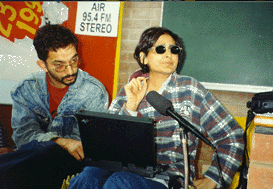
    The founding member of the Muslim Broadcasting Trust … my co host on the very contraversial show “Our Voices – 95.4fm stereo” … a pillar of strength …

    A women … who will never be forgotten . .

    I remember her … for the strength she gave me to continue her struggle … may I never fail her!!

    … I only hope that Islamic women … take up her cource and truly run with it ..

    Not only will they fine a fullfilment in this running … but also will find TRUE ISLAM … where the sexes would find a space common .. and equality natural…

    Basit ……………….


    Date: 7/22/98

    Time: 6:34:55 AM

    786

    Shamimah Shaik, was an inspiring figure to the Islamic Nation. May her efforts long live!

    Insha-Allah other females get the hidayet and courage to carry on from where she left of.

    My condolence and dua’s to her beloved ones.

    Fatima and Zeenat(CyberGal)


    Date: 8/14/98

    Time: 6:31:14 AM

    Months after her passing I cry anew for the loss of a comrade and friend with whom no clarification or justification was ever required

    farid esack


    Date: 8/20/98

    Time: 12:57:26 PM

    Months after her passing we still remember our sister Shamima.. May Allah grant her Janaah …A sister we will never forget…

    Hoosein Ismail and Family.(Cape Town)


    Date:

    12/29/98

    Time: 1:24:19 PM

    Dearest Uncle Na’eem

    There is so much i feel, but i dont quite know how to say it. Unfortunately, i did not have the honour and privilege of meeting Shamima. One has to admit that while browsing this website, one cannot stop the tears from rolling down one’s face.

    oh! how great it is for Shir’a and Minhaj to have had a mother such as her… The love and bond that you and Shamima had is one that we all dream about, but seldom find….

    All that is left to say is that i make dua to Allah that he grant you and your sons the strength and courage to continue with your lives and Insha’Allah Shamima will be eternally happy in JAnnatul Firdous

    Love Salma Mayet


    Date: 6/8/99

    Time: 5:39:43 PM

    18 months after… The sun still shines… Shamima has a left a mark that will not be erased, alhamdulillah!


    Date: 6/8/99

    Time: 5:46:28 PM

    A truly Inspiring woman and human being. May she rest in Allah’s shade


    Date: 15/01/2004

    IS IT POSSIBLE TO HAVE THE HADITH WHERE THE FOLLOWING IS QUOTED FROM. ARE THERE ANY REFERENCES OR SOURCES FROM WHICH TEH FOLLOWING IS QUOTED: She quotes two examples of Islamic history where women have led prayers. In Mecca, women and men pray together during Haj, the annual pilgrimage. A woman led the funeral prayers for Imam Shafi’i (a respected Muslim scholar) and “the other was a case of an elderly women whom the Prophet Muhammad used to visit. The male servant used to give the adhan (call to prayer) while the woman used to lead the prayer,” says Shaikh


    Date: 20/05/2004

    Salaam Brother Na’eem I must confess that I ended up on this site by accident. Although I didn’t know Shamima personally,from what I see here I think that she was a very blessed and brave woman and sister and that she enriched a lot of people’s lives. May Allah forgive her all her sins and grant her paradise, Insha Allah. Thandile Kona


    Date: 08/07/2004

    Salaams What a truly touching & inspiring story…I hope more muslim women have the opportunity to have a look @ this website. As much as i fear Naeem & his children miss their wife & mother, i truly believe that no matter what they go thru’ , Allah (S.W.T) & Shamima wiill guide for the rest of their lives. Na’eem, I thank you for informing me about this website…If @least 1 person is touched & changed,for the better as i have been,by Shamima’s story then it will have truly served its purpose. I make du’aa for Na’eem his family & for Allah (S.W.T) to grant her Jannah. Insha Allah.Aameen

    Salaams Naseeba (Stoutte_Kabouter)


    Date: 09/09/2004

    na’im as-salaamu-alaikum wa rahmat’ullah wa’bara’kaatu’hu i just happened upon this site and became so inspired that i was thinking of suitable people to refer it to, when i happened upon the news of shamina’s passing and … and tears flowed … those of us living abroad were never aware of let alone informed of such a stalwart woman of substance and courage within the muslim community back home. in hindsight, i may have met her in her early years (1970-73) at MYM in newtown/fordsburg (ala m.s. laher) or in the bookshop behind jummah masjid in durban. let’s hope that shamima’s life’s work will be a source of inspiration for thinking muslim woman and those who seriously question their lives and roles in society – throughout africa and beyond … in’sha’allah … it seems that in her untimely/premature passing she has left a legacy for many to delve into, cherish and cleave to … with honour and pride for mshe led by example. sub-han’allah

    was-salaam sharif (washington, DC – USA)


    Date: 27/10/2004

    Thanks for the useful site. Keep up the good work. God bless you and keep you. -John-


    Date: 30/10/2004

    I just can’t express in words what a great site this is! Wonderful qks job whoever is running things.


    Date: 06 Jan 2005

    what a pity that 10 years after shamima took the men of mayfair(and south africa)- by the beard and demanded the right to pray in a mosque, the theology and public of South Africa remain as conservative and illogocical as ever. Women are still not allowed in the majority of mosques in SA and as for having a voice – well thats only if its a harmonious malody of the male tenor. zaheera


    Date: 13 Jan 2005

    we love your website


    Date: 05-Apr-2005

    I had the pleasure of knowing Shamima at UDW and was most saddened to hear of her passing away. I read “Journey to discovery” and never forgot the spirit of Shamima. I came across the website by chance and read every word on it. As a professional muslim woman, I identify with Shamima’s challenges and use her as my inspiration. Her life was short but so totally fulfilled. We pass our days unknowingly with no moral or social goals but with the pursuit of material things. . The example that Shamima left for us in her lifetime is inspiring and I pray that her children have a wonderful and happy future. It can’t be easy raising two young children without a mother and I feel for them but I am sure Shamima has left an indelible mark on their young lives. May allah make it easy for her family.

    Tahera Mather Director- Drumbeat Media and Communications


    Date: 29-Apr-2005

    Salam – impressed with your articles May the all mighty be with you all Salamu Alaikum Ahmed Saudi arabia


    Date: 08-Sep-2005

    I really enjoyed my visit. A great site


    Date: 10-Sep-2005

    Love this web, I’ll be back soon to checek it again, Joshua Odin


    Date: 10-Nov-2005

    Very good site! I like it! I just wanted to pass on a note to let you know what a great job you have done with this site..Thanks!


    Date: 13-Nov-2005

    i really enjoyed reading articles in this websit. my Allah bless her soul and bless those she had left behind. you know lucky her that they had a mother like that ,,,and really lucky that one that had her as a wife..


    Date: 19-Mar-2006

    Althoug I learnt about this woman recently, I am not away from the ideas that she carried out. This ‘Proggressive Mulsim women’ issue is very similiar to greenpeace or feminist movements in the west. they are not paradimg-funder in nature, but operates within a general structure called modernisation. that is the POWER of modernisation that even the people who oppose it works within it, as if they are fighting for more freedom or liberty. they will produce nothing but noise and confusion islamic world. I believe Allah will judge them. Question is simple, how can i trust someone`s comments on Islam who even does not wear headscarf? I believe without putting our house in order, we are just making noise to affect others. even if we do, it will be temporary. May Allah forgive her and award her janna Mehmet OZKAN Postgraduate Student University of Johannesburg South Africa
  • Shamima Shaikh

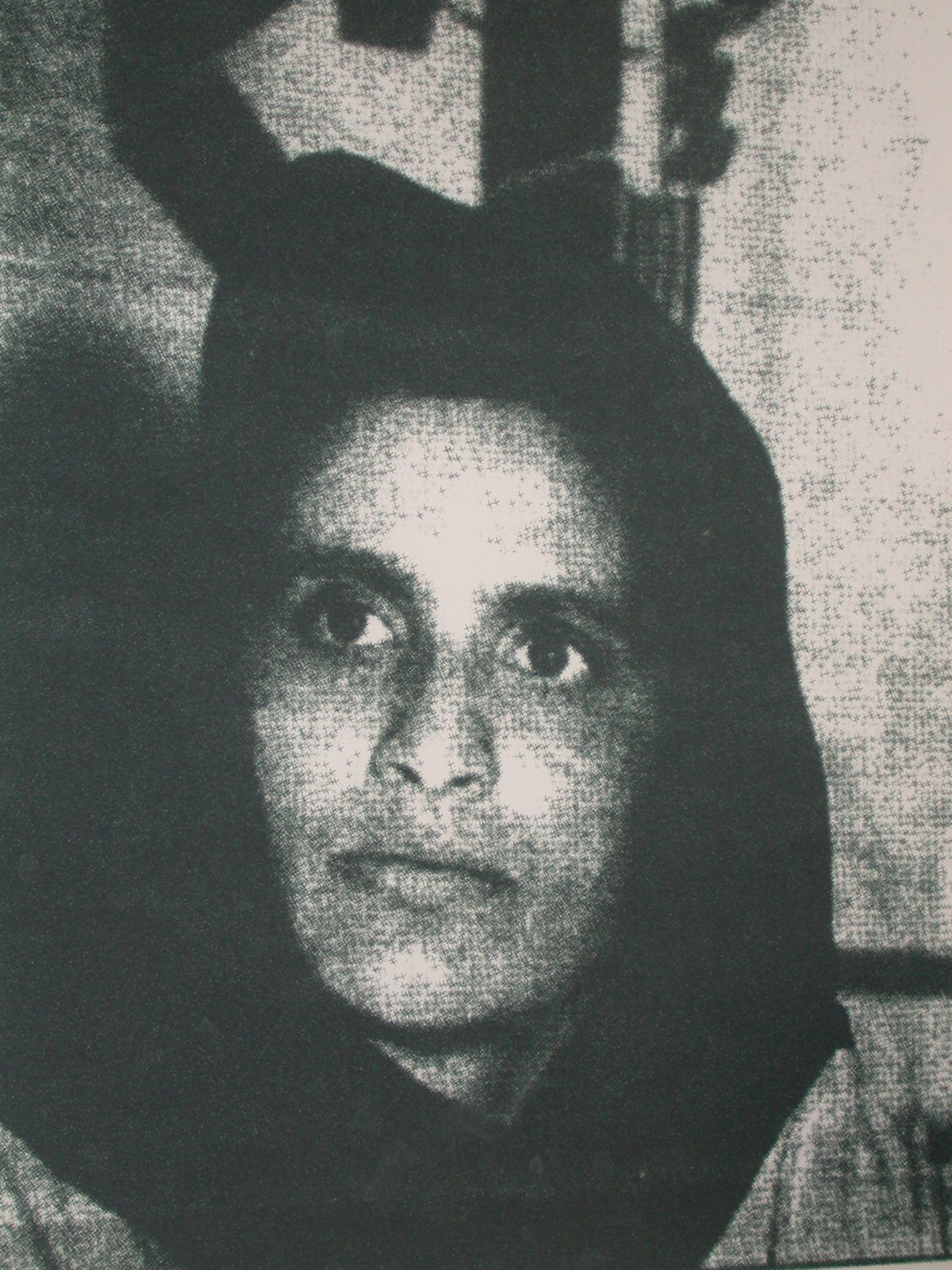
    Shamima Shaikh


    DSCN0050


    Shamima Shaikh
    was one of
    South Africa’s
    foremost
    Muslim
    women’s rights
    activists.
    She died of
    cancer on
    8 January 1998,
    aged 37.
    This website
    includes some
    of her writings,
    articles written
    about her,
    and messages
    received
    upon
    her death.


  • Shamima’s Dialogue with the ‘Ulama

    Sometime in July 1995, Shamima Shaikh was a guest on “Religion on the Line” on the SABC (South African Broadcasting Corporation) radio channel SAfm. She was being interviewed on various issues regarding Islam, but with a focus on women’s rights. Not long after the programme, the United Ulama Council of South Africa wrote to her objecting to certain statements she had made on the show. Shamima responded to the letter in writing and received a second letter from the UUCSA. Those three letters are reproduced here…

    THE UNITED ULAMA COUNCIL OF SOUTH AFRICA


    P.O. BOX 4118

    TEL: (021) 6965150/1/2/3/4

    CAPE TOWN 8000

    FAX: (021) 6968502

    REP. OF SOUTH AFRICA  


    SHAMIMA SHAIKH

    P O BOX 42608
    FORDSBURG
    2033

    24 JULY 1995

    FAX NO. (011) 8393632


    Respected Sister in Islam


    RADIO INTERVIEW : SAFM LIVE


    Our attention has been drawn to a recent radio interview in connection with Muslim Personal Law at which you stated inter alia that :


    “the bill supports unilateral and extra-judicial divorce on the part of the husband, and that has no basis in the Quran, and that’s one of the areas that requires reform…that type of divorce has no basis in the Quran.”


    This statement is contrary to the fundamental principles contained in the Holy Quran and the consensus of muslim jurists (IJMA) throughout the ages. The meaning of all the verses relating to talaaq in the Holy Quran is that the right of talaaq has been given to the husband only. The talaaq takes effect immediately upon pronouncement by the husband himself, and is not dependent upon the decree or consent of a third party.


    As an illustration only, take the following verse of the Holy Quran:


    • SURAH 33 VERSE 49


    “O believers, if you marry believing women and then you (men) divorce them before you have touched them …”

    In this verse, the right to pronounce divorce is given to the husband, and the consequential effect of the divorce is also immediate – the divorcee is not required to calculate a waiting period and she is free to marry a third party of her choice.


    • SURAH 65 VERSE 1


    “When you (men) divorce women, divorce them at their prescribed periods and calculate the period”

    In this verse, the right of pronouncing divorce is clearly ascribed to the husband. The instruction to divorce in a period of purity (by consensus) proves conclusively that the unilateral pronouncement of the husband takes immediate effect, otherwise there was no point in giving the instruction to him in the first place.


    • SURAH 2 VERSE 228


    “And divorced women shall wait for three periods … and their husbands have the better right to take them back in that period if they wish for reconciliation…”

    The use of the words “divorced women” shows clearly that the husband’s unilateral pronouncement of talaaq takes immediate effect and cannot be regulated in any manner. This is why ALLAH has described them as “divorced women”. In addition, the right of taking back (RUJU) is the prerogative of the husband in consequence of his unilateral divorce.


    In all the circumstances, your statement quoted above, amounts to a gross misrepresentation of Islam and a fundamental breach of Quranic Law. As you should know, the wife is entitled by application to a judicial committee to have her marriage dissolved on grounds recognised by Islamic Law. She is also entitled through the procedure of TAFWID UL TALAAQ to have the right of talaaq assigned to her in the marriage contract according to conditions recognised in Islamic Law. You made no mention of this, and other relevant Islamic provisions relating to family law, in the interview in order to portray a balanced and fair view showing the equity underlying the system of family law in Islam.


    Whilst it is appreciated that the husband’s unfair treatment in certain cases causes hardship to the wife, the answer is not to alter an express and unambiguous text (NASS) of the Holy Quran, but to educate Muslims and to inculcate true taqwa. All the laws of Islam are equitable, just and for the benefit of society.


    Unless, therefore, you retract your statement quoted above in writing within 5 days, our Council will have no alternative but to publish a public rebuttal of your views. We believe that such gross misrepresentation brings Islam and Muslims into disrepute – apart from amounting to a gross violation of Islamic Law with serious consequences. We look forward to hearing from you.


    Wasalaam


    ——————————-
    FOR UNITED ULAMA COUNCIL OF S A
    DULY AUTHORISED


    Shamima Shaikh, P O Box 601 Crown Mines 2025,
    Tel: (011)837-9963, Fax: (011)8393632


    9 August 1995

    The United Ulama Council of South Africa
    PO Box 4118
    Cape Town
    8000
    Fax: (021) 696-8502

    In the Name of Allah, Most Gracious, The Dispenser of Grace

    Respected Brothers

    Reforming MPL Practices

    I greet you on this auspicious day – the birthday of the greatest reformer, the Prophet Muhammad (saw) and National Women’s Day.

    Muslims throughout the world commemorate the birth date of Muhammad (saw). We recall that he came as a mercy unto humankind, challenging inhumane and unjust practices. He brought the message of peace and tauhid – forever forbidding subservience to any but Allah. The unity of Allah bears testimony that there is none worthy of worship except Allah and that all humankind is equal irrespective of race, class or gender.

    Today for all South Africans it is also a special day – Women’s Day. On this day we honour the women who marched to the Union Buildings in 1956. We also reaffirm our commitment to remove all forms of discrimination in our land, specifically that based on gender – 1400 years later, but nonetheless affirming the message of our beloved Nabi (saw).

    I hope you are keeping well by the Grace of Allah. I have, as had the rest of my family, the flu, but by Allah’s Grace am able to respond to your letter – Radio Interview: SAFM Live.

    I received the fax on the 24 July 1995 (and some days later a registered letter). In the letter you are critical of my call for the reform of the practice of unilateral and extra judicial divorce on the part of the husband and my assertion that this had no basis in the Qur’an.

    You assert that unilateral divorce has basis in the Qur’an and therefore cannot be reformed. You support your position with extracts from the Qur’an, and ask me to retract my statement within five days of receiving your fax or you will publish a “public rebuttal”. You also say that my “gross misrepresentation brings Islam and Muslims into disrepute”.

    I thank you for the advice, information and for raising your points of contention. If I did not respond immediately it is not because I thought the matter was not urgent. Rather, I am officially a housewife and my own “business” often takes a back seat.

    I do, however, resent your “demand” for a response within five days; you have neither the moral (or other) authority nor power to make such a “demand”. It was rather discourteous of you, I thought. You would have noted that I did not respond within five days, so your promise of a “public rebuttal” will apply, I expect.

    We very much want to engage in healthy and constructive public discussion on the issue. Muslim Personal Law is not a private issue neither is it the domain of the clergy class; it affects all Muslims, and we therefore believe it is an issue for public discussion and input.

    However, in the interests of fairness and Islamic aadaab we are sure you would make it your responsibility to include our response to any “rebuttal”. And if you are using any public platform it would be possible to respond on the same platform. Remember that we have entered into a new era of transparency and democracy which your constituent organisations have enthusiastically embraced. I am sure that in the same vein you are also committed to changing the old system of excluding people from the mosque and other Muslim institutions. Muslims have a heritage of access to mosque platforms – a heritage sadly lost and missed.

    We challenge the perception that the five ‘ulama bodies (i.e. Jamiatul ulama Transvaal, Muslim Judicial Council, Jamiatul Ulama Natal, Sunni Ulama Council, Sunni Jamiyate Ulama) are the authorities of Islam in South Africa. We know that there is no clergy in Islam and that there has always existed diversity of opinion in Islamic history.

    We would at the very outset like to say that we disagree with your promotion of unilateral and extra-judicial divorce. We are terribly disappointed that you pick out a few extracts from the Qur’an and on that basis decide on an issue and consider it to be the only possible conclusion. On reading only the verses about divorce in the Qur’an, many Muslim scholars arrive at conclusions different from yours. On reading the message of the Qur’an in its entirety we are left in no doubt that arbitrary divorce on the part of the husband conflicts with the spirit of shura, decency, dignity and justice.

    We must recall that the Qur’an 1400 years ago challenged inhumane and unjust practices; in this challenge to unjust practices the Qur’an demonstrates that all systems (including your MPL) require muhasabah (evaluation) and adjustment periodically in order to continually reflect the principles of social justice and human equality.

    Please allow me to explain our position: We challenge the inhumane and unjust practices prevalent in MPL. We believe much of the practice needs to be reformed to bring it on par with the Islamic principles of justice, equality and freedom. We must go back to the Qur’an and formulate an MPL that is just. The problem, it seems, is that you are trying to implement an MPL code that was developed in the ninth century. The context was different and the assumptions on which the laws were based are very different. We were never meant to impose those laws on our context, rather, we are meant to apply the eternal, universal and Divine Qur’an to our context.

    The practice of unilateral and extra-judicial divorce in our context goes against the grain of shura and decency. I will quote the translation of just two verses you omitted. (I have for your information included the translation of most of the verses on divorce in the Qur’an.) Please take note that we believe the Qur’an should apply in its entirety and that it is a gross misrepresentation to select extracts and on your interpretation of these, support your position.

    And so, when they are about to reach the end of their waiting term, either retain them in a fair manner or part with them in a fair manner. And let two persons of (known) probity from among your community (i.e. persons who are acquainted with the circumstances of the case) witness; and do yourselves bear witness before God (that the decision has not been made in a frivolous manner); thus are admonished all who believe in God and the Last Day… (Qur’an 65:2)

    And if you have reason to fear that a breach might occur between a (married) couple, appoint an arbitrator from among his people and an arbitrator from among her people; if they both want to set things aright, God may bring about their reconciliation… (Qur’an 4:35)

    I would like to stress the Qur’anic message: part with them in a fair manner; two witnesses, you yourself bear witness before God; appointment of arbitrators from both sides, setting things right if both want to. All this makes nonsense of the arbitrary divorce process prevalent and sanctioned by you, dear ‘ulama.

    One should be aware of the warning of the Qur’an: “Do you believe in part of the Book and reject another part?” The Muslim community is at liberty to “listen to the statement and follow the better part of it,” (Qur’an 39:18).

    Moreover, marriage – we all agree – is a contract between two people and therefore a legally binding agreement. If any one partner wants out there must be a proper process. I do not believe that any of you would allow your business partner to opt out of a contract between you without consulting you or going through some legal process. Isn’t there more reason for a proper process for dissolution of a marriage contract.

    I would like to remind you of Shaikh Rashid Ghannushi’s statement at the launch of the MPL Board, where many of you were present. Shaikh Ghannushi cited the fatwa of Shaikh al-Ja’it of Tunisia. He said that men abuse talaq and they must go to court to dissolve the marriage. Nobody at the meeting challenged Ghannushi’s statement.

    I have touched briefly on some of the issues. There are many other issues we can share our positions on. I would also like to remind you that it was your organisation that dissolved the MPL Board. The MPL Board provided a forum for discussion and debate and we would have all, no doubt, benefited tremendously, coming out enriched and better educated.

    I welcome your assertion that a wife is entitled to apply for a divorce. I am sure you would not be surprised to learn that there are some people who believe that this is a misrepresentation of Islam.

    Last but not least… I share your concern that Islam and Muslims are often brought into disrepute even by Muslims themselves. Might I remind you that it is many from your fraternity, the United Ulama Council, who have been responsible for “gross misrepresentation of Islam” and the administration of injustices to women. The testimonies of many women who have been subject to your administration of Muslim Personal Law will bear witness to that.

    Brothers, the “secular” state has committed itself to truth and reconciliation, justice and equality, accountability and democracy…, why are we lagging behind?

    I look forward to hearing from you and pray that we will agree on a fair and constructive manner in which we can take this discussion to the community.

    Your sister in Islam


    ______________
    Shamima Shaikh


    THE UNITED ULAMA COUNCIL OF SOUTH AFRICA


    P.O. BOX 4118

    TEL: (021) 6965150/1/2/3/4

    CAPE TOWN 8000

    FAX: (021) 6968502

    REP. OF SOUTH AFRICA  


    Shamima Shaikh

    P.O. Box 601

    Crown Mines

    2025

    24 October 1995


    Respected Sister


    RE: RADIO INTERVIEW – SAFM LIVE


    We refer to your letter dated 9th August 1995.


    The opinions expressed by you therein are devoid of substance. They simply display gross ignorance, and an arrogant refusal to accept the truth. There is therefore little point in corresponding with you any further. The correspondence is closed. May ALLAH grant you HIDAYAH and give you the TAWFIQ to surrender fully.


    Yours sincerely


    ______________________________


    FOR UNITED ULEMA COUNCIL


  • Women and Islam – The Gender Struggle in South Africa: The Ideological Struggle

    Women and Islam – The Gender Struggle in South Africa: The Ideological Struggle

    This was transcribed from Shamima Shaikh’s presentation at the Muslim Youth Movement‘s Islamic Tarbiyyah Programme held from 19 to 23 December 1997. Her presentation was made 17 days before her death on the 8 January 1998. Most of the talk was prepared while she lay in hospital having her lungs drained. During that time as well as when she presented the talk she was drugged with morphine and cortisone.


    17 Days before her death delivering a paper on women and Quraan


    Bismillah al-Rahman al-Rahim

    Alhamdulillah al-ladhi hadana li hadha wa ma kunna li nahtadiyya lawla an hadhanallah

    In the Name of God, Most Gracious, the Dispenser of Grace

    All praise is to Allah, Who has Guided us to this. Were it not for His Guidance we would surely have been lost.


    Introduction

    We will be discussing an important arena of the Struggle in upholding the dignity of Muslim women in Islam and the Muslim community. That is the Ideological struggle – the struggle to grasp the existing controversial and conflicting perception of the status, position, worth and constitution of women – a perception used to control women’s actions and status. For Muslims, this perception is supposed to be derived primarily from the Qur’an and Sunnah.

    We will look into verses in the Qur’an that deal with principles and practices or law to ascertain the Qur’anic concept of Women and Gender Identity. For Muslims the Qur’an is the basis. I was also going to look at Hadith, but unfortunately this already looks like it will take all the time available.

    A good book for you to look at on the Prophetic Community is Leila Ahmed’s Women, Gender and Islam.

    But now I’m going to look only at Qur’an. The reason I want to look at it is in order to grasp the existing controversy and conflicting perceptions on the status, position, worth and constitution of women, perceptions used to control women’s actions and status. The perception is that Islam has placed a low status on women and a higher one for men. We will look at the verses that deal with principles and practices or law to ascertain the Qur’anic concept of women’s gender identity.


    An intellectual Exercise?

    The question one could ask is: Is it just an intellectual exercise.

    Some activists regard an ideological investigation as an “intellectual exercise” undertaken by people not involved in the real issues.

    When I informed the ITP co-ordinator about the focus of this paper, this is how she responded in her email message to me:

    > Regarding the brief itself, I have only to indicate that when this
    > topic was suggested in the first place, I expressed that we have to
    > look at new ways of tackling the issue because we always cover the
    > same ground and get nowhere due to the stubbornness and even
    > arrogance sometimes on the part of ourselves to accept what is
    > actually a very black and white issue. That is why I suggested
    > initially that, instead of trying to “emancipate” a group of
    > middle-class, somewhat pampered women who really have no affinity to
    > the REAL issues facing the struggle for gender equality in this
    > country, we devote our precious time to looking at ways for bringing
    > the Gender Desk closer to reality, like the W.Cape has done. It is
    > fine by me if you want to look at Qur’anic perspectives and all
    > that, but I think that the idea that we are actually going to GET
    > somewhere, or make known some things that were not known before,
    > needs to be read with caution

    I think I agree with the co-ordinator, the liberal class does do that. But in Islam the Qur’an applies to all, whether it’s post-middle, pre-middle or working class. The same laws apply to the couple, the same laws apply to the man. And all classes need to know that because that forms the basis of their identity. So it’s slightly different, and also I thought it was important that we deal with that, because in my experience – and I’ve been working with women since I’ve been the Gender Desk Co-ordinator more focussed on gender issues. And in Johannesburg they’re working with women in divorce cases, women that have been beaten and a whole host of women. And the only advice that I could give them was one that the Qur’an says this about you, gives you a status. Because I find it very difficult to tell somebody something that they don’t believe in. I can’t tell them, “Yes, get divorced.” But I can tell them, “You have a right to get divorced. The choice is now yours.” I suggest that they go for some social welfare service. So I think there’s a need for both kinds of things: like the one Cape Town (MYM) has and the kind of thing… What Cape Town does is integrate both. The more people know these issues, the more people will integrate them or deal with one only before the problem arises. So that’s how it should go.

    We cannot altogether dismiss the need for support and other social welfare services, and as long as the problems exist, it is essential that we have social welfare and other institutions that can provide necessary relief for victims. And these problems will continue for as long as there is confusion regarding the correct and liberatory Qur’anic position on women. We must tackle the problem itself and for Muslim women, Islam and the Qur’an can be both a force of empowerment and undermining and disempowerment. It is the source Muslims accept unflinchingly.

    The conflict and, yes, sometimes confusion in our understanding of Islam and gender status arises from the complex way in which a society works.


    Forces within the Muslim community that cause conflict and confusion in understanding Women, Gender & Islam

    After 1400 years it appears that there is still confusion and conflict as to the status of women in Islam, and the role that gender plays in an individual’s worth in terms of status, position, potential and constitution.

    Despite the overwhelming and strong position of Muslims that Islam liberated women 1400 years ago, you still find there’s a problem. Some thought and practice within Muslim society does not reflect this conviction, giving rise to the accusation that Islam oppresses women, to which the Muslim community reacts emotionally with denial and animosity, without reflecting inwardly and addressing the existing problems.

    And I think the reason for this is the way the Muslim community works. What makes Islam work in a Muslim community is a mixture of Islam, the context, an interpretation of Islamic text – Qur’an and Hadith, culture, tradition, customs and the interests of those who are dominant in the community – those who hold the reigns of power.

    These elements are not necessarily negative. The objective is not to apply some “purist” understanding of Islam based exclusively on the Qur’an. In fact, the Qur’anic and Prophetic method is to consider the other elements in order to provide a viable and practical solution to an event or problem. The Qur’an consists of Divine responses to particular questions within a particular context. Therefore it is essential that Islam and the Qur’an are contextualised.

    However, these elements that work within the Muslim community often do so at cross-purposes with conflicting agendas and motives. As a result we have conflicting messages. If somebody wants to subjugate women they will come with a different interpretation, they will do a whole host of things. So you’ll find conflict: in interpretation, in understanding who women are. And people tend to interpret for their convenience. However, I don’t think these elements are necessarily negative. In order for Islam to work it needs to be contextualised and not taking all these elements into consideration means you have not listened to one category or class of people. In fact the Qur’an and the Prophet did exactly that. They took into consideration the customs; they took into consideration a whole host of things in order to understand the laws within the context. It thus is often difficult to distinguish between these various elements. It is therefore not surprising that we are confused on the issues of women, gender and Islam and articulate and send conflicting messages.


    Muslim Feminists

    We’re seeing a lot of Muslim feminists. Their books have been translated into English and even in small communities like in South Africa. (I’m sure all of us are being accused of being feminists.) Muslim feminists face criticism from other feminists for insisting on maintaining the link to Islam in the gender struggle. The Muslim feminist looks to the Qur’an and the Prophet as a force for liberation, but in this ideological struggle faces tremendous opposition and criticism for “reinterpreting”, “changing the Qur’an”, “following western feminists”, etc. from the clergy, the community as well as other women.

    These feminists insist that they are inspired by Islam and the women heroes of Islam who stood up for justice and human rights. And that Islam is a force of empowerment rather than of disempowerment.


    Let’s live as we Believe

    There is a hadith which states a profound truth about human life: “If you don’t live as you believe, then you begin to believe as you live.”

    In order to live as we believe, and to understand what the Islamic and Qur’anic identity of the Woman is, it is essential that we do an enquiry and investigation of the Islamic sources – the Qur’an (in particular) and the practice of the Prophet’s community. Because of the short time available, I will focus here only on the Qur’an.


    The Qur’an: Principles, Practices and Law

    The Qur’an is the first source of guidance, so we’ll start by looking at what the Qur’an says about the position and place of women and what role, if any, gender plays in status of the individual.

    Perhaps an important point to make before we begin discussing verses of the Qur’an, however, is that all such discussion is based on contextual interpretation. No person can honestly claim to understand any part of the Qur’an without any interpretation.

    During the Battle of Siffin, the followers of Mu’awiyah once called for a cessation of hostilities between Mu’awiyah’s and ‘Ali’s parties. They should, they said, accept the Qur’an as the arbitrator between them. Imam ‘Ali’s response is very instructive. He said:

    “When Mu’awiyah invited me to the Qur’an for a decision, I could not turn my face away from the Book of Allah. The Mighty and Glorious Allah declared that ‘If you dispute about anything, refer it to Allah and His Apostle’. (However,) this is the Qur’an, written in straight lines, between two boards (of binding); it does not speak with a tongue; it needs interpreters and interpreters are people.”

    In order to ascertain the status of men and women we will look at verses that lay down certain principles and verses that are reactions to particular contexts.


    The Principles:

    O Humankind! Be conscious of your Sustainer, who has created humanity out of one living entity, and out of it created its mate, and out of the two spread abroad a multitude of men and women. And remain conscious of God, in Whose name you demand [your rights] from one another, and [reverence] the wombs [that bore you]. Verily, God is ever watchful over you! (4:1)

    The points I’d like to highlight here…

    The source of all human creation is one living entity, unlike the biblical interpretation or understanding that men were created first and thereafter women, and women were created from men. Even upto recently, I had the idea that women were created second also, and that men were created first and that women were created out of men. And here it is quite clear that No, there was this one “entity” and Allah created men and women from it. So, women could have been created first or men could have been created first; it’s difficult to say. What we know is that from one entity multitudes of men and women were created. All individuals are born from one entity, according to this verse, and have the same status and equal potential to do good and evil.

    This is such a positive verse, and there are many like that. Why do we choose to make more popular the “negative” ones like the one that can be interpreted that men can beat women. Why not this verse and on the basis of this verse interpret that. If one comes to this first you know that gender doesn’t play a part in spirituality or anything.

    If you come with the idea that you are inferior in the first place, your approach to a particular verse that applies to a particular context will have to be negative, will have to see you as inferior. Whereas, if you have a positive one, it will have to be positive, it will have to accept that there is some kind of equality here. You’ll need to interpret a verse on how you treat somebody according to what the Qur’an says are basic principles or what basic essence of women or men is.

    Verily, for all men and women who have surrendered themselves unto God, and all believing men and believing women, and all truly devout men and truly devout women, and all men and women who are true to their word, and all men and women who are true to their word, and all men and women who are patient in adversity, and all men and women who humble themselves [before God], and all men and women who give in charity, and all self-denying men and self-denying women, and all men and women who are mindful of their chastity, and all men and women who remember God unceasingly, for [all of] them has God readied forgiveness of sins and a mighty reward. (33:35)

    This verse shows clearly that all spiritual and moral obligations of men and women are the same. And that the ones capacity is not inferior to the others.

    It stresses the moral rights and moral obligations of men and women. And if God has given men and women the same obligations it is only because they have the same potential. God is Merciful. He won’t apply greater responsibility than one can bear. Many a time what we have is people claiming that women are morally inferior or spiritually inferior. They menstruate, they are not capable, they cause fitnah. And the Qur’an clearly states that The Merciful God can never place obligations greater than one can bear. And if she’s not spiritually whole or morally whole then you can’t expect her to be equally moral and equally spiritual. And this verse says that we are equally so.

    Hence do not covet the bounties which Allah has bestowed more abundantly on some of you than on others. Men shall have a benefit from what they earn, and women shall have a benefit from what they earn. Ask, therefore, Allah (to give you) out of His Bounty: behold, Allah has indeed full knowledge of everything. (4:32)

    This verse is very clear. That we shall all be rewarded according to what we earn. And also that one will be rewarded for whatever good deeds one does.

    There’s also the verse that men and women that do good deeds will be rewarded according to their deeds and their work. Often times we hear the “hadith” that when the Prophet (s) went to Hell he saw more women in Hell than men. If women were more prone to evil, why would God give them equal obligations to do moral good.

    These are few of the “positive” verses which lay down the basic principle that gender is not a criterion for determining the status of the individual.

    I would be failing in completing the discussion if I left out the more popular verses used to describe women’s identity.

    Degree above:

    Often, to uphold the superiority of men, people say that the Qur’an says that men are a degree above women. And yes, that’s true. It does say it.

    Women who are divorced shall wait, keeping themselves apart, three (monthly) courses. And it is not lawful for them that they conceal that which Allah has created in their wombs if they believe in Allah and the last day. And their husbands would do better to take them back in that case if they desire a reconciliation. And (the rights) due to the woman are similar to (the rights) against them, (or responsibilities they owe) with regard to the good (ma’ruf), and men have a degree (darajah) above them. Allah is Mighty, Wise. (2:228)

    This verse refers to a context of a couple getting divorced and there is the possibility of a pregnancy. It calls on women not to conceal their pregnancy. And it is better for their husbands to take them back if reconciliation is possible. While women have similar rights to their responsibilities, men have a degree of rights and responsibility above them a degree above them.

    This verse is often used to quote the “degree above them”. It’s not applied to the context. I’ve even heard our (MYM) members trying to come to grips with men being a “degree above them”! That’s just accepted. The problem is that it applies to a particular context, not to general law meaning that men are a degree above women. This verse speaks about pregnancy when divorce is taking place. If the wife is pregnant she has no right to conceal the pregnancy. Which is fine. It should be so. Also the fact that the men do have a degree of advantage in taking the child back. The verse speaks about the rights that women have and the rights above them and then speaks about men having a degree above them. So the degree is with respect to responsibilities (rights against them) as well as rights. We must also remember all the time that what they have has been bestowed by Allah. It’s not from themselves; it’s from Allah. And they have a responsibility to give.

    Shamima with co-presenters of the session: Firdousa Waggie and A'isha Roberts

    Maintenance, Beating and Marriage:

    Men are qawwamun (maintainers/protectors) of women, for Allah has preferred (faddala) some over others, and (on the basis) of what they spend of their property. So good women are qanitat (obedient), guarding in secret that which Allah has guarded. As from those whom you fear nushuz (rebellion), admonish them, banish them to beds apart, and scourge/beat them. Then, if they obey you, seek not a way against them.(4:34)

    Men are maintainers of women because Allah has bestowed more on some then others. That’s why they are supposed to be maintainers. The fact is they generally have more money than women. Also, the situation of divorce. If you’re pregnant it’s more of a burden sometimes and you need assistance.

    Then the verse says Allah has bestowed more on some than on others because they have an extra responsibility.

    So good women are “qanitat“. Generally it seems from the Qur’an that the one that contributes more, takes on more responsibility has more rights. The less responsibilities they have, the less rights they have.

    Then, if you fear rebellion from them, there are three stages of correcting: admonish them, banish them to beds apart, and then beat them lightly. The one that causes most grief in the community is that men are allowed to “beat” women or one individual is allowed to beat another, especially in a marriage. This notion has always bothered me. But if I look at the stages through which one goes, through the process. First it’s “admonish them”. (If it says “beat them lightly” then admonishing would be, for example, just saying “stop it” or something like that. Not yelling or shouting, but something light.) And then “banish them to beds apart”. I don’t believe anybody, any rapist or abuser – according to the profiles for such people – will get to the second stage. Rapists and abusers (that are spouses), generally they’d sleep with her first. Generally they sleep with the victim then beat them then sleep with them again. A normal, good Muslim will never reach that stage, the stage of banishing them. An abusive husband will do things the other way around.

    The word “nushuz” is quite a strong word. It means rebellion. And only a “rebellion” allows a man to go through these stages. People are defiant and disobedient everyday; but this “nushuz” is quite strong. The issue with this verse is how we deal with it and how we are prepared to deal with it.

    Marriage relationship:

    And among His wonders is this: He creates for you mates out of your own kind, so that you might incline towards them, and He engenders Love and Tenderness between you: in this, behold, there are messages indeed for people who think. (30:21)

    Here is portrayed a relationship that is tender and a relationship that’s based on tenderness and love. Here’s another principle that one can draw on for a marital relationship.

    It is lawful for you to go in unto your wives during the night preceding the (day’s) fast: they are as a garment for you, and you are as a garment for them.

    Seclusion & separation (Prophet’s wives):

    O Prophet! say to your consorts: “If it be that desire The life of this world, and its glitter, then come! I will provide for you enjoyment and set you free in a handsome manner.

    But if you seek Allah And his Apostle, and the home of the hereafter, verily Allah has prepared for the well doers amongst you a great reward.

    O Consorts of the Prophet ! If any of you were guilty of evident unseemly conduct, the punishment would be double to her, and that is easy for Allah.

    But any of you that is devoted in the service of Allah and His apostle, And works righteousness, to her shall We grant her reward twice and We have prepared for her a generous sustenance.

    O consorts of the Prophet! You are not like any of the (other) women. If you are conscious of Allah, be not too complacent of speech, lest one in whose heart is a disease should be moved with desire. But speak you a speech that is just.

    And stay quietly in your houses, and make not a dazzling display, like that of the former times of ignorance; and establish regular prayer and give regular charity; and obey Allah and His Apostle. And Allah only wishes to remove all abomination from you, you members of the family, and to make you pure and spotless. (33:28-33).

    These verses – the seclusion, the voice story, the staying at home, etc – what one needs to make quite clear is that these verses refer to the Prophet’s wives. Firstly, they will get twice the reward than any other woman will get. But also, there are greater responsibilities and restrictions for what they do. So they’ll get double for doing it, as well double sin.

    The verse: “O consorts of the Prophet! You are not like any of the (other) women. If you are conscious of Allah, be not too complacent of speech, lest one in whose heart is a disease should be moved with desire. But speak you a speech that is just.” is the verse the Jamiat uses to support their no-woman’s voice position. What is clear here is that firstly it’s speaking to the Prophet’s wives only (which they didn’t mention), and secondly – not that they shouldn’t speak but that they should not speak in complacent but in just terms, that their speech is just. What the Jamiat also didn’t do is say the last bit: “But speak you a speech that is just.” All they quote is: “If you are conscious of Allah, be not too complacent of speech, lest one in whose heart is a disease should be moved with desire.” That sentence is part of the verse, but the Jamiat chooses not to quote it. For their convenience, they use the verse to support their position. This is devious! We often do that.

    “And stay quietly in your houses.” Here again is the Tabligh Jamaat position that women should be confined to their homes. People could do that if they like, but the Qur’an is instructing the Prophet’s wives in this instance and not saying it is a general rule.


    Challenges

    I want to look finally at the challenges that we face and that we need to deal with. The issues here we need to deal with practically.

    We should now stop focussing on verses that are interpreted to imply a lower status of women. We of often ignore the principles. We need to extract these to apply to new practical contexts.

    We should also make sure and challenge people who interpret and use verses of selective & convenient text like the Jamiat’s use of verses to argue that women’s voices can’t be heard. There’s the of pamphlet supporting women’s voice not being heard, where the supporters give weight to their position by quoting only part of the verse only .

    Another problem is that “religious authorities” cannot deal with these issues and challenges. They are not qualified to do so; there’s a lack of education, experience and commitment to the reopening of the doors of ijtihad. They are not thinking or reflecting but remain static. And we should ask these “authorities” to also engage in ijtihad. They are also afraid of reform and of challenges to their authority. We must keep challenging them.

    Also they don’t respond very well to challenges. Everytime we challenge them, everytime we speak to them, they don’t respond. Around two years ago, when I was the Gender Desk Co-ordinator, I wrote to the Jamiat about the husband’s right to unilateral divorce. They argued that it is Qur’anic, it is Islamic. Then I quoted them a whole lot of verses and told them that these verses showed that marital relationships don’t adhere to the kind of talaq with a complete lack of consultation. I sent them a five-page letter quoting these verses. They sent me a reply asking Allah to give me hidayah (guidance) and saying that I was very arrogant. This United Ulama Council, this big organisation with hundreds of maulanas, tells me that I’m arrogant and may Allah give me hidayah and this was their last correspondence with us. I felt sick!

    Another problem is that men write women into their experiences, For a long time men have been writing about women, men have been writing the interpretations. Even if a progressive man writes about women, it’s from a male perspective. They write us into their experiences. Ebrahim Moosa (a leading South African and international progressive Muslim theologian and scholar) experiences life much differently than I do. He’s progressive, fine! But I’d rather Firdousa (the MYM Gender Desk co-ordinator) wrote it. It would be more real. Our experiences are different because we’re in an oppressive situation.

    Even some of the women writers that are emerging are the more conservative ones who write from tradition. They don’t change things, they just focus on what’s there.

    That leads us to the next point. That women generally retain and accept traditional stereotypes. Women are more passionate about retaining tradition than men. We find women often just want to keep the peace. It’s in their family lives and comes out in their wider lives. But they could change, and that’s what we should attempt.

    The last issue I want to raise is that Muslim Personal Law is being developed as we speak. We need to find out what is happening, otherwise we will wake up with a rude shock when things are already done. We need much reform in this field and a fresh interpretation of MPL.


  • Profile

    On the 14th September 1960, Shamima Salahuddin Shaikh was born in Louis Trichardt – in what is today South Africa’s Limpopo Province – just North of the Tropic of Capricorn. She was the second of six children born to Salahuddin and Mariam Shaikh.

    Her first school years were in Louis Trichardt, until the family moved to Pietersburg, just over 100 km South.

    After completing her matric in 1978, Shamima went to the University of Durban-Westville. She spent one year at the University and returned home for the next four years.

    In 1984 she returned to UD-W to complete her Bachelor of Arts Degree, majoring in Arabic and Psychology. These were politically-charged years at university, and Shamima got involved in the Azanian People’s Organisation (AZAPO) for the next two years.

    In 1985 she was elected to the executive committee of the Islamic Society of UD-W.

    On the 4 September 1985 Shamima was arrested for distributing pamphlets that called for a consumer boycott of White-owned businesses. She spent the next few hours locked up at Durban’s CR Swart Police Station with her partner-in-crime, Na’eem Jeenah. This was her first meeting with Na’eem, who was National President of the Muslim Students Association. (Two years later, Na’eem was to become Shamima’s husband!)

    At the end of 1985 Shamima completed her BA degree and performed ‘umrah.

    In 1986 and 1987 she taught at the Taxila Primary and Secondary school in Pietersburg.

    On the 20 December 1987 Shamima and Na’eem were married and lived in Johannesburg.

    Shamima gave birth to Minhaj in September 1988.

    In January 1989 the family moved to Durban.

    In 1989 Shamima became involved with al-Qalam which was being edited by Na’eem. al-Qalam was a Muslim community newspaper that belonged to the Muslim Youth Movement of South Africa, an organisation she began to get increasingly involved in.

    1989 and 1990 saw Shamima also get involved in heightened political activity with campaigns against the racist Tricameral Parliament elections; the Mass Democratic Movement; marches; demonstrations; mass rallies; solidarity campaigns; etc.

    Shir’a was born to Shamima and Na’eem on the 8 October 1990.

    In 1991 Shamima and her family moved back to Johannesburg.

    At the end of 1991 Shamima again became involved with al-Qalam, writing and sub-editing.

    In 1993 Shamima was elected the Transvaal Regional Chairperson of the Muslim Youth Movement of South Africa, and was thus a member of its National Executive, only the second woman to hold such a position.

    1993 also saw Shamima leading women to attend the taraweeh prayers at the 23rd Street Mosque in Fietas in Johannesburg. This led to clashes between her and some of the members of the mosque committee and thrust Shamima into the public eye.

    Shamima was featured in various newspaper articles, on radio and TV programmes for her forthright positions on women’s rights in Islam and other issues.

    In December 1993 she became the first National Co-ordinator of the Muslim Youth Movement Gender Desk, a position that again put her on the MYM’s National Executive. She held the position until the middle of 1996, when – as a result of a proposal she made – the position was moved off the National Executive.

    In her position as Gender Desk Co-ordinator, Shamima organised various workshops, seminars and campaigns. She spearheaded the MYM’s “Campaign for a Just Muslim Personal Law”, the “Access to Mosques” campaign and various others.

    Shamima was very involved in the Muslim Forum on Elections – a coalition of Muslim organisations that was calling on the community to vote in South Africa’s first democratic elections in April 1994, and to vote for those parties “that had formerly been part of the liberation movement” – in particular, the African National Congress (ANC) and the Pan Africanist Congress (PAC).

    In 1994 also, Shamima helped found and became the first chairperson of the Muslim Community Broadcasting Trust which applied for a community radio licence for Johannesburg. She remained chairperson of the MCBT till her death.

    Shamima was also involved from 1994 with the founding and establishment of the Muslim Personal Law Board of South Africa. She was a member of the Board till it was unilaterally shut down by the United Ulama Council of South Africa.

    In the year of the elections, Shamima was diagnosed with breast cancer. She had a lumpectomy done and received radiation treatment.

    A year later it was discovered that cancer secondaries had affected her entire skeleton. For this she was treated with high dose chemotherapy. After the cancer had thus disappeared, Shamima had decided not to receive chemotherapy again if the cancer recurred. She said she preferred to die with dignity and continue doing till the end whatever she loved rather than being sick in hospital. In 1996 she had a relapse.

    That same year she was appointed Managing Editor of al-Qalam. Under her editorship al-Qalam was the flagship of a progressive expression of Islam in South Africa.

    In April 1997 Shamima performed the hajj for the first time. After her return she and Na’eem began working on a manuscript about their hajj experiences. The result is Journey of Discovery: A South African Hajj, published in 2000.

    In August 1997 the Muslim community radio station, The Voice, was launched – with Shamima at its head.

    On the 22 December 1997, Shamima completed her final public engagement. She delivered a paper, “Women & Islam – The Gender Struggle in South Africa: The Ideological Struggle” at the 21st Islamic Tarbiyyah Programme of the Muslim Youth Movement of South Africa, at the As Salaam Educational Institute on the KwaZulu-Natal South Coast.

    Seventeen days later, on the 8 January 1998 / 9 Ramadan 1418, Shamima returned to her Lord.

    In death, as in life, Shamima challenged orthodoxy and traditionalism: one of the four janazah salawat (funeral prayers) performed for her was led by a woman friend – as per Shamima’s request. Also, many women attended her janazah salah at a Johannesburg Mosque and at the Claremont Main Road Mosque in Cape Town. And in Pietersburg, dozens of women were present at her burial.

    Shamima Shaikh – May Allah be pleased with her, and she with Him…

  • What’s New in 1.5?

    As with previous releases, Joomla! provides a unified and easy-to-use framework for delivering content for Web sites of all kinds. To support the changing nature of the Internet and emerging Web technologies, Joomla! required substantial restructuring of its core functionality and we also used this effort to simplify many challenges within the current user interface. Joomla! 1.5 has many new features.

    In Joomla! 1.5, you”ll notice:

    • Substantially improved usability, manageability, and scalability far beyond the original Mambo foundations
    • Expanded accessibility to support internationalisation, double-byte characters and right-to-left support for Arabic, Farsi, and Hebrew languages among others
    • Extended integration of external applications through Web services
    • Enhanced content delivery, template and presentation capabilities to support accessibility standards and content delivery to any destination
    • A more sustainable and flexible framework for Component and Extension developers
    • Backward compatibility with previous releases of Components, Templates, Modules, and other Extensions
  • Hajj and Freedom – not for women, it seems

    Women are often the sacrificial lambs when Muslims have to deal with “problems” in our community. Men are unable to control their libidos so women are punished – confined to the homes, relegated to galleries (in mosques) and their voices suppressed. That women fall victim to chauvinistic laws is not surprising, considering that the community, men and women, are often fed with selective information.

    Regulations around gender and haj starkly illustrate one type of chauvinism. Not too long ago the Saudi Government introduced a law that forbade women under the age of 45 from undertaking the haj without a mahram (either a husband or a man she cannot marry, like a close relative). This meant that women under 45 could go for haj only if there was a mahram willing to “take her” for haj.

    Previously, women were allowed for haj in groups without a mahram. Among most schools of thought it is accepted that a woman may travel with a group of trustworthy women or even with a trusted woman companion. There is also a view that a woman may travel by herself, provided the way to haj or ‘umrah is safe. The Prophet (s) is reported to have replied to a man who complained about highway robbery, “If you lived long enough you will see that a woman will travel from Hira (in Iraq) and will perform tawaf around Ka’bah, and she will have no fear except that of Allah.”

    The Qur’an speaks of the peace, security and freedom from fear at Makkah. “Behold, the First Temple ever set up for humankind was indeed the one at Bakkah (Makkah): rich in blessing, and a (source of) guidance unto all the worlds. (It is) the place whereupon Abraham once stood; and whoever enters it finds inner peace and freedom from fear. Hence Pilgrimage unto the Temple is a duty owed to Allah by all people who are able to undertake it. And as for those who deny the truth, verily Allah does not stand in need of anything in all the worlds” (Qur’an 3:96-97).

    We need to recall only the story of Hajar (s), to have a proper perspective of the issue. She stayed in the desert with her infant son Isma’il because of her faith in God, and her fear for God alone. She did not have a mahram, she survived with the infant by striving to take care of herself and her son with the help of God. Ibn ‘Abbas relates the incident thus: “Prophet Ibrahim (s) brought Hajar (s), his wife, and their son Isma’il (s), whom she was still nursing, and left them at the House of Allah under a tree above the Zamzam. Makkah at that time was a place where there was neither water nor any dweller. He left a bag of dates and a container of water for them. Then Ibrahim (s) turned to go away. Isma’il’s mother said to him, ‘O Ibrahim! Where are you going? And who are you leaving us to in this valley without a companion or a thing?’ She repeated this several times but he did not respond. At last she asked him, ‘Has Allah commanded you to do so?’ He answered, ‘Yes.’ Thereupon she said, ‘Then He will not let us perish!’ (Bukhari).

    One cannot help but be inspired by this black slave woman who actively strove to please Allah and survive in the harsh desert. One must remember that a central person whom Muslims follow during the haj is Imama Hajar, a woman.

    Women had been performing haj and ‘umrah, travelling in groups, enjoying the haram’s security and access to the Houses of Allah – which is denied to them in some parts of the world. This freedom was then snatched away from an already suppressed group within the community. If the Saudis wanted to control the numbers entering Arabia they could surely have used other methods. But it is easier and one is less likely to face resistance if one deprives a sector that already does not have a voice.

    The mahram law effectively bars some Muslims from fulfilling a religious obligation (fard). There are many reverts particularly, on whom haj has become obligatory but who don’t have Muslim mahrams. This is especially true in a Muslim minority country like South Africa. The recently-formed South African Haj and ‘Umrah Council, whose task it is top ease the way for South African hujjaj, should challenge this regulation and request an exemption to this kind of discrimination.

    Once a Muslim has the means to perform haj it becomes obligatory on him or her. One never knows what the future holds; deferring the haj could mean that one would lose the opportunity and means to perform it. Ibn ‘Abbas related that the Prophet (s) said: “He who intends to perform haj let him do so expeditiously, for he may well fall sick, may lose his mount (ability to bear expenses of the journey) or may be prevented by some other exigency.”

    The strange exemption for women over 45 indicates the mind set behind the law. It seems to be more about sex than safety.

    Besides the mahram law, many other (official and unofficial) regulations on haj are riddled with many prohibitions for women which cannot be attributed to the Prophet (s): they must not make ramal (brisk walk) while making tawaf; they must not jog the short distance between Safa and Marwa – the Milain Akhdarain – (even though the act is to commemorate a woman Hajar, who ran from Safa to Marwa); they must not make their way to the Hajarul Aswad or pray near the Maqam Ibrahim; and books distributed in South Africa claim they must perform all their salah in their apartments/hotels and not in the Haram; they must perform the tawaf on the outskirts and not try to get close to the Ka’bah; in a crowd of hundreds of thouands they must keep a clear distance from men; they must not say the talbiyyah aloud…

    Yes, the Prophet and Allah stress that there is no need to overburden oneself. But only the individual knows the burden that he or she can carry, and each person should have the right to choose the most convenient. Gender cannot be the criterion for deciding one’s ability for these rituals.

    * Shamima Shaikh wrote this article under the pseudonym Salma Said. It was published in Al-Qalam.