Author: shamsadmin

  • Claremont Main Road Masjid Mourns Mujahidah Shamima Shaikh

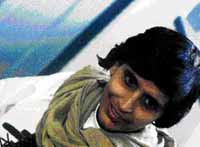
    Shamima Shaikh, one of the foremost Muslim women activists in South Africa, died peacefully in the early hours of the morning, at her home in Mayfair, Johannesburg. Shamima leaves behind two young boys, Minhaj and Shir’a, and her husband Na’eem Jeenah. She will be buried in Pietersburg, the town of her birth, later today.

    Shamima will always be remembered by Islamic activists all over the country for her unflinching commitment to the gender jihad. She was a founder member of the Muslim Youth Movement’s Gender desk. A few years ago in the month of Ramadan, she led a group of women in a protest to a Johannesburg Masjid who had refused women permission to pray inside of it.

    Shamima has served as editor of the Muslim newspaper Al-Qalam and more recently she served as chairperson of the management board of Radio Al-Saut/The Voice, a local Muslim community radio station broadcasting in the Johannesburg area.

    Shamima will also be fondly remembered by all of us for her gentle nature and soft speech.

    We extend our heartfelt condolences to her immediate family and friends and implore Allah, the Most Merciful, to grant her jannatul firdous, insha-Allah.

    Salatul Janazah Ghaibah will be performed for the deceased at the Claremont Main Road Masjid this evening after Tarawih Salah, followed by an obituary to be delivered by Maulana Dr. Ebrahim Moosa.

  • A letter to Shamima – Tahir Sitoto

    By Shaikh Tahir Sitoto

    Dear Shamima

    The last we saw of you, you were a living mortal – your spirit fighting, refusing to give up. That memory still lingers. We remember the many moments we shared both in times of joy and sadness. The moments of struggle and celebration.

    We remember the students at Rhodes University howling at you and yet you kept calm and smiled at them. The only crime was to say women are not sub-human, but all are equal in the eyes of the Creator. We remember you walking and jumping in the dusty and muddy roads of Kwa-Nobuhle, sharing a meal in a tiny four-room matchbox house, not afraid to enter the terrain or conquering our space and confronting some of us whom you perceived to have male chauvinist tendencies. You sensitised some to the gender jihad not in a confrontational fashion but in a caring and loving manner, not self-righteous but persuasive.

    Your doors were always open. We spent many treasured moments in your small flat with no trepidation.

    We remember your honesty that made you vulnerable at times, but above all your unwavering commitment to the cause of the doormats of society, the so-called marginalised, those on the periphery and sidelines, that category known as the women; the so-called converts or reverts and so-called Africans.

    Together with your family you were almost entirely wiped out in a car accident on your way to Botshabelo. Your spleen crashed, yet you continued the struggle. All these memories as we write to you are flashing back, reminding us of your presence. In short, yours was a life of selflessness.

    Even after hospitalisation you fervently went to the ITP, presented a paper on a theme so dear to you and continued to participate inspite of your predicament. These are moments we will hold dear and continue to cherish.

    When some of us shared your tenth wedding anniversary, little did we know that it would be the last meal in your esteemed company.

    We know this letter should have been written to you whilst you were still in our company – and so we must admit that it is with reluctance that we do so. We do so, however, with the thought that even at this moment you will not say, “No, it is too late,” and thus refuse its acceptance.

    Words, we must add, are not sufficient to convey what you have been and meant to us. Others can try to do so, but we refuse. Suffice to say you were an epitome of what is true and genuine humanity.

    We ask the God of Mercy and Compassion, the All Wise and All Knowing, to grant you Jannah al-Firdous.

    As for your family, especially Na’eem, little Minhaj and Shir’a… We invoke Allah the Almighty to grant them the necessary patience and perseverance in these trying moments.

    In missing you we can find contentment in the thought that your spirit forever lives. And so the only commitment we can make is to continue the struggle for which you were a tireless campaigner.

    Hamba Kahle – Go Well.

    Eyakho indima uyifezile – You have fulfilled your task.

    On behalf of the National Executive of the Muslim Youth Movement of South Africa

    Shaikh Tahir Fuzile Sitoto

    National Vice- President

  • Death of a Muslim Joan of Arc – Faried Esack, Mail & Guardian

    Death of a Muslim Joan of Arc – Faried Esack, Mail & Guardian

    OBITUARY: Shamima Shaikh, former editor of the progressive Muslim monthly Al-Qalam, and the leading Muslim gender-equality activist, dies at age 37.


    FARIED ESACK

    20 January 1998, Mail & Guardian


    SHAMIMA SHAIKH (37), South Africa’s leading Muslim gender equality activist, passed away in the early hours of January 8 at her home in Mayfair, Johannesburg. She had cancer. Shaikh left behind her husband, Naeem Jeenah, and two sons Minhaj (9) and Shir’ah (7).

    Shaikh was a member of the national executive committee of the Muslim Youth Movement and former editor of the progressive Muslim monthly Al-Qalam. More recently, when other Muslims were denying women the right to be on air, she served as chair of the Muslim Community Broadcasting Trust, which runs The Voice, a Johannesburg Muslim community radio station.

    It was, however, as a gender activist within the Muslim community that she made her mark. She spearheaded the formation and headed the gender desk of the Muslim Youth Movement. In this capacity, she rapidly became a thorn in the flesh of conservative Muslim clerics on the now defunct Muslim Personal Law Board, who were keen to develop and implement a set of laws which would entrench gender inequality.

    In an event that drew widespread controversy in the Muslim community, she led a rebellion of Muslim women worshippers at the 23rd Street mosque in Fietas in 1994. Throughout the month of Ramadan she and a number of other women prayed upstairs in the mosque. On the 27th night, the most spiritually significant one for Muslims, when she arrived the upstairs section was occupied by men and a tent was set up outside for women.

    Braving numerous angry offended men with tiny egos, she led a group of women to re-occupy their space. By then she had acquired the well-deserved description of “that mad Shaikh woman”. Yet to friend and foe, Shaikh was the epitomy of gentleness and politeness.

    In the same way that for anyone committed to gender justice, a woman’s place cannot be confined to bedrooms and kitchens, she ultimately became frustrated with being an “upstairs” woman. In a little-known move, and an unprecedented one in the Islamic world, she and a number of comrades — male and female — started an “alternative” congregation where gender equality and all its implications for Islamic thought and practice were the norm.

    Shaikh first learned that she had cancer about three years ago. Nothing had changed for her. Her life was full of laughter, courage and the will to change the world and she merrily continued.

    “If the last hour strikes and finds you carrying a sapling to the grove for planting,” said the Prophet Muhammed, “go ahead and plant it.” Her hour had struck but her planting continued unabated. Knowing that her life was rapidly ebbing away, she delivered a lecture in Durban three weeks ago on the “Qur’an and Woman”.

    She inspired us and taught us that there is nothing inevitable in life. She insisted that while death may be inevitable, we are free to shape our responses to it. She chose not to undergo various forms of chemotherapy and, other than resorting to some traditional and homeopathic options, she was determined not to return to her Lord kicking and screaming.

    The day of her death and burial was a day of relentless pushing of the religio-cultural limits. Shaikh’s death was a testimony to the Qur’anic verse which says “Do not say about those who are slain in the path of God that they are dead; nay they are alive …”.

    She asked that a close female friend lead her funeral prayers (as part of her obsession with retrieving subversive theological and juristic memories which accorded women a more just place in Islam, she had come across a report that the funeral prayers for Imam Idris bin Shafi, a revered Muslim jurist, was lead by a woman).

    Thus, for the first time in the last few centuries a Muslim’s funeral service, albeit at her home, was led by a woman.

    At another service in the nearby mosque later, her husband led the prayer despite the presence of a number of theologians and clerics. In what is possibly unprecendented in the contemporary Islamic world, a large number of women attended the funeral prayers at the mosque. And no, they did not go upstairs, nor to an outside tent.

    When her physical remains arrived at her final earthly resting place, in Pietersburg, the place where she was reared, the women were there again to offer the funeral prayers. While a narrow pathway separated the women mourners (mostly clad in black) from the men (mostly clad in white) who surrounded the grave, it was nevertheless an historic occasion.

    “If this be madness, God,” her husband Na’eem prayed at her funeral service, “give us all the courage to be mad.”

    Faried Esack is the acting chief executive officer of the Commission on Gender Equality


  • Warrior of the gender jihad returns to her maker after a life well lived

    Warrior of the gender jihad returns to her maker after a life well lived


    By: Staff Reporter

    Sunday, January 18, 1998

    The silence after the prayers for Shamimah Shaikh, who died on January 8, is broken by tributes from family, friends and comrades. They talk about a defiance and a fighter’s spirit that will never die.

    The Seido Karate Hall in Brixton, Johannesburg, is full. It is Saturday, the 16th day of Ramadan.

    Shaikh, who was 37, comes alive in memory. Deeply spiritual, she sought justice and challenged whomever stood in its way.

    Her activities are relived by her comrades who are here to tell her family what she meant to them. Her husband Na’eem and their two children, nine-year-old Minhaj and seven-year-old Shir’ah, her mother, her three sisters and two brothers are present.

    Shaikh touched many lives. She was a member of the Muslim Youth Movement’s national executive committee; she edited the newspaper Al-Qalam for a while; she co-hosted Our Voices on The Voice, a Muslim radio station; and she chaired the station’s controlling body.

    Her critics referred to her as “that mad Shaikh woman”. Not today, though. Mohamed Mahdavi, the Iranian ambassador, recalls the way she challenged him. “We had differences but I admired her. She was concerned about Islam and she tried to introduce Islam to the right way of doing things as she saw it. After the visit of female parliamentarians from Iran, Shaikh wrote articles illustrating that the public perception of Iran is wrong.”

    Mahdavi commends her for introducing “this divine religion” to those who had no knowledge of it and for her attempts to revive the rights of half of “the community of suffering humanity”.

    He says Islam came to the world 1 400 years ago, when the status of women was so low that men expressed their shame at having fathered a baby daughter by committing infanticide.

    One after another, people take the podium. Farid Esack, the acting head of the Commission for Gender Equality, recalls how her dear friend challenged the Muslim Personal Law Board, a group of men who tried to rewrite Muslim personal law to make it applicable to South Africa.

    Esack describes a deeply spiritual woman, stirred but not angered by injustice. She established study groups to reinterpret Muslim theology and tradition, and to retrieve “the subversive memories” about gender equality in the Islamic tradition.

    Before her death, Shaikh requested that a woman friend read prayers at her memorial. Esack says this was the first time in several centuries that a Muslim woman’s funeral service was led by a woman. The service took place at home, before the service at the mosque.

    Prayers were important to Shaikh and those who have come to say goodbye smile as they remember how she fought for equal access to the mosques.

    They recall how, in 1994, she challenged the men of her community to allow women to enter the mosque on the Night of Power, the 27th night of Ramadan. The women ended up saying their prayers in a tent, but that they were allowed to say them at all is remarkable, says Esack.

    Firoz Cachalia, a member of the Gauteng legislature, remembers “the exclusion, the vilification and the diminutions” to which Shaikh was subjected. Author and activist Julie Adams recalls the way that Shaikh “cracked the door of woman’s equity”.

    A picture of Shaikh emerges: a fiery, beautiful woman who gave as well as fought. The battle she fought was the gender jihad. She was utterly without ambiguity in her cause.

    Her sister Fatima says she was the sun around which the rest of the family revolved. The memory of her beautiful older sister makes her weep. Her friend Aisha Roberts remembers their journey to Mecca last year, where Shaikh broke down with joy at the sight of men and women praying side by side in the holy mosque.

    The tears fall for the woman who refused to fight her cancer with chemotherapy once she found out the disease was terminal. The mourners wipe their eyes as they contemplate filling a gap left by a woman who was happy to return to her maker after a life well lived.

    “Never will I suffer to be lost the work of any of you, either man or woman. The one of you is of the other.” The quote from the Koran is embellished in large lettering; it stands boldly above the grieving faces.

  • Obituary – Abdulkader Tayob

    By Professor Abdulkader Tayob

    In the Name of Allah, Most Gracious, Most Merciful.

    Moving on the Exalted Friend is always a momentous occasion. But when a martyr to truth and justice moves to her Exalted Friend, it calls for more than a moment of reflection and gratitude. Perchance, we may not be counted among those who cover up (kafara).

    Shamima, you have given us an opportunity to reflect on ourselves and our stations in this world. May the Exalted Friend grant you supreme satisfaction, forgiveness. May all your sins be forgiven, and transformed into righteous rewards.

    O Allah, Possessor of Peace, to whom all Peace returns, grant her the Abode of Peace. Grant strength and perseverance to her family, her husband, her children, and her many friends.


    Shamima reminds one of many things. As we read the Qur’an in this blessed month of Ramadan, it also provides us an opportunity to remember Rumi’s insightful remarks about our cosmos. In reference to the names taught to primordial Adam about the true nature of things, Rumi told us that most of us often live in some form of deception. Death reveals the true nature of things, the names deeply imprinted onto our primordial selves.

    He added though, that some people, like Umar (May Allah be pleased with him) had penetrated to their nature before death. And thus, while Umar was his common name, his true name was the fighter of the devil. Even the devil took another road in order not to cross the path of Umar.

    Shamima, your everyday name was beautiful. But there are many of us who know that your true name was:

    Fighter for Justice

    Smiling

    Don’t let grass grow under my feet.

    You have met the Exalted Friend


    Take Care

    Prof. Abdulkader Tayob

    Department of Religious Studies

    University of Cape Town

  • Obituary – Shuaib Manjra

    By Dr Shuaib Manjra

    Shamima Shaikh, one of the foremost Muslim women activists in South Africa, was recalled by her Lord in the early hours of the morning of the 9th day of Ramadaan. In writing this obituary, one cannot but remember Soraya Bosch, whose obituary I wrote just about two months ago. Soraya and Shamima were close friends and sisters in a common struggle, both of whose names will feature prominently in the history of the struggle for gender equity within the Islamic tradition.

    In remembering Shamima two enduring qualities stand out: tremendous courage and a singular commitment to a cause. The courage with which she coped with her cancer, was the same quality which made her a fearless campaigner for women’s rights, a democratic and free South Africa and the cause of the Muslim Youth Movement (MYM). Her commitment to these ideals was unflinching. Operating in a parochial “Transvaal” environment dominated by the conservative clergy and their compradore, and being a women, made these essential qualities. Shamima epitomised them. Her small frame and small voice belied her underlying strength.

    Shamima was a founder member of the Muslim Youth Movement’s gender desk. She served as the past editor of Al-Qalam and more recently as chairperson of the Muslim Community Broadcasting Trust, which runs As Saut/The Voice, a radio station in Gauteng. That is where I last saw her just six weeks ago conducting her controversial and often contentious talk show. She also served on the national executive of the MYM. In a very sick state Shamima travelled to the Natal South Coast to attend the Islamic Training Programme and presented her paper from a wheel chair barely ten days ago. Her paper on women’s rights is a testament she leaves us all.

    Shamima challenged everything. This is how I remember her at university and she remained so till her departure from us. In fact this legacy continues even after. Her Janazah salaah at home was performed by her dear friend Farhana Ismail, which was Shamima’s last wish. The salah at a Johannesburg mosque was performed by her husband, Na’eem Jeenah. Women graced this salah as well as her Janazah salaah and burial at the cemetery in her home-town Pietersburg. In life as in death she challenged orthodoxy.

    Shamima leaves behind two young sons, Minhaj (9) and Shir’a (7), whose names reveal the intellectual and activist vision of Shamima and Na’eem. Minhaj means an open way and Shir’a, a moral code. Her marriage to Na’eem was one of the “struggle marriages” that endured and endeared. They constantly challenged each other, inspired and motivated each other, and probably competed as well – they were truly garments unto each other.

    We thank Allah for this gift which he loaned to us for a fixed period. We celebrate her life, give gratitude for His gift, and pray for Sabr in thinking of a future without her. Our hearts and thoughts go to her family, husband and two young children. We pray that Allah grants them patience and perseverance to bear this loss. May Allah grant her Jannatul Firdous, insha-Allah.

  • If this be madness… – Farid Esack

    By Dr Farid Esack

    Published in Women in Action, Phillipines, February 1998

    Shamima Shaikh (37), South Africa’s leading Muslim gender equality activist passed away in the early hours of last Thursday at her home in Mayfair, Johannesburg when her physical body succumbed to cancer. Shamima left behind her husband, Na’eem Jeenah and two sons, Minhaj (9) and Shir’a (7).


    Shamima was a member of the National Executive of the Muslim Youth Movement and former editor of the progressive Muslim monthly, al-Qalam. More recently, at a time when other co-religionists were denying women the right to be on air, she served as chairperson of the Muslim Community Broadcasting Trust, which runs The Voice, a Johannesburg Muslim community radio station. It was, however, as a gender activist within the Muslim community that she made her mark. She spearheaded the formation and headed the Gender Desk of the Muslim Youth Movement. In this capacity she rapidly became a thorn in the flesh of conservative Muslim clerics on the now defunct Muslim Personal Law Board who were keen to develop and implement a set of Shari’ah laws which would entrench gender inequality.

    In an event that drew widespread controversy in the Muslim community, she led a rebellion of Muslim women worshippers at the 23rd Street Mosque in Fietas in 1993. Throughout the month of Ramadan she and a number of other women prayed upstairs in the mosque. On the 27th night, the most spiritually significant one for Muslims, when she arrived, the upstairs was occupied by men and a tent was set up outside for the use of women. Braving numerous angry offended men with tiny egos, she led a group of comrades to re-occupy their space. By then she had acquired the well-deserved description as “that mad Shaikh woman”. Yet to friend and foe Shamima was the epitome of gentleness and politeness.

    In the same way that for anyone committed to gender justice a woman’s place cannot be confined to bedrooms and kitchens, she ultimately became frustrated with being an “upstairs” woman. In a little known move, and unprecedented in the world of Islam, she and a number of comrades – male and female – started an “alternative” congregation where gender equality and all its implications for Islamic thought and practice were the norm.

    Shamima first learnt that she had cancer about three years ago. Nothing changed for her. Her life was full of laughter, courage and the will to change the world and she merrily continued. “If the last hour strikes and finds you carrying a sapling to the grove for planting” said the Prophet Muhammad, “go ahead and plant it”. Her hour had struck but her planting continued unabated.

    Knowing that her life was rapidly ebbing away she delivered a lecture in Durban three weeks ago on “Qur’an and Woman”. She inspired us and taught us that there is nothing inevitable in life. She insisted that while death may be inevitable we are free to shape our responses to it. She chose not to undergo various forms of chemotherapy and, other than resorting to some traditional and homeopathic options, she was determined not to return to her Lord kicking and screaming. A poem, penned by a cousin and posted at the entrance to her bedroom said it all:

    What Cancer Cannot Do

    Cancer is so limited

    It cannot cripple love,

    It cannot shatter hope,

    It cannot corrode faith,

    It cannot destroy peace,

    It cannot kill friendship,

    It cannot suppress memories,

    It cannot silence courage,

    It cannot invade the soul,

    It cannot steal eternal life,

    It cannot conquer the spirit

    The day of her death and burial was a day of relentless pushing of the religio-cultural limits. Shamima’s death was testimony to the Qur’anic verse which says: “Do not say about those who are slain in the path of God that they are dead; nay they are alive.” She requested that a close female friend lead her funeral prayers. (As part of her obsession with retrieving subversive theological and juristic memories which accorded women a more just place in the Islamic scheme of things, she had come across a report that the funeral prayers for Imam Idris bin Shafi’, a revered Islamic jurist, was led by a woman.). Thus it came to pass that for the first time in the last few centuries a Muslim’s funeral service, albeit at her home, was led by a woman.

    At another service in the nearby mosque later, her husband led the prayer despite the presence of a number of theologians and clerics. In what is possibly unprecedented in the contemporary Islamic world, a large number of women attended the funeral prayers at the mosque. (And no, they did not go upstairs, nor to an outside tent.) When her physical remains arrived at her final earthly resting place, in the town where she was born, Pietersburg, the women were again there to offer the funeral prayers. While a narrow pathway separated the women mourners (mostly clad in black) from the men, (mostly clad in white) who surrounded the grave, it was nevertheless an historic occasion.

    What a life! What a way of passing on! What a death!

    “If this be madness, God”, her husband, Na’eem, prayed at her funeral service, “Give us all the courage to be mad”.

    Amen.

    Dr Farid Esack

    Acting CEO

    Commission on Gender Equality

  • 23rd Street Women’s Jamaah statement

    This was a pamphlet authored by Shamima and distributed at Johannesburg’s 23rd Street Mosque on the 28th night of Ramadan in 1993. The pamphlet has a history, of course, and you may read about that in Shamima’s Profile or in “Death of a Muslim Joan of Arc”


    In the Name of Allah, Most Gracious, The Dispenser of Grace

    Statement by the 23rd Street Mosque Women’s Jamaah

    (28 Ramadan 1413)

    Muslim women in the Transvaal have been for long denied our right of performing our salah in jamaah. We were thus very grateful to the trustees of the 23rd Street Mosque last year when special facilities were provided for us on the 27th Ramadan.

    This year Muslim women have been performing salah at this mosque on this level since the 1st Ramadan. We exercised great tolerance, especially on the first night, just so that we could fulfil this Sunnah of our Nabi Muhammad (saw). On the first night we were shouted at, intimidated, and some women’s salah was broken, after which they left to perform salah at another mosque over five kilometres from here. We did not expect such behaviour from a trustee of a mosque. Yet we continued attending salah here, and this practice enhanced our appreciation of Ramadan.

    Last night we were shocked and disappointed that after performing tarawih here for 26 nights we were forced to offer our salah behind the mosque in a marquee with wet mats. There were about 150 women, and there would have been enough space here for all of us.

    What hurts us is that while we had performed salah here for the whole month, and many of us arrived at 7:30pm last night, men that arrived late – many of whom had possibly not regularly attended the tarawih – got preferential treatment and performed their salah in the area we had, we believe, earned through our perseverance. Why were the late men not directed to the marquee?

    It is about time that our community, especially the men, begins educating itself about issues that are crucial to our lives and survival as a community. Women and children are not second-class citizens to be denied access to mosques, to be hushed up whenever we begin talking, and to be shunted around at the whims of men.

    It is the Grace of Allah that liberated women through Islam 1400 years ago. It was this expression of Allah’s Grace that the Prophet Muhammad (saw) ordered that women not be prevented from attending mosques.

    We will not depend on the grace of some men above that of Allah. We have performed salah here for this month and will continue to perform salah here in the months to come. This mosque does not belong to a committee, or to the men in our community; it belongs to the whole community: children, women and men.

    Women’s attendance at this mosque for all salawat will, insha Allah, become a regular feature!

  • Woman’s role in contemporary society

    Presented at Rhodes University, Grahamstown, South Africa, on the occasion of the Islamic Week organised by the Muslim Students Association in 1994


    I would like to thank the Muslim Students Association for giving me this opportunity to speak with you on the issue of women which is close to my heart and which is, I believe, one of the biggest challenges facing us today as we move towards a better and just society.

    The role of woman, her position and status in society, and her nature have been issues of debate and discussion informed by religion, tradition and culture, misogyny, feminism and – many times – downright ignorance and bigotry.

    I am a Muslim and Muslims seek guidance from Allah through his book, the Qur’an, and His messenger Mohammed (pbuh). Muslims believe that the word of Allah is supreme and takes precedence over all traditions cultures.

    The Muslim Youth Movement in its struggle towards realising its goals of establishing a just order based on the Divine Will and promoting the values and principles of Islam felt that the area of gender needed redressing. We therefore established the Gender Desk.

    As the head of the MYM Gender Desk and on the many campaigns we undertake – like getting women to the mosques, struggling for a just Muslim Family Law system or simply insisting that the woman’s voice be heard – I am often asked by people who are not Muslim why I do what I do; why struggle for the rights of women –  and particularly Muslim women. What happened in my past that drove me to this?

    The answer is simple: we respond to the injunction of the Qur’an to “enjoin what is right and forbid what is wrong”, as we did when faced with the terrible injustices of apartheid and oppression on the basis of race and class.

    In discussing the role of women in contemporary society I have divided my talk into three parts:

    1.       The perceptions of woman within contemporary Muslim societies.

    2.       The status, position and role of woman in the Qur’an and in early Islam from where we derive our aspirations.

    3.       Some of the challenges facing us in contemporary society – more specifically, in South Africa.

    You might have heard at some time or the other that Islam teaches that women are “inferior” and “unequal” to men. Women are described as weak, inferior, inherently evil (it is the nature of woman to promote fitnah (mischief)), we have deficient intellectual capabilities and are spiritually lacking. Furthermore, these evaluations have been used to claim that women are unsuitable for performing certain tasks, or for functioning in some ways in society.

    Thus women are barred from mosques and excluded from other Muslim institutions. The “intermingling of the sexes” is frowned upon on the basis that women create fitnah. The Muslim identity of a woman is restricted and limited to her dress code.

    Specific functions and roles have been attributed to each sex; the function of woman is often confined to her reproductive ability. It is known that her primary function is to be mother and wife. And that she would be lacking in her Islamic duty if she in any way did not fulfil this role in accordance with how society defines it.

    Since it is the responsibility of males to provide for females, women are liberated from all social, political and economic obligations. They are freed from all these burdens so they can enjoy the joys of housework and child-bearing and caring. And this is regarded as the special status that Islam has accorded woman, thus liberating her from oppression and suppression over 1400 years ago.

    Some traditionalists are of the opinion that “according to strict Islamic injunctions, it is not obligatory for a woman to cook food for her husband or children or wash their clothes or even suckle the infants. A woman may refuse to do all these things without this being made ground for legal complaint against her. If she undertakes these duties it is out of sheer grace.” Nevertheless, they stress that man and woman’s roles are complementary and the most important role the women plays is in the family unit.

    The same traditionalists also believe that her primary role is that of a mother and wife and that she needs not venture from the home and the darkest corners of her home are best for her. They also limit her freedom to exercise her will and choice.

    It is ironical that all of them claim that Islam liberated women 1400 years ago. They claim that Islam gave women the right to equal education and civil and economic rights, but at the end of their analysis they come to the conclusion that a woman’s place is in her husband’s home and that she should be obedient to him and the male elite.

    How on earth can she enjoy any liberty if she lacks knowledge, is confined to her home and has minimal control over her life.

    We need to ask: Are these the teachings of Islam or have they been concocted by some people in order to maintain control over a sector of society so that they alone can benefit optimally. It is our duty as Muslims to refresh people’s memories and look to our Glorious Qur’an and our glorious past. Let us look at the status and position and role of women in Qur’an and early Islam.

    The fundamental principle of Islam is Tauhid – the unity of the human race under the sovereignty of the One and Only, Universal Divine Allah. Islam’s message of peace affirms the equality of all human beings, and rejects all discrimination on the basis of race, class and gender.

    Yes, Allah is the Sovereign and we succumb to Him and put aside our preferences, prejudices, and traditions and culture which are secondary to Allah’s injunctions.

    The Qur’an declares the absolute moral and spiritual equality of men and women.

    “For Muslim men and Muslim women, for believing men and believing women, for devout men and devout women, for true men and true women, for men and women who are patient and constant, for men and women who humble themselves, for men and women who give in charity, for men and women who fast (and deny themselves), for men and women who guard their chastity, and for men and women who engage much in Allah’s praise, for them has Allah prepared forgiveness and great reward.”(Sura 33:35)

    This passage makes a clear statement about the absolute equality of the human moral condition and identical spiritual and moral obligations placed on all individuals regardless of sex. Incidentally, this is one of the passages that addresses women directly. It is related that the women asked the Prophet Muhammad (pbuh) about why the Qur’an addressed only men when women too accepted God and His prophet. This question occasioned the revelation of the Qur’anic verses explicitly addressing women as well as men – a response that unequivocally shows Muhammad’s (pbuh) and Allah’s readiness to hear women. Thereafter the Qur’an explicitly addressed women a number of times.

    I would like to read Sura 3:195 to you:

    “And their Lord has accepted of them, and answered them: ‘Never will I suffer to be lost the work of any of you, male or female. You are members, one of another: Those who have left their homes, or been driven out therefrom, or suffered harm in My Cause, or fought or been slain, verily, I will blot out from them their iniquities, and admit them into gardens with rivers flowing beneath. A reward from the presence of Allah, and from His presence is the best of rewards.’”

    Allah clearly tells us here that we are members of one and the same human race, and therefore equal to one another.

    We read in the Qur’an that taqwa (God-consciousness) is the only distinguishing factor between human beings.

    “O humankind! We created you from a single (pair of a) male and a female, and made you into nations and tribes, that you may know each other (not that you may despise each other). Verily the most honoured of you in the sight of Allah is the most righteous (or God-conscious) of you. And Allah has full knowledge and is well acquainted (with all things).”(Sura 49:13)

    And taqwa – “God consciousness” – is definitely not determined by gender!

    Another interesting fact about women in the Qur’an is that Allah relates instances when woman received wahy (revelation). Oftentime the assertion is made that there has never been a female prophet. To that I say that there is no conclusive evidence that there did not exist a woman prophet. And yes, women have received wahy. Allah sent a messenger who carried Allah’s message to Mary (pbuh):

    “She placed a screen (to screen herself) from them; then We sent her our angel, and he appeared before her as a man in all respects. She said: ‘I seek refuge in The Most Gracious from you: (come not near) if you are conscious of Allah.’ He said: ‘No, I am only a messenger from your Lord, (to announce) to you the gift of a holy son.’”  (Sura 19:17-19)

    Allah also “spoke” to the mother of Musa:

    “And We revealed to Musa’s mother, saying: ‘Give him suck, then when you fear for him, cast him into the river and do not fear nor grieve; surely We will bring him back to you and make him one of the messengers.’”(Sura 28:7).

    And, in the Qur’an we read the story of Bilqis, the Queen of Sheba. Most Muslims hold leadership as improper for women. The Qur’an uses no terms to imply that leadership is inappropriate for a woman. On the contrary, the Qur’anic story of Bilqis celebrates both her political and religious practices:

    “But the Hoopoe tarried not far: he (came up and) said: ‘I have compassed (territory) which you have not compassed, and I have come to you from Sheba with tidings true. I found (there) a woman ruling over them and provided with every requisite; and she has a magnificent throne…”(Sura 27:22-23).

    These verses and the verses following them  tell us of a wise woman; a woman who recognises the goodness in the Propeht Sulaiman (Solomon) just from his letter to her; a woman who rules her people through consultation; a woman who readily recognises and accepts the Truth when Solomon presents it to her.

    What is interesting is that Allah, The Most Wise, has not specified any particular role for all men or all women. The Qur’an does not propose or support a singular role or single definition of a set of roles, exclusively, for each gender across every culture.

    This thus allows individuals the freedom to decide on their functions and roles best suited to their contexts. This must, of course, be done by maintaining fairness and equality through mutual consultation, mercy, consideration and compassion between those affected by the decision.

    Women do have a special and exclusive function; and that is procreation. The Qur’an elevates this special function in Sura 4 Verse 1:

    “O humankind! Reverence your Guardian-Lord… reverence Allah, through whom you demand your mutual (rights), and (reverence) the wombs (that bore you).”

    Another aspect that engenders the equal worth of individuals is that the Qur’an does not set value for particular deeds between men and women. Note verse 195 in Sura 3:

    “Never will I suffer to be lost the work of any of you, male or female. You are members, one of another

    In contemporary society this is not so. Much more value is attached to the work that men do. Domestic work is not less of a good deed than going out of the house to work. I believe that there is space in Islam to actually attach monetary value to domestic work done by  wives. Indeed, some classical scholars have stated that women should be paid even for breastfeeding their own children! And if the criteria for valuing any function is monetary value then we should insist that all these functions should also have monetary values attached to them.


    History

    Let us now take a step back into our history and look at the various roles our sheroes played in the societies they lived in. I admit I will be focusing on and emphasising the active and assertive roles they played. We have been taught well about what is traditionally considered to be pious about our early Muslim sisters. But what about the other roles they played?

    Women were actively involved in warfare.

    Umm ‘Umara was known for her effectiveness with weapons. The Prophet (pbuh) commented that she was better than many men. Umm ‘Umara fought in many battles and she lost her hand in one of them.

    Umm Hakim single handedly disposed of seven Byzantine soldiers in the battle of Marj al- Saffar.

    In one expedition against a Persian seaport the women, led by Azdah bint al-Harith turned their veils into flags, marching in martial array to the battlefield. They were mistaken for fresh reinforcements, which struck fear into the hearts of the enemy, and this contributed – at a critical moment – to the victory of the Muslims.


    Religion

    Women of the first Muslim community attended the mosque, took part in religious services on feast days, and listened to Muhammad’s (pbuh) discourses. They were not just passive listeners and docile followers, but actively participated in discussion and questioned, confronted and challenged.

    This practice continued even in ‘Umar’s time – when he was caliph. It is reported that when ‘Umar attempted to limit the dowry in a khutbah in the mosque, a woman challenged his ruling and ‘Umar conceded that “the woman is correct and ‘Umar is wrong”.

    Talking about the mighty ‘Umar, strong-headed and strong-willed… He never forbade his own wife to attend the mosque because he knew that this was a betrayal of the Prophet’s teaching. In fact, he tried some dubious means to discourage her. He once hid in an alley and frightened her to illustrate the danger of women being harassed by the hypocrites while they were going to mosque. He was not successful; his wife continued on her way to the mosque!

    Woman participated in political activities.

    When Makkah was recaptured by the Muslims (Fath Makkah) many woman came to give their allegiance to Islam. They refused to offer their allegiance to ‘Umar and insisted that they wanted to give it to the Prophet (pbuh) himself. The Prophet conceded and this was at a public assembly of men and women.

    Women like Asma bint Abu Bakr were active in the workforce. She shared the responsibility of supporting her family with her husband by working away from her home.

    Women were given the responsibility of running the affairs of state. A woman – Shifa bint ‘abd Allah – was appointed controller of the market of Madinah by the Prophet. She was reappointed by ‘Umar when he became caliph.

    The Prophet left it in the hands of his wife Umm Salamah to advise the Muslims to forgo the haj and to rather sign the treaty of Hudaibiyya.

    ‘Aisha, the prophet’s wife, was a reporter of many of the Prophet’s traditions. She also addressed the congregation at the mosque and led an army in battle.

    In the private domain women also exercised their rights.

    They enjoyed the freedom of stipulating their demands in their marriage contract. An illustrious example is the story of Sukayna, the great-grand-daughter of the Prophet, daughter of Husayn. In her marriage contract she stipulated that she would not obey her husband and denied her husbands had the right to practise polygamy. She brought a case against one of her husbands who had violated her rule of monogamy. The judge was obliged to hear her case.

    Yet when we attempt to assert ourselves as Muslim women we are accused of being influenced by the West, and attempting to cause divisions and putting Muslims and Islam to disrepute.

    The renowned author Fatima Mernissi, says in Women and Islam that such a person is “one who misunderstands his own cultural heritage. The vast and inspiring records of Muslim history so brilliantly completed for us by scholars such as Ibn Hisham, Ibn Hajar, Ibn Sa’ad and Tabari speak to the contrary.

    “We Muslim women can walk into the modern world with pride, knowing that the quest for dignity, democracy, and human rights, for full participation in the political and social affairs of our country , stems from no imported Western values, but is a true part of Muslim tradition.

    “Women fled aristocratic tribal Mecca by the thousands to enter Medina, the Prophet’s city in the 7th century, because Islam promised equality and dignity for all, for men and women, masters and servants. Every woman who came to Medina when the Prophet was the political leader of the Muslims could gain access to full citizenship, the status of sahabi, companion of the Prophet. Muslims can take pride that in their language they have the feminine of that word, sahabiyat, women who enjoyed the right to enter into the councils of the Muslim umma, to speak freely to its Prophet-leader, to dispute with men, to fight for their happiness, and to be involved in the management of military and political affairs. The evidence is there in the works of religious  history, in the biographical details of sahabiyyat by the thousands who built Muslim society side by side with their male counterparts.”

    Lastly, let us look at some of the challenges facing us as we aspire towards the realisation of our goals of justice and a better society.

    (Unfortunately, this section was not completed by Shamima in the paper version we have, although she did present it at the meeting. And no recording exists to be able to complete it. Thus we simply reproduce here the points in her notes. – editor)

    1.       Addressing the misrepresentation and misemphasis in Islam (which is contrary to what we see in the Qur’an and in History).

    2.       Realising what the position and roles of men and women are.

    3.       Addressing the problems of gender relationships in Muslim communities and outside, gender imbalances.

    4.       Muslim Personal Law

    5.       Muslim women and the Muslim public domain.

    6.       Campaigns.


  • Denying women access to the ‘Main Space’ – A Betrayal of the Prophet

    Presented to the Jamaat Khana Committee of the University of the Witwatersrand – 1995. Shamima was a ‘community member’ of the committee which was negotiating with the university administration for a new Mosque complex and participating in decisions regarding the design of the complex. She argued for women to be accommodated in the ‘main space’ of the mosque.


    An ‘Ignorance’ that’s frightening

    I was prompted to put together these few thoughts after a meeting with a group of architects (who are also popular mosque designers in South Africa) and students who presented their proposals for the WITS mosque. The architects expressed their certainty as to where a woman may be located in a mosque, saying that any other accommodation was bid’ah (innovation). A young student presenting his design said women and men reading alongside was unacceptable; they had to be completely separated (he said that women should be accommodated in a gallery). His other assumption was that men at WITS could not control their libidos.

    It was their certainty that their beliefs and perspectives were actually the Prophetic tradition and that anything else was bid’ah, that I found frightening. I was in no doubt about the sincerity and love these men have for the Prophet (pbuh). It is because of this and my own love for Islam and the Prophet (pbuh) that I feel the need to inform them about what I’ve come to learn about women and the space they occupied in the Prophet’s mosque.

    Women’s Space in the Prophet’s Mosque

    Women occupied the back rows of the Prophet’s mosque; where they could be seen and heard by the rest of the congregation. (Remember that the Prophet’s mosque was fairly small.)

    Ibn Abaas (ra) said: “Once the Prophet came out (for the ‘Id prayers) as if I were just observing him waving to the people to sit down. He then, accompanied by Bilal, came crossing the rows till he reached the women. He recited verse 12 of chapter 60 to them and asked: ‘O ladies, are you fulfilling your covenant?’ None except one woman said ‘Yes’. The Prophet then said: ‘Then give sadaqah.’ Bilal (ra) then spread his garment and said ‘Keep on giving alms’. 1


    Access to the Imam

    Direct contact between the Prophet, as the imam who led the prayers, and those who attended the prayers seems to have been an important element in the Friday khutba:

    “. . . On Friday he (the Prophet) preached the khutba leaning on a staff. . .. And the people were in front of him, their faces raised toward him, they listened as they watched him. . . .”²

    The idea that the mosque is a privileged place, the collective space where the leader debates with all the members of the community before making decisions, is the key idea of Islam which today is presented to us as the bastion of despotism. Everything passed through the mosque which became the school for teaching new converts how to do the ritual prayer, the principles of lslam, how to behave towards others in places of worship and elsewhere. Was it fitting to come armed or not? Could one do buying and selling there (the Prophet and his Makkan supporters were originally merchants)? Could one keep prisoners of war in the mosque courtyard (to keep better watch on them) or not?³

    The mosque was a space where dialogue between the leader and the people could take place. The apparently simple decision to install a mimbar in the mosque was treated by the Prophet as a matter that concerned all Muslims:

    The Prophet used to say the Friday prayers standing, leaning against a palm trunk. One day he announced that standing made him tired. Tamim al-Dari answered: ‘Why not build a pulpit like I have seen in Syria?’ The Prophet asked their advice on the question, and they agreed to the suggestion.(4)

    A Madinah carpenter cut a tree and built a pulpit with a seat and two steps up to it.

    Other versions say that the Prophet was urged to take his place on the mimbar at the time of prayer so that he could be seen by everybody, because in a few months the number of Muslims had grown considerably, and this seemed a more plausible reason than fatigue. The Prophet was only 54 years old at the time of the Hijra and was in the prime of life.


    From access to denial of access

    In the Kitab al-Jum’a (Book of Friday) of Imam Bhukhari (d. 256H),(5) who wrote two centuries after the death of the Prophet (pbuh), he quotes the hadith:

    “Do not forbid the mosques of Allah to the women of Allah.”

    A half-century later (300H), Imam Nasa’i, wrote his al-Sunan. In his chapter on al-masjid, he gives specifications for the rows between men and women: how crowded they may be and how far from each other.

    He states that a man has no right to forbid his wife to go to the mosque. He quotes the Prophet:

    “When a woman asks authorisation from one of you to go to the mosque, let him grant it to her.”(6)

    Ibn al-Jawzi (d. 597H), wrote a book on the laws that govern women in Islam and devoted his chapter 24 to ‘Women’s Friday Service’. He had to acknowledge that they had a right to the service since the hadith on the subject was incontrovertible. However he raises four issues:

    On the question of rows he said ‘the prayers of men who are seated behind women are worthless.’(7) It often happened that men came to the mosque late and were blocked by the rows of women. It is very easy to imagine the fatal next step: ban women from the mosque, since the mere presence of women risked creating a problem.

    Ibn al-Jawzi than asks a question which in itself contains a betrayal of the ancient texts: ‘Is it permitted for women to go to the mosque?’ And his answer: ‘If she fears disturbing men’s minds, it is better for her to pray at home.’(8)

    He cites Bukhari’s key hadith in which the Prophet stresses that the mosques of Allah are not forbidden to women. He concludes by saying that ‘the Friday service is not a duty for women’.(9) And, ‘A woman should try to avoid going out as much as she can.’(10)

    But it is in reading modern authors like Muhammad Sadiq al-Qannuji, the twentieth-century Indian scholar (d. 1308H), that one notes the institutionalisation of the exclusion of women from such a crucial place as a mosque. In his chapter on “What has been said on the fact that the Friday sermon is not a duty for women”, he brings out a dubious hadith which says: “The Friday service is a duty for all Muslims, with four exceptions: slaves, women, children, and the ill.”(11)

    We are certainly a long way from the Prophet’s mosque, open to all, welcoming all those interested in Islam, including women. The mosque now suffers a betrayal of Muhammad’s (pbuh) ideal community: women are declared strangers to the place of worship. Women, who had the privilege of access to the mosque as sahabiyyaat, companions of the Prophet, very quickly became polluting, evil beings.


    Sexual men and invisible women

    The premise that women ‘distract’ men from their spiritual endeavours and that they stimulate sexual urges rests on a certain understanding of what it means to be human, and a certain understanding of what constitutes maleness and femaleness.

    This argument operates from the premise that our focus of control, and our focus of self as human beings, as Muslims, is outside ourselves, and that men have weak inner centres since, upon seeing and listening to women, they are overcome by irresistible uncontrollable sexual urges. By such reasoning we imply that man are incapable of taking moral responsibility for their behaviour and relations.

    The solution is to manipulate the external environment – women must be invisible – to keep men’s responses in check. This raises important questions: What does this say about man’s capacity to take full responsibility for his spirituality? On what understanding of humanity are these arguments based?

    In order that we believing men and believing women, God-conscious men and God-conscious women, can reclaim our full humanity, reclaim our Islam, we need to revolutionise our categories of maleness and femaleness. We must reject the idea of uncontrollable male sexuality and evil women.

    Allah says in the Qur’an: “The Believers, men and women, are protectors one of another: they enjoin what is just, and forbid what is evil: they observe regular prayers, practice regular charity, and obey Allah and His apostle. On them will Allah pour His mercy: for Allah is Exalted in Power, Wise.”(12)


    Therapy for male ‘sexuality’

    For those men and women who view each other only as sexual beings, the mosque precinct – a holy precinct – can be therapeutic. On seeing women in the holy precinct, the depraved soul has to recognise that women are not just sexy beings but spiritual beings, members of the ummah, their sisters in faith. If women are invisible in this holy precinct his perception of women as just sexy beings will not be challenged and he will never be able to reclaim his full humanity, his Islam.

    May Allah guide us and help us respect each other


    ___________________________

    (1) Bukhari, vol. 2, no. 95

    (2) Ibn Sa’d, Tabaqat, vol, l, p, 238

    (3) One of the most fascinating descriptions of the Prophet’s mosque is in Imam al-Nasa’i, Sunan, vol. l, pp. 31- 59

    (4) Ibn Sa’d, Tabaqat, vol. l, p. 250

    (5) Askalani, Fath al-bari, vol. 3, p. 34

    (6) Imam Nasa’i, Sunan, vol. 2, p. 32

    (7) Ibn al-Jawzi, Kitab ahkam al.nisa’ eirut: Al-Makbba al-’Asriyya, 1980), p. 201.

    (8) Ibid., p. 202.

    (9) Ibid., p. 205.

    (10) Ibid., p.209.

    (11) Muhammad Sidiq Hasan Khan al-Qannuji, Husn al-uswa bima tabata minha allahi fi al -niswa (Beirut: Mu’assasa al.Risala, 1981) p. 345.

    (12) Qur’an (9:71)


    Sources:

    Fatima Mernissi, The Forgotten Queens of Islam.

    Sa’diyyah Shaikh, Sexual men and Spiritual women
